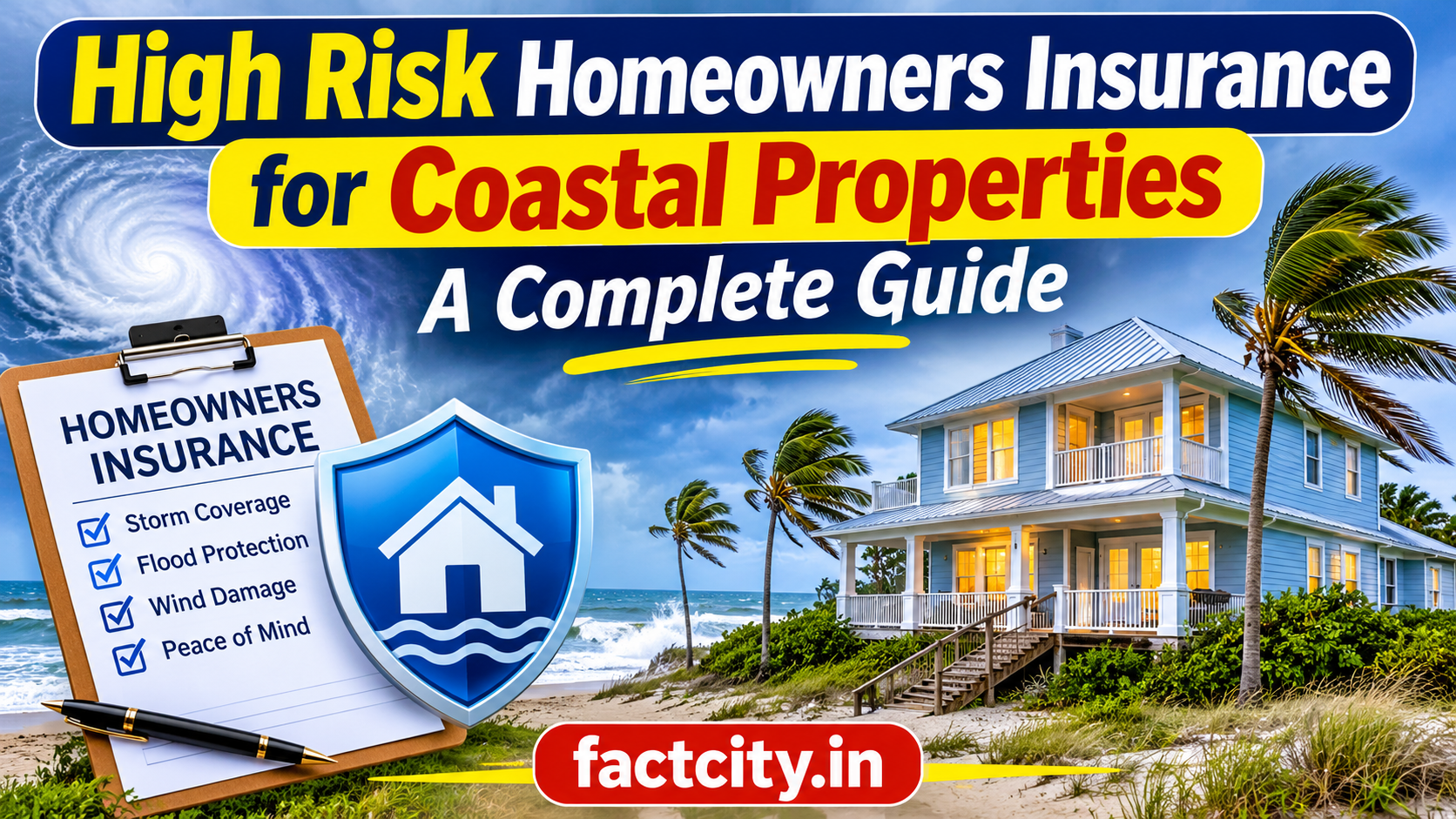
High-Risk Homeowners Insurance for Coastal Properties: Owning a home near the ocean can be a wonderful experience, but coastal living also comes with certain risks. Beautiful beaches, ocean views, and refreshing sea air make coastal properties attractive places to live. However, homes located near the coast often face a higher risk of hurricanes, tropical storms, flooding, strong winds, storm surges, and saltwater damage. These risks can make finding affordable homeowners insurance more difficult than it is for people living farther inland.
Many traditional insurance companies consider coastal properties high-risk because severe weather can cause significant damage within a short period. Some insurers may charge higher premiums, increase deductibles, limit coverage, or stop offering new policies in certain coastal areas. As a result, homeowners may need specialized high-risk homeowners insurance for coastal properties to protect their homes and financial investments.
High-risk homeowners insurance can help property owners find protection when standard insurance options are limited or unavailable. Understanding how these policies work, what they cover, how much they cost, and where to find suitable coverage can make the insurance process easier. This guide explains the important details homeowners should know before choosing a policy for a coastal property.
What Is High-Risk Homeowners Insurance for Coastal Properties?
High-risk homeowners insurance is coverage designed for properties that insurance companies consider more likely to experience damage or expensive claims. Coastal homes often fall into this category because they are exposed to environmental conditions that can increase the possibility of property damage.
For example, a house located near the Atlantic or Gulf Coast may face hurricanes, strong winds, heavy rainfall, and storm surges. A property along the Pacific Coast may experience coastal flooding, erosion, earthquakes in some regions, or severe winter storms, depending on its location.
Traditional homeowners insurance companies usually evaluate several factors before accepting a coastal property. These factors include the home’s distance from the shoreline, its construction materials, roof condition, age, previous insurance claims, local weather patterns, and flood zone classification.
When an insurance company believes the property has a higher chance of generating expensive claims, it may classify the home as high-risk. Homeowners may then need to explore specialty insurance companies, surplus lines insurers, state-backed insurance programs, or other available coverage options.
Why Coastal Properties Are Considered High-Risk
Coastal properties face several environmental challenges that can increase insurance costs and make coverage harder to obtain. Understanding these risks helps homeowners identify the protection they need.
1. Hurricanes and Tropical Storms
Hurricanes are among the biggest concerns for homeowners living near the coast. These powerful storms can bring destructive winds, heavy rainfall, flying debris, and storm surges. Even homes that are not directly hit by a hurricane can experience roof damage, broken windows, water intrusion, and structural problems.
Insurance companies consider hurricane-prone locations risky because a single storm can damage thousands of properties at the same time. This can result in a large number of claims and substantial financial losses for insurers.
2. Coastal Flooding and Storm Surges
Flooding is another major concern for coastal homeowners. Heavy rainfall, rising sea levels, overflowing rivers, and storm surges can push water into residential areas.
Storm surges are especially dangerous because ocean water can move inland with considerable force during hurricanes and tropical storms. Floodwater may damage flooring, electrical systems, furniture, appliances, foundations, and other important parts of a home.
Standard homeowners insurance policies generally do not cover flood damage caused by rising or overflowing water. Separate flood insurance is usually necessary for this type of protection.
3. Strong Winds and Flying Debris
Coastal areas frequently experience strong winds that can damage roofs, siding, windows, fences, and outdoor structures. During severe storms, flying debris can break windows or damage exterior walls.
Some insurance policies include windstorm coverage, while others apply separate wind or hurricane deductibles. In certain high-risk locations, homeowners may need to purchase windstorm insurance through a separate insurer or state-supported program.
4. Saltwater and Corrosion Damage
Salt in ocean air can gradually damage metal components, roofing materials, outdoor equipment, and other parts of a property. Over time, corrosion may weaken certain building materials and increase maintenance expenses.
Although standard homeowners insurance may not cover gradual deterioration, homeowners should consider the impact of coastal conditions when maintaining their properties and selecting appropriate coverage.
5. Rising Sea Levels and Coastal Erosion
Rising sea levels and coastal erosion are long-term concerns for many waterfront communities. Changes in shoreline conditions can increase the risk of flooding and affect the stability of land surrounding a property.
Insurance companies may consider these environmental conditions when evaluating a home’s location and future risk exposure.
What Does High-Risk Coastal Homeowners Insurance Cover?
Coverage depends on the insurance company, policy type, location, and selected protection limits. Homeowners should carefully review the policy rather than assuming every coastal risk is automatically covered.
Common coverage options include the following.
Dwelling Coverage
Dwelling coverage helps pay to repair or rebuild the main structure of a home after a covered event. It may include protection for walls, roofing, floors, ceilings, built-in cabinets, and other permanent parts of the house.
For coastal homeowners, choosing an appropriate dwelling coverage limit is particularly important because construction and rebuilding costs can be high after a major storm.
The coverage amount should reflect the estimated cost of rebuilding the property, rather than simply its current market value.
Personal Property Coverage
Personal property coverage protects belongings inside the home when they are damaged or destroyed by a covered event. These belongings may include furniture, clothing, electronics, appliances, and other household items.
Homeowners should check whether their policy provides replacement cost coverage or actual cash value coverage. Replacement cost generally pays to replace eligible belongings with comparable new items, while actual cash value accounts for depreciation.
Liability Protection
Personal liability coverage can help protect homeowners financially if someone is injured on their property and the homeowner is legally responsible.
For example, if a visitor slips and falls on a damaged outdoor walkway, liability coverage may help with eligible legal expenses and settlement costs, subject to policy terms and limits.
Additional Living Expenses
If a covered disaster makes a home temporarily unlivable, additional living expenses coverage may help pay for certain extra costs while repairs are completed.
Depending on the policy, this may include temporary accommodation, additional food expenses, and other necessary living costs.
Other Structures Coverage
This coverage may protect detached structures located on the property, such as garages, fences, storage buildings, and certain outdoor structures.
Coastal homeowners should confirm whether docks, seawalls, swimming pools, and other waterfront features are covered because these items may have special exclusions or limitations.
Does Standard Homeowners Insurance Cover Flooding?
One of the most important things coastal homeowners need to understand is that standard homeowners insurance generally does not cover flood damage caused by external rising water.
For example, if a hurricane pushes ocean water into a neighborhood and damages the ground floor of a house, the resulting flood damage would generally require separate flood insurance.
Homeowners can explore flood coverage through the National Flood Insurance Program (NFIP), which is managed by FEMA, or through private flood insurance providers.
The NFIP offers building and contents coverage within its program limits. Private flood insurance may provide different coverage limits, deductibles, and additional options depending on the insurer.
Before purchasing a policy, homeowners should understand whether it covers storm surge, heavy rainfall flooding, temporary accommodation, personal belongings, and other relevant expenses.
It is also important to remember that flood insurance may have a waiting period before coverage begins, although certain exceptions apply. Homeowners should not wait until a hurricane is approaching to arrange protection.
How Much Does High-Risk Homeowners Insurance Cost for Coastal Properties?
The cost of high-risk homeowners insurance for coastal properties can vary significantly. There is no single price that applies to every coastal home because insurance companies evaluate individual property characteristics and local risks.
A smaller home located several miles inland may receive a different quote from a large waterfront property exposed directly to ocean winds and storm surges.
Several factors influence the total insurance premium.
Location: Homes in hurricane-prone coastal regions may have higher premiums because of their exposure to severe weather.
Property Value: Larger homes and properties with expensive construction materials generally require higher dwelling coverage limits.
Age and Condition: Older properties with outdated roofs, electrical systems, or plumbing may be more expensive to insure.
Roof Type: Roof materials, installation quality, age, and wind resistance can affect insurance pricing.
Previous Claims: A history of frequent insurance claims may influence eligibility and premiums.
Deductibles: Choosing a higher deductible may reduce the regular premium, but homeowners must be prepared to pay more when filing a claim.
Coverage Limits: Higher protection limits and additional coverage options generally increase the cost of insurance.
Coastal homeowners should also pay attention to hurricane and windstorm deductibles. These deductibles may be calculated as a percentage of the insured home’s value instead of a fixed dollar amount.
For example, a 2% hurricane deductible on a home insured for $400,000 would equal $8,000. This means the homeowner may need to pay that amount toward an eligible hurricane-related claim before insurance benefits apply.
Best Insurance Options for High-Risk Coastal Homes
Finding the right insurance company can be challenging when a property is located in a high-risk coastal area. Homeowners should compare several types of insurance providers rather than relying on only one option.
1. Traditional Homeowners Insurance Companies
Some major insurance companies continue to offer homeowners insurance in selected coastal areas. Their availability depends on the property’s location, condition, and underwriting requirements.
Homeowners should contact multiple companies to determine whether standard policies are available and whether windstorm or hurricane protection is included.
2. Specialty Insurance Companies
Specialty insurers focus on properties that may not qualify for traditional homeowners insurance. These companies may offer coverage for expensive coastal homes, older properties, waterfront houses, or homes with unusual construction features.
However, specialty policies can have different exclusions, coverage limits, and pricing structures. Comparing policy documents is essential before making a decision.
3. Surplus Lines Insurance
Surplus lines insurers provide coverage for risks that standard insurance companies may be unwilling or unable to insure.
This option can be useful for homeowners with properties in particularly challenging coastal locations. However, surplus lines insurance is regulated differently from admitted insurance, and state guaranty fund protections generally do not apply in the same way.
Homeowners should work with a licensed insurance professional who understands surplus lines coverage and can explain the financial strength and terms of the insurer.
4. State-Backed Insurance Programs
Some coastal states operate insurance programs designed to provide coverage when private insurance options are limited.
For example, Florida has Citizens Property Insurance Corporation, while other states have their own insurance plans or coastal coverage arrangements.
These programs often have eligibility requirements and may provide more limited options than private insurance companies. Homeowners should review the current rules and determine whether they qualify.
How to Find Affordable High-Risk Homeowners Insurance
Finding affordable coverage for a coastal home requires research and careful planning. Although homeowners cannot control hurricanes or coastal flooding, they can take steps that may improve insurance eligibility and reduce certain expenses.
Compare Multiple Insurance Quotes
Homeowners should request quotes from several insurance companies, including traditional providers, specialty insurers, and independent insurance agencies.
Comparing multiple quotes makes it easier to understand differences in premiums, deductibles, exclusions, and available coverage.
The cheapest policy is not always the best choice. A low premium may come with limited protection or a high hurricane deductible.
Improve Roof Protection
The roof is one of the most important parts of a coastal home because it is directly exposed to strong winds and flying debris.
Installing impact-resistant roofing materials, maintaining roof connections, and repairing damaged shingles may help improve the property’s storm resistance.
Some insurers offer discounts for qualifying wind-resistant improvements, depending on local rules and company guidelines.
Install Storm Shutters
Impact-resistant windows and storm shutters can help reduce damage from flying debris during severe weather.
Homeowners should check whether these improvements meet the insurance company’s required building standards before expecting a discount.
Elevate Important Equipment
Elevating electrical systems, heating equipment, air-conditioning components, and other vulnerable systems may help reduce certain flood-related losses.
These improvements should follow applicable building codes and professional safety recommendations.
Maintain the Property Regularly
Regular maintenance can help prevent avoidable damage and keep a property in better condition. affordable-eo-insurance-for-independent-contractors
Homeowners should inspect roofs, gutters, drainage systems, windows, exterior walls, and plumbing. Addressing small problems early may reduce the possibility of larger repair expenses.
Important Questions to Ask Before Buying a Policy
Before purchasing high-risk homeowners insurance for a coastal property, homeowners should ask the insurance company several important questions.
First, does the policy include windstorm and hurricane coverage, or must these protections be purchased separately? This is important because some coastal policies have specific wind-related exclusions.
Second, does the policy cover flood damage? In most cases, separate flood insurance is required, so homeowners should understand exactly which water-related losses are excluded.
Third, how much is the hurricane deductible? A percentage-based deductible can result in a substantial out-of-pocket expense after a major storm.
Fourth, does the policy provide replacement cost coverage for the dwelling and personal belongings? Understanding the difference between replacement cost and actual cash value can help avoid unexpected financial problems.
Finally, are detached structures, swimming pools, docks, seawalls, and outdoor equipment covered? Waterfront properties often contain features that may require special protection.
Getting clear answers to these questions can help homeowners choose coverage that matches their property’s actual risks.
Common Mistakes Coastal Homeowners Should Avoid
One common mistake is assuming that a regular homeowners insurance policy covers every type of hurricane damage. In reality, wind damage and flood damage may be treated differently, and separate policies or deductibles may apply.
Another mistake is selecting a policy only because it has the lowest premium. A cheaper policy may provide lower coverage limits, higher deductibles, or important exclusions that become costly after a disaster.
Some homeowners also underestimate rebuilding costs. Construction expenses, labor shortages, and material prices can increase significantly after a major coastal storm. Reviewing dwelling coverage limits regularly can help reduce the risk of being underinsured.
Ignoring hurricane deductibles is another serious mistake. Homeowners should calculate how much they would need to pay out of pocket before purchasing coverage.
Finally, waiting until hurricane season to search for insurance can create problems. Insurance companies may temporarily restrict new policies when a storm approaches or when a severe weather event is expected.
Is High Risk Homeowners Insurance Worth It for Coastal Properties?
For homeowners living near the ocean, having appropriate insurance protection can be an important part of financial planning.
A coastal property may represent years of savings and a significant personal investment. Without suitable insurance, repairing extensive storm damage could create a serious financial burden.
High-risk homeowners insurance may cost more than standard coverage, but it can provide valuable financial protection against covered losses. The right policy can help homeowners manage repair expenses, protect personal belongings, and reduce the financial impact of unexpected disasters.
However, insurance should not be considered a replacement for proper property maintenance and disaster preparation. Homeowners should combine suitable insurance coverage with storm-resistant construction, flood planning, and regular inspections.
Final Thoughts
Finding high-risk homeowners insurance for coastal properties may require more research than purchasing a standard homeowners policy. Coastal homes face additional challenges from hurricanes, storm surges, strong winds, flooding, and saltwater exposure. These risks can make insurance more expensive and limit the number of companies willing to provide coverage.
The best approach is to compare multiple insurance providers, understand policy exclusions, review hurricane deductibles, and consider separate flood insurance when necessary. Homeowners should also explore specialty insurers and state-backed insurance programs if traditional coverage is unavailable.
Most importantly, the right insurance policy should provide protection based on the actual risks facing the property. By understanding available coverage options and preparing for coastal weather conditions, homeowners can make more confident decisions and protect their homes for the future.