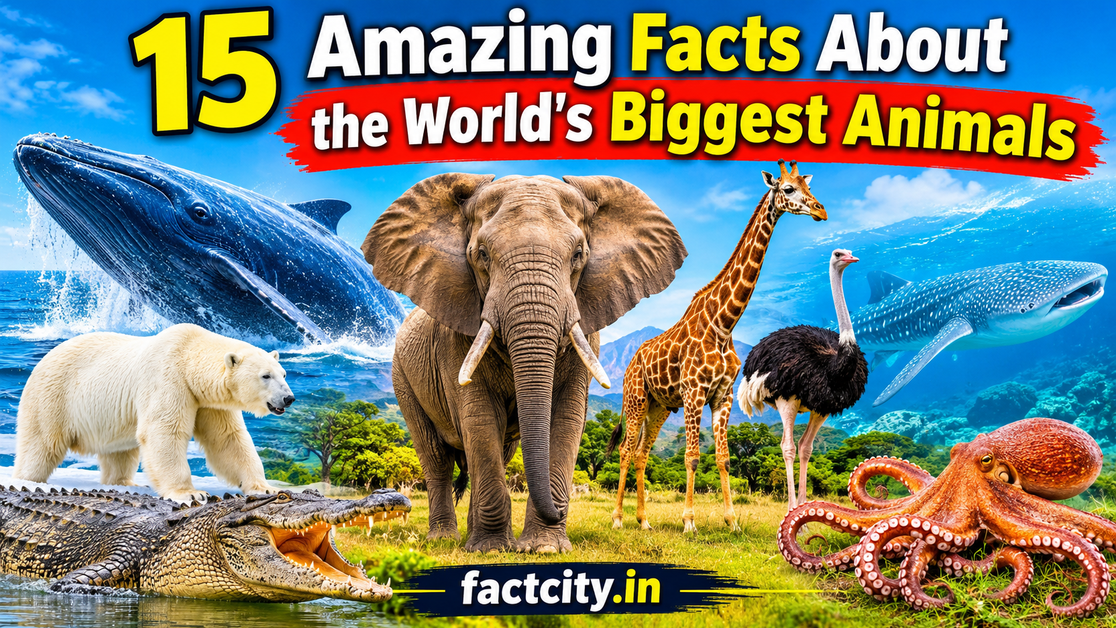
15 Amazing Facts About the World’s Biggest Animals. The animal kingdom is full of incredible creatures, but some animals are so enormous that they are difficult to imagine until we see them with our own eyes. From the giant blue whale swimming through the deep ocean to the African elephant walking across the grasslands, the world’s biggest animals have amazing features that make them truly special. Some are heavier than several cars, while others have bodies longer than a school bus. Despite their enormous size, many of these animals are gentle, intelligent, and perfectly adapted to their environments.
The world’s biggest animals are not only fascinating because of their size. They also have unique feeding habits, unusual survival skills, impressive communication abilities, and important roles in nature. Some live in the ocean, where their bodies can grow to extraordinary lengths, while others survive in forests, deserts, rivers, and open grasslands. Learning about these giant creatures helps us understand how different species have adapted to life on Earth.
Here are 15 amazing facts about the world’s biggest animals that will surprise you and give you a closer look at some of the most extraordinary creatures on our planet.
1. The Blue Whale Is the Largest Animal Ever Known to Exist
The blue whale is the largest animal known to have ever lived on Earth, even bigger than the largest dinosaurs discovered by scientists. These incredible marine mammals can grow up to around 100 feet long and weigh approximately 150 to 200 tons, although some individuals may be larger. Their enormous bodies make them one of the most impressive sights in the natural world. 15 Amazing Facts About the World’s Biggest Animals
Despite their massive size, blue whales mainly eat tiny shrimp-like animals called krill. During feeding season, a blue whale can consume several tons of krill in a single day. It uses special structures called baleen plates inside its mouth to filter enormous amounts of water and capture small prey. Another amazing fact is that blue whales produce extremely powerful low-frequency sounds that can travel long distances underwater. These sounds help them communicate across the vast ocean.
2. The African Elephant Is the Largest Land Animal
The African elephant holds the title of the largest living land animal. Adult males can reach approximately 13 feet in height at the shoulder and weigh up to 6,000 kilograms or more. Their enormous ears, long trunks, thick legs, and powerful bodies make them easy to recognize.
One of the most interesting features of an African elephant is its trunk, which contains tens of thousands of muscle units. The trunk helps the animal breathe, smell, drink water, pick up food, communicate, and even greet other elephants. African elephants also have excellent memories and strong family relationships. They usually live in groups led by an experienced female called a matriarch. These family groups work together to protect young elephants and find food and water across large areas.
3. The Ostrich Is the World’s Largest Living Bird
The ostrich is the largest and heaviest living bird on Earth. Native to Africa, this remarkable bird can grow up to around 9 feet tall and weigh more than 140 kilograms. Unlike most birds, ostriches cannot fly because their bodies are too heavy and their wings are not designed for powered flight.
However, they have another impressive ability that helps them survive. Ostriches are extremely fast runners and can reach speeds of approximately 70 kilometers per hour over short distances. Their long, powerful legs allow them to cover large areas while searching for food and escaping predators. Another surprising fact is that an ostrich has very large eyes, which help it spot potential danger from a distance. Its eggs are also the largest of any living bird species.
4. The Giraffe Is the Tallest Animal in the World
The giraffe is the tallest living animal on Earth, with adult males sometimes reaching heights of approximately 18 feet. Its extremely long neck allows it to reach leaves high in trees, especially acacia trees, that many other herbivores cannot access.
Interestingly, a giraffe has the same number of neck bones as humans. Both species have seven cervical vertebrae, but giraffe neck bones are much longer. Their powerful hearts and specialized blood circulation help move blood throughout their unusually tall bodies. Another fascinating detail is that giraffes have long, dark-colored tongues that can reach around 18 to 20 inches. These tongues help them pull leaves from thorny branches without easily injuring themselves.
5. The Saltwater Crocodile Is the Largest Living Reptile
The saltwater crocodile is the largest living reptile in the world. It can grow beyond 20 feet in exceptional cases and weigh more than 1,000 kilograms. These powerful reptiles live in coastal regions, rivers, estuaries, and mangrove environments across parts of Southeast Asia and northern Australia.
One of the most impressive features of a saltwater crocodile is its incredibly strong bite. Its powerful jaws allow it to capture and hold large prey. It can also remain underwater for extended periods while waiting for an opportunity to hunt. Saltwater crocodiles are excellent swimmers and can travel between freshwater and saltwater habitats. Although they spend much of their time resting quietly in the water, they are highly effective predators and deserve plenty of respect.
6. The Whale Shark Is the Biggest Fish in the Ocean
The whale shark is the largest living fish in the world, reaching lengths of around 40 feet or sometimes more. Despite its enormous size, this gentle giant is not a dangerous predator of large marine animals. Instead, it feeds mainly on plankton, tiny fish, and other small organisms.
Whale sharks have wide mouths that help them filter food from the water. Their bodies are covered with beautiful patterns of white spots and pale lines, making each individual visually distinctive. These sharks usually swim slowly through warm tropical and subtropical oceans. Scientists are still learning about their migration patterns and behavior because they can travel enormous distances across the sea. Sadly, whale sharks face threats from fishing activities, boat strikes, and habitat-related pressures.
7. The Colossal Squid Has Enormous Eyes
The colossal squid is one of the largest invertebrates known to science. It lives in the cold, deep waters of the Southern Ocean and is famous for its enormous body, powerful arms, and large eyes. Some estimates suggest that it may reach around 10 to 14 meters in total length, although reliable measurements of complete specimens are limited.
One of the most amazing features of this deep-sea animal is its eyes. They can reach approximately the size of a dinner plate, helping the squid detect movement in the dark ocean environment. Its arms and tentacles also have powerful hooks that help it capture prey and defend itself. Because colossal squids live at great depths, humans rarely encounter them alive, making them one of the most mysterious giant animals in the world.
8. The Polar Bear Is the Largest Living Land Carnivore
The polar bear is the largest living land carnivore, although its size overlaps with that of the brown bear. Adult male polar bears commonly weigh between 350 and 700 kilograms, with some individuals becoming considerably heavier.
These powerful animals are specially adapted to survive in the freezing Arctic environment. They have thick fur and a layer of body fat that helps protect them from extreme cold. Their large paws distribute their weight across snow and ice while also helping them swim efficiently. Polar bears mainly depend on seals for food and use their excellent sense of smell to locate prey. Climate change and shrinking sea ice are major challenges for their survival because they depend on frozen ocean habitats for much of their hunting activity.
9. The Anaconda Is One of the Heaviest Snakes in the World
The green anaconda is widely recognized as the heaviest snake in the world. It lives in the rivers, swamps, and wetlands of South America, where its powerful body helps it move through water and surrounding vegetation.
Green anacondas can grow to impressive lengths, with large females generally being much bigger than males. They are non-venomous snakes that capture prey by constriction. Their diet can include fish, birds, and various mammals. Their eyes and nostrils are positioned near the top of their heads, allowing them to remain mostly underwater while watching their surroundings. This adaptation makes them effective hunters in their natural wetland habitats.
10. The Giant Pacific Octopus Has an Incredible Arm Span
The giant Pacific octopus is the largest octopus species in the world by overall mass. It lives in the coastal waters of the northern Pacific Ocean, including areas around Japan, Russia, Alaska, and western North America.
This intelligent sea creature can have an arm span of around 14 to 16 feet in exceptional individuals. Its eight arms contain powerful suckers that help it grip surfaces, open shells, and handle objects. The giant Pacific octopus is also famous for its ability to change color and skin texture, helping it blend into surrounding rocks and underwater environments. Another fascinating fact is that octopuses have three hearts. Two pump blood through the gills, while the third circulates blood to the rest of the body.
11. The Leatherback Sea Turtle Is the Largest Living Turtle
The leatherback sea turtle is the largest living turtle species on Earth. Some individuals can grow more than 6 feet in length and weigh over 900 kilograms. Unlike other sea turtles, it does not have a hard shell made of large bony plates. Instead, its back is covered with a flexible, leathery skin.
Leatherback turtles are remarkable long-distance travelers and can migrate thousands of kilometers between feeding and nesting areas. Their main food source is jellyfish, which they capture using specialized mouth structures. Their bodies are also adapted to survive in colder ocean waters, allowing them to travel farther from tropical regions than most other sea turtles. Unfortunately, plastic pollution, fishing equipment, and the destruction of nesting beaches threaten their populations.
12. The Moose Is the Largest Member of the Deer Family
The moose is the largest living member of the deer family. It is found across northern parts of North America, Europe, and Asia, where it lives in forests, wetlands, and areas with plenty of vegetation. Adult males can weigh more than 600 kilograms and stand over 6 feet tall at the shoulder.
One of the most recognizable features of a male moose is its enormous antlers, which can spread several feet across. These antlers are grown and shed every year. Moose are excellent swimmers and can travel through lakes and rivers while searching for aquatic plants. Their long legs also help them move through deep snow and dense vegetation. Despite their large size, moose mainly eat leaves, twigs, bark, and aquatic plants.
13. The Giant Manta Ray Has One of the Widest Wingspans
The giant oceanic manta ray is one of the largest rays in the world. Its wingspan can reach approximately 23 feet, making it an impressive sight when it glides through the ocean. Unlike many other large marine animals, manta rays do not have dangerous stingers on their tails.
These gentle creatures feed mainly on plankton and small organisms by filtering food from the water as they swim. Their wide, wing-like pectoral fins help them move gracefully through the sea. Giant manta rays are also known for their intelligence and complex behavior. Scientists have observed them visiting cleaning stations, where smaller fish remove parasites from their bodies. They sometimes perform impressive jumps out of the water, although researchers are still studying the reasons behind this behavior.
14. The Hippopotamus Is One of Africa’s Heaviest Land Animals
The hippopotamus is one of the heaviest living land mammals, with large adult males sometimes weighing more than 3,000 kilograms. It spends much of the day in rivers and lakes, where the water helps keep its enormous body cool under the hot African sun.
Although hippos look slow and relaxed while resting in water, they can move surprisingly quickly on land over short distances. Their powerful jaws and large teeth make them formidable animals. Hippos mainly eat grass and usually come out of the water at night to feed. Another interesting fact is that their skin produces a natural reddish oily substance that helps protect it from sunlight and may also provide some protection against microorganisms. Despite their plant-based diet, hippos can be highly territorial and should never be approached in the wild.
15. The Giant Anteater Has an Extremely Long Tongue
The giant anteater is the largest living anteater species in the world. It can grow to approximately 7 feet in total length when its long, bushy tail is included. It is native to Central and South America, where it lives in grasslands, forests, and wetlands.
Its most remarkable feature is its long, narrow tongue, which can extend around 2 feet from its mouth. This specialized tongue helps it collect ants and termites from nests. A giant anteater can flick its tongue in and out many times per minute while feeding. It has no teeth, so it swallows its prey whole and uses its muscular stomach to help digest food. Its large front claws are useful for breaking open insect nests and protecting itself when necessary.
Why Are Some Animals So Big?
Animal size is influenced by several factors, including genetics, food availability, habitat, temperature, and evolutionary adaptations. For example, the enormous size of blue whales is supported by their marine environment, where water helps support their bodies. Large land animals such as elephants have developed strong legs and specialized body structures to carry their weight.
Food availability also plays an important role. Animals need enough energy and nutrients to maintain large bodies. Some species have evolved specialized feeding methods that allow them to consume large quantities of food efficiently. Others have developed physical features that help them survive in challenging environments.
Over millions of years, these adaptations have produced some of the most extraordinary creatures on our planet. Their different body sizes show how life can evolve in many surprising ways. 10-interesting-facts-about-space
Why Protecting the World’s Biggest Animals Is Important
Many of the world’s largest animals face serious threats due to human activities and environmental changes. Habitat destruction, illegal hunting, ocean pollution, climate change, and accidental capture in fishing equipment have affected several giant species.
Blue whales and whale sharks, for example, are vulnerable to threats such as ship strikes, fishing activities, and changes in ocean conditions. African elephants face habitat loss and poaching, while polar bears are affected by the reduction of Arctic sea ice. Protecting these animals requires international cooperation, wildlife conservation programs, responsible tourism, and stronger protection of natural habitats.
Every species plays an important role in maintaining a healthy ecosystem. By protecting large animals, we also help preserve the environments and smaller species that depend on the same natural systems.
Conclusion
The world’s biggest animals are among the most fascinating creatures on Earth. From the enormous blue whale and powerful African elephant to the tallest giraffe and mysterious colossal squid, each animal has unique characteristics that make it special. Their impressive sizes are only one part of their story. Their intelligence, survival skills, feeding habits, and adaptations show just how incredible nature can be.
Learning about these amazing animals also reminds us that the natural world needs protection. Many giant species are facing growing environmental challenges, and their survival depends partly on the decisions humans make today. By understanding and respecting these extraordinary creatures, we can help ensure that future generations will also have the opportunity to discover the wonders of the animal kingdom.