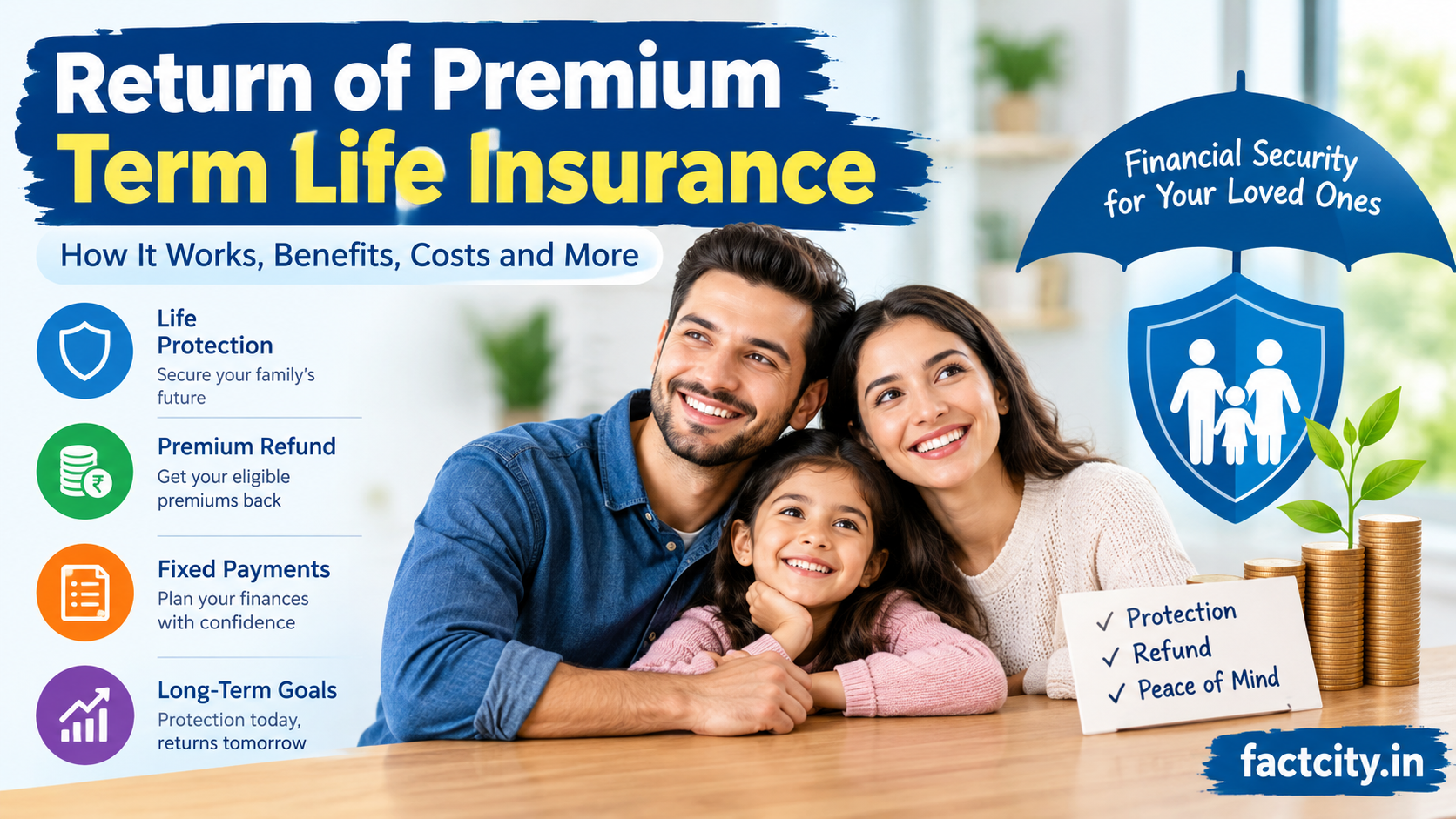
Return of Premium Term Life Insurance: Choosing the right life insurance policy is an important step toward protecting your family’s financial future. Many people want life insurance coverage but feel hesitant about paying premiums for years without receiving money back if they survive the policy term. This is where return of premium term life insurance can be an interesting option. It combines the financial protection of traditional term life insurance with the possibility of receiving eligible premiums back at the end of the policy period.
Return of premium term life insurance is designed for people who want to provide financial security to their loved ones while also having an opportunity to recover the premiums they have paid. However, this type of policy generally costs more than standard term life insurance, and its benefits depend on the policy’s terms and conditions.
In this guide, we will explain what return of premium term life insurance is, how it works, its benefits and disadvantages, and what you should consider before purchasing a policy.
What Is Return of Premium Term Life Insurance?
Return of premium term life insurance, often called ROP term life insurance, is a type of term life insurance that may return eligible premiums to the policyholder if they survive the entire policy term and meet the policy requirements.
Traditional term life insurance provides coverage for a specific period, such as 10, 20, or 30 years. If the insured person dies during the covered period, the insurance company generally pays the death benefit to the named beneficiaries, subject to the policy terms. If the insured person survives until the policy expires, there is usually no maturity payment.
With a return of premium policy, the insurer agrees to refund eligible premiums if the policyholder meets the requirements stated in the contract. This feature can make the policy attractive to people who want life insurance protection without feeling that all their premium payments will be lost if they outlive the policy.
It is important to understand that a premium refund is not the same as earning a profit. The amount returned may not include the cost of optional riders, additional charges, or other excluded payments. Inflation and the opportunity cost of keeping money tied up in insurance premiums should also be considered.
How Does Return of Premium Term Life Insurance Work?
Return of premium term life insurance follows a relatively straightforward process. First, you choose a coverage amount and a policy term based on your financial responsibilities and family needs. The insurance company evaluates your application and determines your premium based on factors such as your age, health, lifestyle, coverage amount, and selected policy features.
You then pay the required premiums throughout the agreed term. During this period, your policy provides a death benefit to your beneficiaries if you die while the coverage is active and the claim meets the policy conditions.
If you survive the entire term, maintain the policy as required, and satisfy the contract’s conditions, the insurer refunds the eligible premiums. The exact refund amount depends on the agreement.
For example, suppose you purchase a 20-year return of premium term life insurance policy and pay $100 per month. Over 20 years, you would pay a total of $24,000 in premiums. If the policy promises a full return of eligible base premiums and you meet all its requirements, you could receive $24,000 at the end of the term. interesting-facts-about-the-usa-20-amazing-things
This is only an illustrative example, not an actual insurance quote. The premium, refund amount, exclusions, and eligibility requirements will vary by insurer and policy.
Key Benefits of Return of Premium Term Life Insurance
1. Opportunity to Get Your Premiums Back
One of the main attractions of return of premium term life insurance is the possibility of receiving eligible premiums back after completing the policy term. People who dislike the idea of paying for insurance without a maturity benefit may appreciate this feature.
However, the refund generally depends on surviving the term and meeting all contractual requirements. It should not be assumed that every payment made to the insurer will automatically be returned.
2. Financial Protection for Your Family
The main purpose of life insurance remains protecting your loved ones financially. If you die during the policy term, the death benefit can help your family manage household expenses, outstanding loans, education costs, and other financial obligations.
A suitable coverage amount can give your family more financial stability during a difficult period. Always check the policy’s exclusions, claim conditions, and beneficiary provisions.
3. Predictable Premium Payments
Many term life insurance policies offer fixed premiums throughout the selected term, although this depends on the contract. Predictable payments can make it easier to plan a household budget and manage long-term financial responsibilities.
Before purchasing a policy, confirm whether your premiums are guaranteed to remain unchanged and whether any optional benefits involve additional costs.
4. Useful for Long-Term Financial Planning
Some families prefer a policy that provides protection during important financial years and offers a potential refund if they survive the term. For example, parents may want coverage while their children are growing up, or homeowners may want protection while paying off a mortgage.
The policy can support these goals, but it should be considered alongside emergency savings, retirement planning, and other financial priorities.
Disadvantages of Return of Premium Term Life Insurance
Although return of premium term life insurance has attractive features, it also has limitations that deserve attention.
1. Higher Premiums
The biggest disadvantage is usually the higher cost compared with a similar traditional term life insurance policy. You are paying for the insurance protection and the contractual refund feature.
If your budget is limited, a standard term policy may allow you to purchase a larger death benefit for the same monthly premium. This could be especially important if your family needs substantial financial protection.
2. No Guaranteed Investment Profit
Receiving your eligible premiums back does not necessarily mean you have earned money. For example, a refund of $24,000 after 20 years has less purchasing power than $24,000 today because of inflation.
You should also consider what might have happened if you had purchased less expensive term insurance and invested the difference. Investment returns are not guaranteed, but comparing both approaches can help you understand the trade-offs.
3. Strict Policy Conditions
The refund may depend on maintaining the policy for the entire term. Cancelling early, missing required payments, or making certain policy changes may reduce or eliminate the refund, depending on the contract.
Some policies may also exclude rider premiums or other charges from the refund calculation. Read the policy document carefully before making a commitment.
4. Limited Flexibility
Long-term insurance payments can become difficult if your income decreases or your financial responsibilities change. If you cancel a return of premium policy early, you may not receive the amount you expected.
Before choosing this type of coverage, make sure the premiums are affordable even during financially challenging periods.
Return of Premium vs. Traditional Term Life Insurance
The main difference between these two policies is what happens when the insured person survives the term.
Traditional term life insurance generally offers lower premiums and a death benefit if the insured person dies during the coverage period. If the person survives the term, the policy normally expires without a premium refund.
Return of premium term life insurance generally costs more but may refund eligible premiums if the policyholder survives the full term and meets the contractual requirements.
For example, if two people need the same amount of life insurance coverage, the traditional term policy may cost less each month. The person choosing the return of premium option pays more for the possibility of receiving a refund later.
Neither option is automatically better for everyone. The right choice depends on your budget, financial goals, coverage needs, and preferences.
Who Should Consider Return of Premium Term Life Insurance?
Return of premium term life insurance may suit people who want temporary life insurance protection and strongly prefer a policy with a potential premium refund. It may appeal to families with stable incomes, people planning around a long-term financial commitment, and individuals who value predictable payments.
However, people who need the maximum possible coverage at the lowest cost may prefer traditional term life insurance. Those who have high-interest debt, insufficient emergency savings, or other immediate financial priorities should consider whether the higher premiums are appropriate for their situation.
Your decision should focus first on obtaining adequate life insurance protection. A refund feature is an additional consideration, not a replacement for choosing the right death benefit.
How to Choose the Right Return of Premium Term Life Insurance Policy
Before buying a policy, compare multiple insurers and request written quotations for the same coverage amount and term. Comparing similar policies makes it easier to understand the actual cost of the refund feature.
Check the total premiums payable over the policy term and confirm exactly which payments qualify for a refund. Ask whether optional riders, administrative charges, or other costs are excluded. Understand what happens if you cancel early, miss a payment, or need to change the policy.
You should also review the death benefit, exclusions, renewal provisions, and any conditions affecting the refund. Make sure the insurer is appropriately licensed in your jurisdiction and read the complete policy document before signing.
Finally, compare the return of premium policy with a traditional term policy. Calculate the difference in premiums and consider how you could use that difference toward savings or investments. This comparison can help you make a decision based on your real financial needs rather than the promise of getting money back.
Frequently Asked Questions
Is return of premium term life insurance worth it?
It can be worthwhile for people who value a premium refund and can comfortably afford the higher cost. However, traditional term life insurance may provide better value for people who prioritize affordable coverage.
Do you get all your money back?
Not necessarily. The refund depends on the policy’s specific terms. Some contracts return eligible base premiums but exclude rider costs or other payments. You must meet the stated requirements to qualify.
What happens if I cancel my policy early?
Early cancellation may result in a reduced refund or no refund at all. Check the surrender and cancellation provisions before purchasing the policy.
Is the premium refund considered an investment return?
No. A refund of premiums is not automatically an investment gain. Inflation can reduce the purchasing power of the money returned, and the refund may not compensate you for the opportunity to earn returns elsewhere.
Can I add riders to a return of premium policy?
Some insurers allow optional riders, such as accidental death or other additional benefits. Availability and costs vary. Rider premiums may not qualify for a refund, so check the contract.
Conclusion
Return of premium term life insurance offers a combination of temporary life insurance protection and the possibility of recovering eligible premiums at the end of the policy term. It can be appealing to people who want financial protection for their families while also valuing a potential refund if they survive the coverage period.
However, higher premiums, policy restrictions, inflation, and the lack of guaranteed investment profit are important factors to consider. Before making a decision, compare return of premium coverage with traditional term life insurance and review the complete terms of each policy.