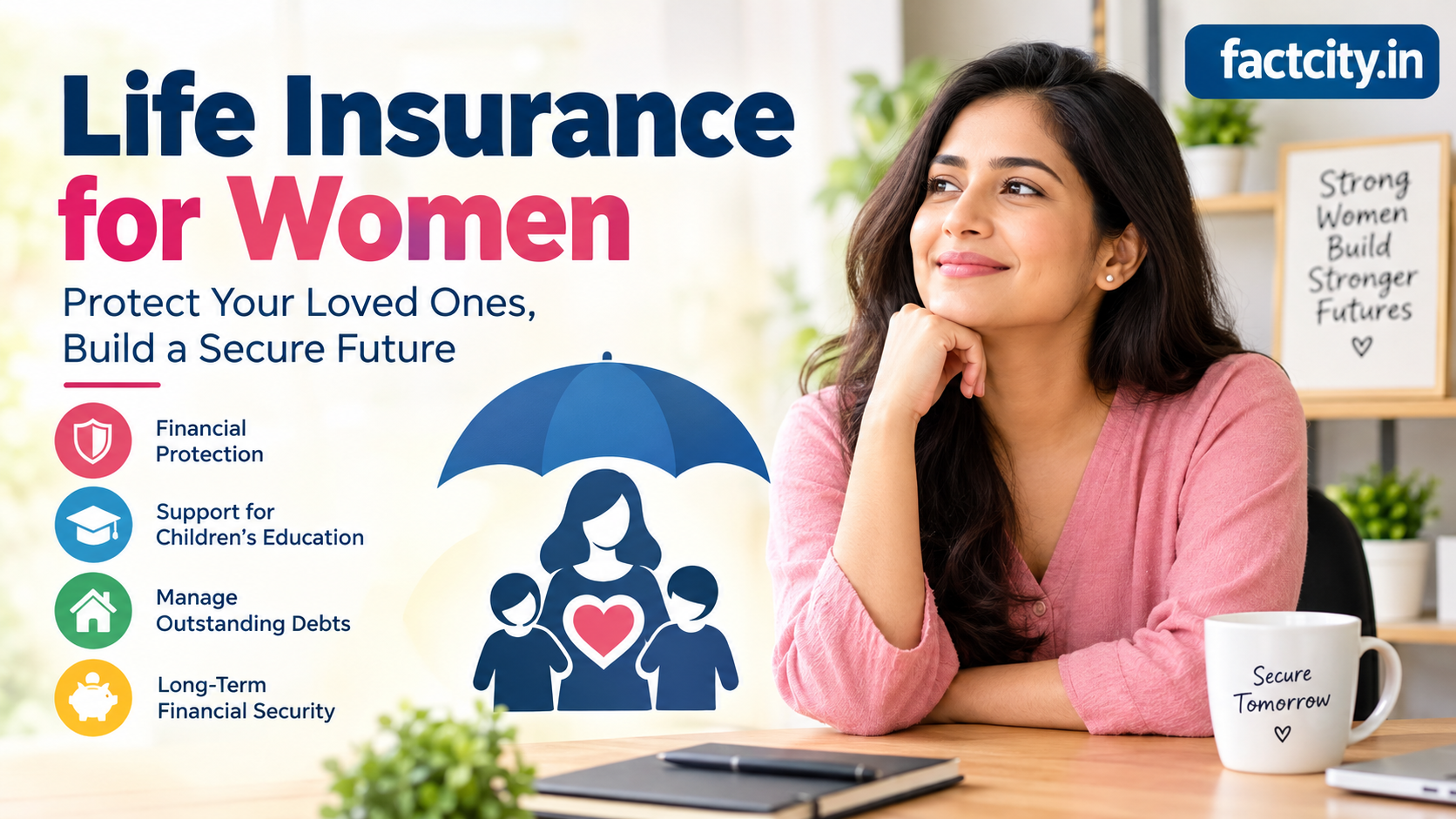
Life Insurance for Women is an important part of financial planning because it helps protect loved ones, support long-term goals, and provide financial security during uncertain times. Whether a woman is working full-time, running a business, managing a household, or raising children, having the right life insurance policy can make a meaningful difference in her family’s future.
Many women focus on their family’s daily needs and long-term financial goals but may overlook their own financial protection. Life insurance can help address this gap by providing a financial benefit to the chosen beneficiaries if the insured woman passes away while the policy is active. Depending on the policy, it may also offer savings or investment-related benefits.
Choosing the right life insurance policy does not have to be complicated. By understanding the available options, benefits, costs, and important policy features, women can make informed decisions that suit their personal circumstances. This guide explains everything you need to know about life insurance for women and how to choose suitable coverage.
What Is Life Insurance for Women?
Life insurance for women is a financial protection product designed to provide a payout to designated beneficiaries after the insured person’s death, subject to the policy’s terms and conditions. The payout, known as the death benefit, can help family members manage expenses and maintain financial stability.
For example, a woman who contributes to household income may purchase life insurance to help her family cover mortgage payments, children’s education, everyday expenses, and outstanding debts if she passes away unexpectedly.
Life insurance can also be valuable for women who do not earn a traditional salary. A homemaker may provide childcare, household management, and other essential services that would be expensive to replace. Insurance coverage can help a family prepare financially for the loss of these contributions.
The right policy depends on factors such as income, age, health, dependents, financial responsibilities, and future plans. Women should evaluate these factors before choosing a policy.
Why Is Life Insurance Important for Women?
Life insurance can offer several benefits that support financial independence and family protection.
1. Financial Protection for Family
One of the main reasons women consider life insurance is to protect their families from financial difficulties. If a woman is a primary or secondary income earner, her death could reduce the household’s ability to meet regular expenses.
A suitable life insurance payout can help beneficiaries pay bills, manage outstanding loans, and maintain their standard of living during a difficult period.
2. Support for Children’s Education
Parents often save for school fees, college tuition, and other educational expenses over many years. Life insurance can provide financial support that helps protect these plans if a parent passes away unexpectedly.
Women with young children may consider their children’s future educational costs when deciding how much coverage they need.
3. Protection Against Outstanding Debts
Home loans, personal loans, and other financial obligations can place pressure on surviving family members. Life insurance proceeds may help beneficiaries manage these liabilities, depending on the payout amount and their financial circumstances.
Women who have significant debts should consider these obligations when estimating their coverage needs.
4. Financial Security for Homemakers
A homemaker’s contribution is not always reflected in a monthly salary, but household responsibilities have real economic value. If a homemaker passes away, the family may need to pay for childcare, cooking, transportation, and other services.
Life insurance may help cover some of these additional expenses. Eligibility, coverage limits, and available policy options depend on the insurer and the family’s circumstances.
5. Greater Financial Independence
Life insurance can form one part of a broader financial plan. Women who manage their own income, support dependents, or operate businesses can use it to plan for financial risks and protect the people who rely on them.
However, life insurance should complement other financial tools, such as emergency savings, health insurance, and retirement planning, rather than replace them.
Types of Life Insurance Policies for Women
Understanding the different types of life insurance is essential when comparing available plans.
Term Life Insurance
Term life insurance provides coverage for a specific period, such as 10, 20, or 30 years. If the insured person passes away during the covered period, the insurer pays the death benefit to the beneficiaries, subject to the policy terms.
Term insurance is often suitable for women who want substantial financial protection at a relatively affordable premium. It can be especially useful for parents, homeowners, and women who have dependents.
Most standard term policies do not provide a maturity payout if the insured person survives the policy term. Some policies offer different benefits, so it is important to check the contract carefully.
Whole Life Insurance
Whole life insurance generally provides lifelong coverage, provided the policy remains in force and its conditions are met. Depending on the product, it may include a cash value component that develops over time.
This type of policy may appeal to women seeking long-term coverage and estate-planning support. However, premiums can be higher than those of comparable term insurance, and policy fees and conditions should be reviewed carefully.
Endowment Insurance
An endowment policy combines life insurance protection with a savings component. It generally pays a benefit if the insured person dies during the policy term or survives until the specified maturity date, according to the contract.
These plans may suit women who prefer structured, long-term saving alongside insurance protection. Before purchasing one, compare its expected benefits, costs, and flexibility with separate term insurance and savings options.
Unit-Linked Insurance Plans
Unit-linked insurance plans, often called ULIPs in India, combine life insurance coverage with market-linked investments. A portion of the premium is allocated to investment funds according to the policy’s structure.
Returns are not guaranteed and depend on market performance, charges, and other factors. Women considering a ULIP should understand its investment risks, lock-in period, fees, and insurance benefits before making a decision.
How Much Life Insurance Coverage Do Women Need?
There is no single coverage amount that is suitable for every woman. The right amount depends on financial responsibilities, future goals, and the needs of dependents.
A practical starting point is to estimate the financial support your family would need if you were no longer there. Consider outstanding debts, children’s education, daily living expenses, future financial goals, and funeral costs where applicable.
Next, subtract existing savings, investments that can reasonably be used for these needs, and any other life insurance benefits already available.
For example, if a woman estimates that her family would need ₹1 crore to cover future expenses and outstanding obligations, and she has ₹20 lakh in suitable existing assets, she might begin by evaluating a coverage need of approximately ₹80 lakh. This is only a simplified illustration, not a personalized recommendation. Inflation, investment returns, income replacement needs, and existing liabilities can change the result.
Women should review their coverage when major life events occur, such as marriage, having children, purchasing a home, starting a business, or taking on new financial responsibilities.
Factors to Consider Before Buying Life Insurance
Choosing a policy involves more than comparing premium prices. Women should evaluate the following factors before making a final decision.
Age and health: Premiums and eligibility often depend on age, medical history, lifestyle, and underwriting requirements. Applying when younger and in good health may help some applicants obtain lower premiums.
Income and responsibilities: Consider how much financial support your dependents would need and how long they might need it.
Premium affordability: Choose a premium that fits your budget over the long term. A policy that becomes unaffordable may lapse and leave you without the intended protection.
Policy duration: Select a term that broadly matches your financial responsibilities, such as the years remaining until children become financially independent or a major loan is repaid.
Exclusions and conditions: Read the policy wording, waiting periods where applicable, exclusions, claim requirements, and rules for missed premiums.
Claim settlement information: Review the insurer’s claim settlement record, complaints information, service quality, and financial strength. A single headline statistic does not guarantee that an individual claim will be approved.
Beneficiary details: Keep nominee or beneficiary information accurate and updated according to the applicable legal requirements.
Is Life Insurance Cheaper for Women?
In some markets, women may receive lower premiums than men for comparable life insurance coverage because insurers assess factors such as mortality risk and life expectancy. However, pricing rules vary by country, insurer, product, age, health, and underwriting method.
In India, women should compare actual quotations rather than assume that every insurer offers a separate discount for female applicants. The premium depends on the policy’s terms and the applicant’s circumstances.
The best approach is to compare policies offering similar coverage amounts, durations, and benefits. A lower premium is useful only when the policy provides appropriate protection and the terms are suitable. weird-and-crazy-facts-that-will-blow-your-mind
Common Mistakes to Avoid
Women purchasing life insurance should avoid choosing a policy solely because it is advertised as a special plan for women. Some policies may offer useful features, but others may cost more or provide benefits that do not match the buyer’s needs.
Another common mistake is purchasing insufficient coverage. A small policy may not provide enough financial support for dependents, especially when debts and long-term expenses are considered.
It is also important not to hide medical information or provide inaccurate answers during the application process. Incorrect disclosures can create problems when a claim is assessed.
Finally, avoid confusing life insurance with health insurance. Life insurance primarily provides financial protection against the insured person’s death, while health insurance generally helps cover eligible medical expenses. Many women benefit from considering both types of protection.
Conclusion
Life insurance for women can be an important step toward protecting loved ones and building a stronger financial future. Whether a woman is a working professional, entrepreneur, single parent, or homemaker, the right coverage can help her family manage financial responsibilities if the unexpected happens.
Term life insurance may be a practical choice for women seeking substantial protection at a relatively affordable cost, while whole life, endowment, and unit-linked plans may suit different long-term objectives. The most suitable option depends on personal needs, budget, financial goals, and the policy’s conditions.
Before purchasing a plan, compare multiple insurers, calculate your coverage requirements, understand the exclusions, and read the policy documents carefully. Reviewing your insurance needs regularly can also help ensure that your coverage continues to match your changing responsibilities.