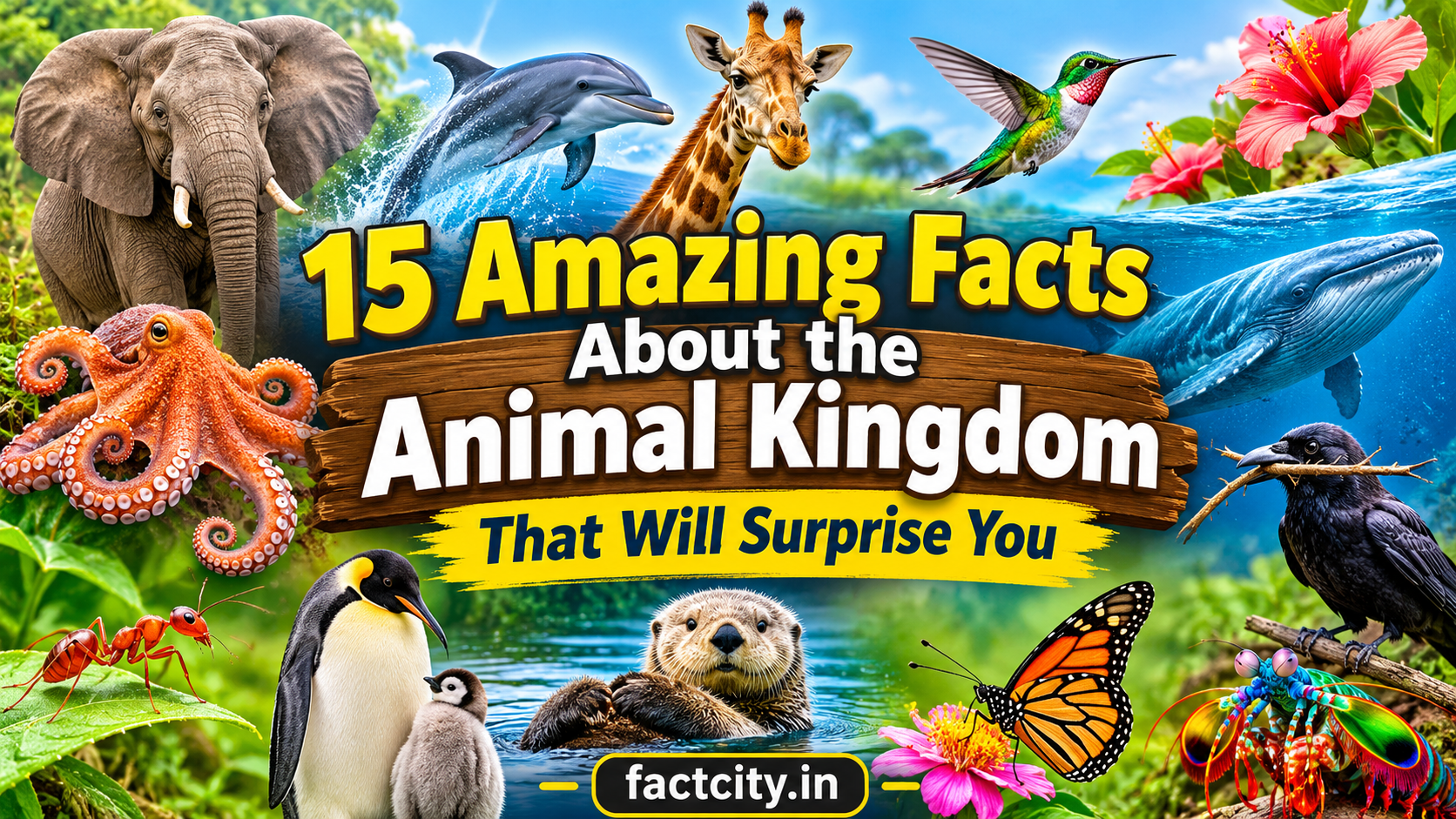
15 Amazing Facts About the Animal Kingdom. The animal kingdom is full of incredible creatures, unusual behaviors, and natural abilities that are difficult to believe. From tiny insects that can lift objects many times their own body weight to enormous ocean animals that communicate across great distances, wildlife offers endless reasons to be curious. Every animal has unique characteristics that help it survive, find food, protect itself, and adapt to its surroundings. Some animals have extraordinary intelligence, while others possess physical abilities that seem almost impossible.
Although humans have studied wildlife for centuries, scientists continue to discover fascinating details about how animals live and interact with their environments. Many species have developed remarkable survival techniques, communication systems, and social behaviors that make them truly special. Learning about these animals not only satisfies our curiosity but also helps us understand why protecting nature and biodiversity is so important.
In this article, we will explore 15 amazing facts about the animal kingdom that reveal just how extraordinary wildlife can be. These interesting animal facts cover everything from elephants and dolphins to octopuses, birds, insects, and some of the smallest creatures on Earth.
1. Octopuses Have Three Hearts and Blue Blood
Octopuses are among the most fascinating creatures in the ocean, and their bodies have several unusual features. One of the most surprising facts about octopuses is that they have three hearts. Two hearts pump blood toward the gills, where oxygen enters the bloodstream, while the third heart circulates oxygen-rich blood throughout the rest of the body.
Another interesting feature is their blue blood. Unlike humans, whose blood uses iron-based hemoglobin to transport oxygen, octopuses have a copper-based protein called hemocyanin. This protein gives their blood a blue appearance and works particularly well in cold water with low oxygen availability. 15 Amazing Facts About the Animal Kingdom
Octopuses are also known for their intelligence and problem-solving abilities. They can open containers, navigate complicated spaces, and use objects as tools. Some species can even change their skin color and texture to blend into their surroundings. These abilities make octopuses some of the most unusual and intelligent invertebrates in the animal kingdom.
2. Elephants Can Recognize Themselves and Show Strong Emotions
Elephants are famous for their enormous size, but their intelligence and emotional behavior are equally impressive. These animals live in close family groups and develop strong relationships with other members of their herds. They communicate through sounds, body movements, touch, and even low-frequency calls that can travel over long distances.
One fascinating discovery is that elephants have demonstrated the ability to recognize themselves in mirrors. This behavior is considered an indication of self-awareness and has been observed in only a limited number of animal species.
Elephants also display behaviors that researchers associate with empathy and social bonding. They may touch and comfort distressed members of their group, remain close to injured companions, and show unusual interest in the remains of other elephants. Their strong memories help them remember locations, migration routes, and other animals they have encountered.
These qualities make elephants remarkable examples of intelligence and social cooperation in the natural world.
3. Dolphins Have Unique Whistles That Help Them Communicate
Dolphins are highly social marine mammals known for their intelligence, playful behavior, and advanced communication systems. One of their most interesting abilities is the use of signature whistles. Research suggests that individual bottlenose dolphins develop distinctive whistles that function somewhat like names.
These sounds help dolphins identify one another and maintain contact with members of their social groups. When separated, dolphins can use these whistles to communicate across the water.
Dolphins also use clicks and other sounds for echolocation. This natural ability allows them to detect objects, identify prey, and understand their surroundings by interpreting returning sound waves. Echolocation is especially useful in dark or cloudy underwater environments where visibility is limited.
Their ability to learn, cooperate, communicate, and solve problems makes dolphins some of the most remarkable animals living in the oceans.
4. Hummingbirds Can Fly Backward
Hummingbirds are among the smallest birds in the world, but they possess extraordinary flying abilities. Unlike most birds, which primarily move forward when flying, hummingbirds can also fly backward. They can hover in one position, move sideways, and quickly change direction while searching for nectar.
Their wings move extremely rapidly, creating the familiar buzzing sound associated with these tiny birds. Their unique shoulder joints allow their wings to rotate and produce lift during both the forward and backward parts of each wingbeat.
Hummingbirds have very high energy requirements because hovering and rapid movement consume large amounts of energy. They therefore need to feed frequently throughout the day. Flower nectar provides much of their energy, while small insects and spiders supply additional nutrients.
Their incredible flying skills demonstrate how evolution can produce highly specialized adaptations that help animals survive.
5. A Blue Whale Is the Largest Animal Ever Known to Have Lived
The blue whale holds the record as the largest known animal to have ever lived on Earth. These enormous marine mammals can grow to around 30 meters in length, and some individuals weigh more than 150 metric tons.
Despite their enormous size, blue whales mainly feed on tiny marine animals called krill. During feeding, they take in large amounts of seawater and filter the krill through special structures in their mouths known as baleen plates.
Another remarkable feature of blue whales is their communication system. They produce powerful low-frequency sounds that can travel considerable distances through the ocean. Scientists study these sounds to better understand whale behavior, movement, and communication.
Blue whales were heavily affected by commercial whaling during the twentieth century. Although international protections have helped their populations recover in some regions, they still face threats such as ship collisions, ocean noise, and environmental changes.
6. Ants Can Carry Objects Much Heavier Than Their Bodies
Ants may be extremely small, but their strength is impressive compared with their body size. Depending on the species, an ant can carry or pull objects many times heavier than itself. This remarkable ability is related to its small body structure and the way muscular forces work at different body sizes.
Ants are also known for their organized social systems. A colony usually contains different groups with specialized responsibilities, including workers, reproductive individuals, and sometimes soldiers. Each member contributes to the survival of the colony.
Some ant species farm fungi, while others protect aphids to collect the sugary liquid they produce. Certain species even create living bridges using their own bodies to help other ants cross gaps.
Their cooperation, strength, and ability to organize complex activities make ants one of the most successful groups of insects on the planet.
7. Crows Can Use Tools and Solve Complicated Problems
Crows are among the most intelligent birds in the animal kingdom. Scientists have discovered that certain crow species can use tools, solve puzzles, and remember people who have treated them differently.
New Caledonian crows are particularly famous for making tools from sticks and leaves to reach insects hidden inside tree holes. They can also modify materials to create tools that work more effectively.
Some experiments suggest that crows understand basic cause-and-effect relationships and can complete tasks involving multiple steps. They have also demonstrated impressive memory skills, allowing them to remember locations where they have hidden food.
Another fascinating characteristic is their social intelligence. Crows can recognize individual human faces and may communicate information about potential dangers to other members of their group.
These abilities show that intelligence in the animal kingdom is not limited to mammals.
8. Sea Otters Hold Hands While Sleeping
Sea otters are known for their adorable appearance, but their behavior is just as interesting. One of their most famous habits is holding hands while floating on their backs in the water. This behavior can help them stay close to one another and reduce the chances of drifting apart while resting.
Sea otters also use kelp forests as natural anchors. They may wrap themselves in kelp to remain in place while sleeping or resting.
Another remarkable fact is that sea otters use rocks and other hard objects as tools. They place shellfish on their stomachs and use stones to break open hard shells. This makes them one of the few marine mammals known for regular tool use.
Sea otters also play an important environmental role. By eating sea urchins, they help prevent these animals from destroying kelp forests. Healthy kelp forests provide food and shelter for many other marine species.
9. Giraffes Have Extremely Long Tongues
Giraffes are easily recognized by their unusually long necks and tall bodies, but their tongues are another interesting adaptation. A giraffe’s tongue can reach approximately 45 to 50 centimeters in length, helping it pull leaves from trees and reach vegetation that many other herbivores cannot access.
Their tongues are generally dark bluish-purple or blackish in color. Scientists have suggested that this pigmentation may help protect the tongue from prolonged exposure to sunlight while feeding, although its exact protective role is not completely established.
Giraffes also have specially adapted mouths and tough lips that help them feed on thorny plants, particularly acacia trees.
Their long necks are useful for reaching food and observing their surroundings. Despite their height, giraffes have only seven neck vertebrae, the same number found in most mammals, including humans. The difference is that each vertebra is much longer.
10. Axolotls Can Regrow Lost Body Parts
The axolotl is one of the most extraordinary amphibians in the world. Native to the lake system around Mexico City, this unusual animal is famous for its remarkable ability to regenerate damaged body parts.
Axolotls can regrow lost limbs, including bones, muscles, nerves, and other tissues. They can also repair certain parts of their spinal cord and have impressive regenerative abilities involving other organs.
Unlike most amphibians, which undergo a transformation from aquatic larvae into adult forms, axolotls generally retain their juvenile characteristics throughout their lives. They keep their external feathery gills and remain aquatic.
Scientists study axolotls to understand how regeneration works and whether similar biological processes could eventually contribute to advances in human medicine.
Unfortunately, wild axolotls are critically endangered because of habitat loss, pollution, invasive species, and changes to their natural environment. Protecting their remaining habitat is essential for their survival.
11. Penguins Can Recognize Their Partners by Their Voices
Penguins live in crowded colonies where thousands of birds may gather together. Finding a particular partner or chick in such a noisy environment can be challenging. However, many penguin species have developed special vocal communication abilities.
Individual penguins produce distinctive calls that help their partners and chicks recognize them. Even when separated within a large colony, adults can identify familiar voices and respond to them.
Emperor penguins are especially famous for their parenting behavior. During the harsh Antarctic winter, males incubate eggs on their feet beneath a special fold of skin while females travel to the ocean to find food.
Penguins also have thick feathers and layers of body fat that help them stay warm in extremely cold conditions. Their streamlined bodies and powerful flippers make them excellent swimmers, allowing them to move efficiently through icy waters.
12. Butterflies Taste With Their Feet
Butterflies have a fascinating sensory system that allows them to detect food using their feet. Their feet contain specialized chemical receptors that help them identify suitable plants and determine whether a surface is appropriate for laying eggs.
When a butterfly lands on a leaf or flower, it can detect chemical information through these receptors. This ability is particularly important for female butterflies because choosing the right plant can determine whether their caterpillars have enough food after hatching.
Butterflies also have other impressive adaptations. Their long, tube-like mouthparts, called proboscises, allow them to drink nectar from flowers. Their wings are covered in tiny scales that create beautiful colors and patterns.
These colors can serve several purposes, including attracting mates, warning predators, and helping butterflies blend into their surroundings.
13. Kangaroos Cannot Easily Walk Backward
Kangaroos are famous for their powerful hind legs and distinctive hopping movement. They are native to Australia and have evolved a body structure that makes jumping an efficient way to travel across open landscapes.
One interesting fact about kangaroos is that their large hind legs and strong tails make walking backward extremely difficult. Their long feet and muscular tails are better suited to forward movement and balance.
Kangaroos can travel impressive distances through repeated jumps, using their powerful leg muscles to move quickly while conserving energy at certain speeds.
Female kangaroos also have a special reproductive adaptation. Their babies, known as joeys, are born extremely small and continue developing inside their mother’s pouch. The pouch provides warmth, protection, and access to milk during early development.
This unusual reproductive system is one of the most recognizable features of marsupial mammals.
14. Sloths Can Hold Their Breath for a Surprisingly Long Time
Sloths are known for their slow movements and relaxed lifestyle. These mammals spend much of their time hanging upside down from tree branches in tropical forests of Central and South America.
One surprising ability of sloths is their capacity to hold their breath for an extended period. Some sloths can remain underwater for around 40 minutes by slowing their heart rate and conserving oxygen.
Their slow metabolism helps them survive on a diet consisting mainly of leaves, which provide relatively little energy. Because leaves are difficult to digest, food can take a long time to pass through their digestive systems.
Sloths also have long, curved claws that help them grip branches securely. Their fur supports a small ecosystem of organisms, including algae and insects, which can contribute to their camouflage.
Although they may appear helpless because of their slow movements, sloths are well adapted to life in the forest canopy.
15. The Mantis Shrimp Has One of the Most Powerful Strikes in the Ocean
The mantis shrimp is a small marine animal with abilities that seem almost unbelievable. Despite its relatively small size, certain species can deliver incredibly fast and powerful strikes using specialized front appendages.
These strikes can break the shells of crabs, snails, and other hard-shelled prey. The movement is so rapid that it can create cavitation bubbles in the surrounding water. When these bubbles collapse, they produce additional energy and a small shockwave.
Mantis shrimp are also famous for their unusual vision. Their eyes contain many types of light-sensitive receptors and can detect forms of light, including ultraviolet and polarized light, that humans cannot see in the same way.
Although their visual system differs greatly from ours, scientists are still studying how mantis shrimp process the complex information they receive.
Their powerful attacks and extraordinary sensory abilities make them some of the most unusual hunters in marine environments.
Why Is the Animal Kingdom So Important?
The animal kingdom plays an essential role in maintaining the balance of ecosystems around the world. Every species has a place in nature, whether it helps pollinate plants, control insect populations, spread seeds, maintain healthy forests, or support marine food chains.
For example, bees and butterflies help many plants reproduce through pollination. Predators such as wolves help regulate populations of other animals, while elephants can influence the structure of forests and grasslands through their feeding and movement patterns. Marine animals also support ocean ecosystems through their roles in food webs and nutrient cycling.
Unfortunately, many animal species are facing serious challenges. Deforestation, climate change, pollution, illegal wildlife trade, overfishing, and habitat destruction are putting pressure on wildlife populations. Some species have already disappeared, while others are becoming increasingly rare.
Protecting animals requires cooperation between governments, conservation organizations, local communities, scientists, and ordinary people. Supporting wildlife protection programs, reducing plastic waste, respecting natural habitats, and choosing sustainable products are some practical ways to contribute. best-key-person-life-insurance-for-small-businesses
Understanding the importance of animals is the first step toward protecting the incredible biodiversity that makes our planet unique.
Conclusion
The animal kingdom is filled with extraordinary creatures that continue to surprise scientists and nature lovers. From octopuses with three hearts to hummingbirds that can fly backward, every species has special characteristics that help it survive in its environment. Elephants demonstrate remarkable social intelligence, crows use tools, axolotls regenerate lost body parts, and mantis shrimp possess some of the fastest strikes in the ocean.
These 15 amazing facts about the animal kingdom show that nature is far more diverse and interesting than we often imagine. Even familiar animals can have abilities and behaviors that are hard to believe.
As scientists continue exploring wildlife, new discoveries will undoubtedly change what we know about animals and their environments. By learning about different species and supporting conservation efforts, we can help protect the natural world for future generations.