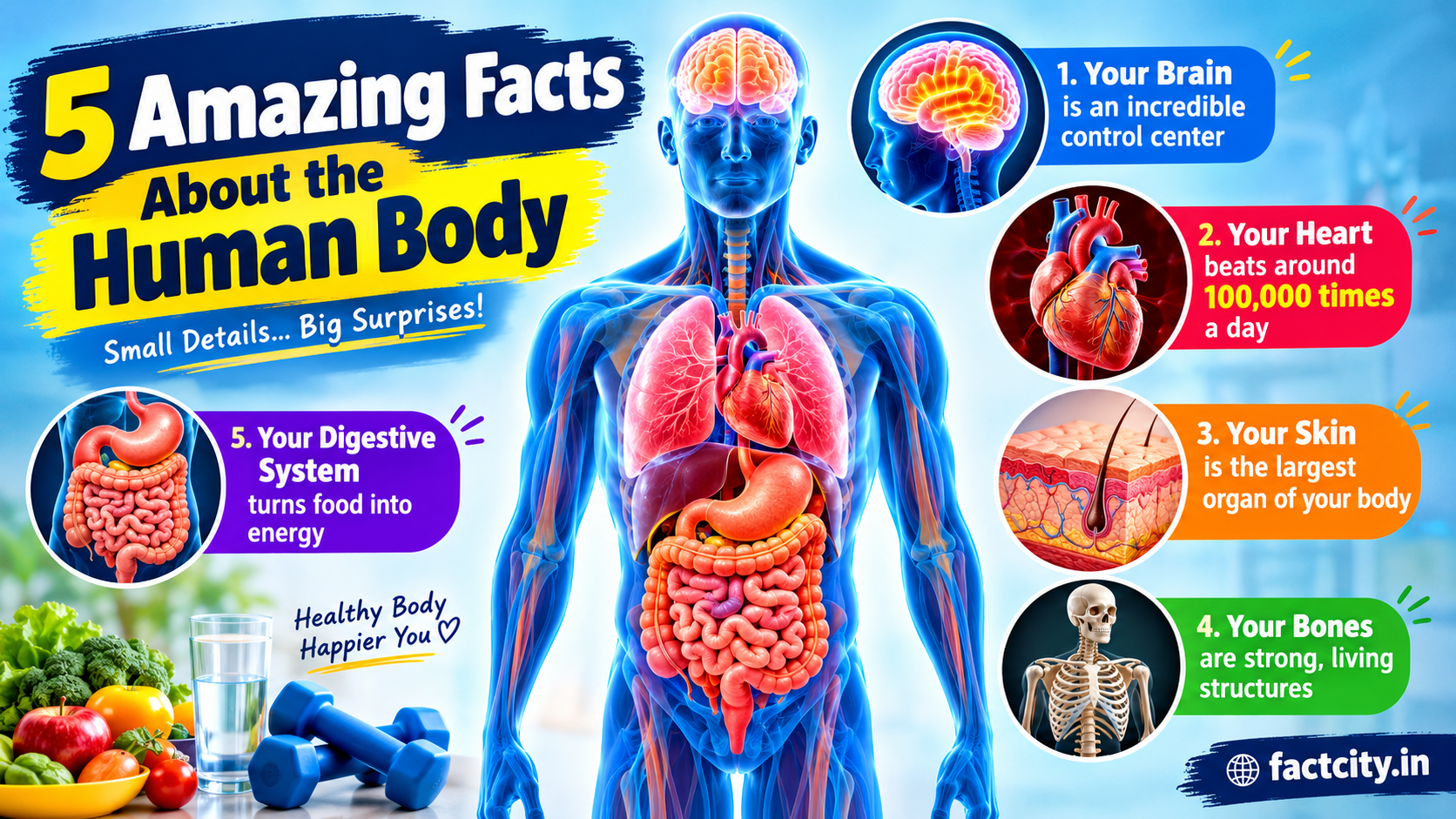
5 Amazing Facts About the Human The human body is one of the most amazing and complicated systems in the world. Every day it does thousands of things to keep us alive, breathing, moving, thinking, and digesting food. Many of these processes occur automatically, without us even noticing them. All the parts play a significant role, from how our heart pumps blood throughout our body to how our brain controls our actions.
Many interesting facts about the human body can help us understand how it works. Some facts may seem incredible at first glance, but science accounts for them. In this article, we will discuss 5 amazing facts about the human body: how the brain processes information, how the heart works, how the skin protects us, how bones support our bodies, and how the digestive system provides energy.
The human brain is an amazing control center
The brain is one of the most interesting organs in the human body. It controls our thoughts, memories, emotions, movements, and a lot of automatic functions like breathing and regulating body temperature. It also allows us to understand what we see, hear, smell, taste, and touch.
The average adult human brain weighs about 1.3 to 1.4 kilograms, but weight and size can differ from person to person. It is small compared to the whole body, but it contains billions of nerve cells called neurones. Neurons talk to each other by sending messages back and forth using electrical and chemical signals so the brain can process information and coordinate different activities.
One of the most amazing facts about the brain is that it is active even while we sleep. During sleep, the brain continues to regulate essential functions and play an important role in memory, learning, and emotional processing. Sleep is also important for healthy brain function and helps the body to recuperate.
Neuroplasticity is how the brain can change based on new experiences. When you learn a new language, play a musical instrument, or develop a new skill, connections between neurons can change and build strength. This capacity enables people to learn throughout their lives.
The brain is also responsible for many automatic actions. The brain helps you regulate breathing automatically so that you don’t have to remind yourself to breathe every second of the day. But you can also control your breathing voluntarily for short periods. These abilities make the human brain a remarkable organ that lets us learn, communicate, solve problems, and experience the world around us.
Your Heart Pounds 100,000 Times a Day
The heart is a powerful muscular pump, working constantly to keep blood flowing around the body. It provides oxygen and nutrients to the tissues and helps remove carbon dioxide and other waste products from the tissues. One of the most amazing facts about the human body is that an average adult’s heart will usually beat about 100,000 times in a day, though the exact number depends on heart rate, activity, age, and other factors. what-is-love-in-a-relationship
There are four chambers in the heart; the top two are the atria and the bottom two are the ventricles. These chambers work together to pump blood through the lungs and around the rest of the body. The heart has valves to direct the blood in the proper direction. When you exercise, your muscles demand more oxygen and energy. This causes your heart to speed up and pump more blood. Normally, your heart rate slows down when you are resting. This is because your body needs less oxygen than when you are physically active.
Another interesting fact is that the heart possesses its own electrical conduction system. Electrical signals coordinate the timing of each heartbeat so that the heart chambers contract in an ordered way. The system is designed to keep a steady beat. Taking care of your heart is a long-term health requirement. Regular physical activity, a healthy diet, adequate sleep, not using tobacco, and stress management can help maintain good cardiovascular health. Your heart may be silent in the background, but its constant activity is vital for keeping you alive.
The largest organ of the body is the skin
When people think of important organs in the body, they usually think of the brain, heart, and lungs. But the skin is an important organ also. In adults, the skin covers about 1.5 to 2 square meters, depending on body size, and is generally regarded as the largest organ in the body. The skin does more than cover the body. It acts as a barrier against many damaging environmental influences, including bacteria, some chemicals, and mechanical injury. It also helps to prevent excess water loss and helps to regulate the body temperature.
The skin consists of three main layers: the epidermis, the dermis and the hypodermis. The epidermis is the outer protective layer. In the dermis, there are blood vessels, nerves, sweat glands, hair follicles, etc. Beneath the skin is the hypodermis, composed of connective tissue and varying amounts of fat that help insulate and cushion the body. Another amazing fact about human skin is that it is constantly renewing itself. The old skin cells are gradually shed and replaced by new ones. This renewal process assists in preserving the protective outer barrier, but its speed depends on age, health and other factors.
The skin is also our way of sensing the world through touch. Sensations like pressure, vibration, temperature and pain are detected by specialised nerve endings and receptors. These signals allow us to react to our surroundings and avoid possible injuries. The skin also has an important function of temperature regulation. Sweat is produced by sweat glands when your body gets too hot. Sweat also cools the skin when it evaporates. The blood vessels just under the skin can also open up and release more heat.
Proper sun protection, cleansing, hydration, and a healthy lifestyle can help to maintain the function and appearance of your skin.
Your Bones Are Strong, Living Structures
The human skeleton is the framework that supports the body, protects vital organs, and makes movement possible. In an adult, there are 206 bones. The number of bones can differ a bit because of normal anatomical differences. Here is an interesting fact about the human body. Bones are not dead things. They are living tissues with cells, blood vessels, and nerves. Bones are continuously being remodelled by breaking down old bone tissue and forming new tissue.
This process helps to maintain the strength of the bones and allows the skeleton to respond to changes in physical activity, age, hormones and nutritional needs. Bone growth and development are rapid during childhood and adolescence. As we get older, it is increasingly important to keep our bones healthy. Bones also shield some of the body’s most delicate organs. The skull protects the brain. The rib cage helps protect the heart and lungs. The vertebral column supports the body and encloses the spinal cord, which carries messages between the brain and the rest of the body.
Another important function of bones is the storage of minerals. They contain minerals such as calcium and phosphorus, which help to make them strong. The skeleton also has bone marrow. Many blood cells are made here. Bones are strong but can break if too much force is applied. They can also be weakened by some medical conditions. Eating a well-rounded diet with plenty of calcium and vitamin D, and getting regular weight-bearing exercise, can help you maintain good bone health. Your skeleton is much more than a set of hard structures. It is a living system that allows your body to function, supports movement, protects organs, and stores minerals.
Your Digestive System Converts Food to Energy
Food you eat provides your body with nutrients needed to grow, repair tissues, and carry out daily activities. But food cannot provide these benefits until the digestive system breaks it down into smaller substances that the body can absorb and use. The digestive system consists of the mouth, oesophagus, stomach, small intestine, large intestine and a number of supporting organs including the liver, pancreas and gallbladder. Digestion starts in the mouth. Your teeth break the food into smaller pieces, and your saliva moistens it and contains enzymes that start breaking down some carbohydrates. The food then moves down the oesophagus into the stomach.
Muscles in the stomach help to churn the food with digestive juices, including acid and enzymes. This helps to digest food and prepare it for further digestion. The partially digested material then moves into the small intestine, where most of the nutrients are absorbed. The inside of the small intestine is special and has millions of tiny finger-like projections called villi. These structures provide a larger surface area for nutrient absorption. These nutrients then enter the blood or the lymph and are carried to where they are needed.
The large intestine absorbs water and electrolytes from the material that remains. This helps to form stool. The gut microbiome, an assortment of beneficial microorganisms residing in the digestive tract, also aids in digestion and other health-related functions. Another interesting fact is that digestion is not just dependent on the stomach. The pancreas produces enzymes that aid in the digestion of carbohydrates, proteins, and fats. The liver produces bile, which assists the body in digesting and absorbing fats. The digestive system works through a series of coordinated processes that convert food into usable nutrients. A diet rich in fruits, vegetables, whole grains, and other healthy foods can support digestive health.
Why Should We Learn About the Human Body
Knowing what the human body does can help us make better health decisions. Each organ system has a specific role, but the systems also depend on each other. The brain sends messages to other organs; the heart pumps blood; the skin protects the body; the skeleton gives us support; the digestive system gives us the nutrients we need. These systems can work well with simple daily habits. It is important for your overall health that you eat a well-rounded diet, stay physically active, drink enough water, get enough sleep, and follow the appropriate medical advice.
Learning about the body can also help us to understand that many important processes happen automatically. Our body controls these activities with complex biological mechanisms, so we do not need to think about every heartbeat or every stage of digestion.
Summary
Here are 5 amazing facts about the human body that just show how amazing it is. The brain controls thoughts and movements. The heart pumps blood throughout the body for life. The skin protects the body. Bones support and strengthen the body. The digestive system breaks down food into useful nutrients.
These organs may have different jobs, but they all work together to keep us alive and well. Learning about them helps us develop an appreciation of the complexity of the body and the importance of healthy habits.
The more we learn about the human body, the more we understand that even the simplest daily actions require amazing biological processes. By learning about these processes and taking care of ourselves, we can increase our appreciation for the amazing system that makes human life possible.
Frequently Asked Questions (FAQs)
5 Mind-Blowing Facts About The Human Body
Five amazing facts are that the brain is active during sleep, the heart beats around 100,000 times a day on average, skin is the body’s largest organ, adult humans typically have 206 bones, and the digestive system breaks down food to allow the body to absorb nutrients.
What is the most incredible organ in the human body?
The brain is generally considered one of the most remarkable organs, controlling thinking, memory, movement, emotions, and many automatic body functions. But each organ plays a vital role in keeping us alive.
How many bones do we have in the human body?
The adult human body has 206 bones. Babies are born with more separate bones, which slowly fuse together as they grow up.
Can the human body heal itself?
Yes. The body can repair many forms of damage through processes like wound healing, skin renewal, and bone remodelling. However, tissue repair ability depends on tissue type, severity of injury, and overall health of the individual.
Why do we have to learn facts about the human body?
Learning facts about the human body helps us to understand how our organs work, to appreciate the importance of healthy habits, and to have a better understanding of basic human biology.