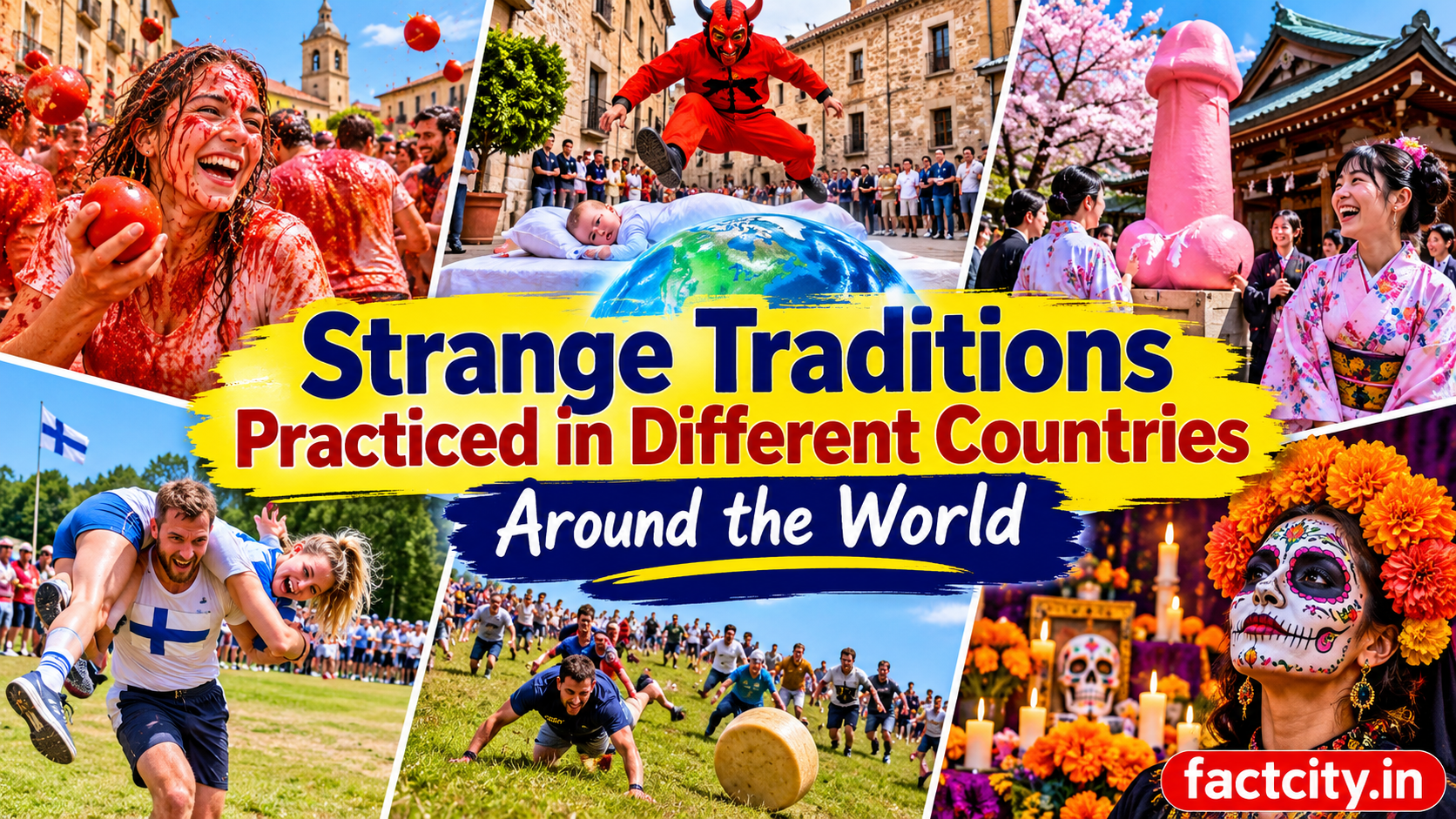
Strange Traditions Practiced in Different Countries. Every country has its own unique culture, history, and traditions that make it different from the rest of the world. While some customs are familiar to people everywhere, others may seem strange, surprising, or even unbelievable to visitors. These traditions often have deep historical roots and reflect the beliefs, values, and lifestyles of the communities that practice them. From unusual festivals and fascinating wedding customs to extraordinary celebrations involving food, music, and symbolic rituals, the world is full of cultural practices that attract curiosity.
Exploring strange traditions practiced in different countries is a wonderful way to understand how diverse human societies can be. What may appear unusual to outsiders often holds special meaning for the people who celebrate it. These customs are passed down through generations and help communities preserve their cultural identity. Here are some of the most fascinating traditions from different parts of the world that reveal the surprising and colorful side of human culture. Strange Traditions Practiced in Different Countries
1. La Tomatina – Spain
One of the most unusual festivals in the world takes place in the small Spanish town of Buñol. Known as La Tomatina, this annual event involves thousands of participants throwing ripe tomatoes at one another in a massive street battle. The festival usually takes place in August and attracts visitors from many countries who want to experience this unusual celebration.
The tradition began in the 1940s, although its exact origin remains uncertain. Some stories suggest it started during a local parade when young people began throwing tomatoes during a disagreement. Over time, the activity developed into an organized festival. Today, participants gather in the streets, and trucks deliver large quantities of tomatoes for the event. After the tomato fight, the streets are washed clean, and the town returns to normal. La Tomatina is a perfect example of how an unexpected activity can become an important cultural tradition.
2. Baby Jumping Festival – Spain
Another strange tradition practiced in Spain is the Baby Jumping Festival, known locally as El Colacho. This unusual event takes place in the village of Castrillo de Murcia, usually during the celebration of Corpus Christi.
During the ceremony, babies born during the previous year are placed on mattresses arranged along the streets. Men dressed as the devil then run and jump over the babies. The ritual is believed by participants to symbolize the removal of evil and the protection of children from misfortune.
Although the practice may look surprising to outsiders, it has been part of the village’s religious tradition for centuries. Families participate as part of their cultural and spiritual beliefs. The event is carefully organized, and it remains one of Spain’s most unusual traditional celebrations.
3. Kanamara Matsuri – Japan
Japan is famous for its festivals, many of which have unusual themes and colorful celebrations. One of the most distinctive is Kanamara Matsuri, also known as the Festival of the Steel Phallus, held in Kawasaki.
The festival is associated with fertility, childbirth, marital happiness, and protection from certain illnesses. During the celebration, participants carry large symbolic objects through the streets, while shops sell themed souvenirs and traditional foods.
The festival has historical connections to local religious beliefs and stories about protection and fertility. Today, it also raises awareness and supports charitable causes related to health. Kanamara Matsuri demonstrates how ancient beliefs can continue to influence modern celebrations in surprising ways.
4. Wife Carrying Competition – Finland
Finland hosts one of the world’s most unusual sporting traditions: the Wife Carrying World Championship. The event takes place in Sonkajärvi and attracts competitors from different countries.
Participants race through an obstacle course while carrying a partner, who may be carried in several different positions. The course includes barriers and a water obstacle, making the competition both challenging and entertaining.
Although the event is called wife carrying, competitors do not necessarily have to carry their spouses. The competition is open to partners who meet the event’s rules. The winning team receives a prize traditionally connected to the weight of the carried partner.
This unusual tradition combines humor, teamwork, physical strength, and community entertainment. It has become an internationally recognized event that celebrates Finland’s playful approach to competition.
5. Cheese Rolling Festival – England
In Gloucestershire, England, people gather every year for the famous Cooper’s Hill Cheese Rolling event. The tradition involves rolling a large wheel of cheese down a steep hill while participants chase after it.
The hill is extremely steep, and competitors often tumble or lose their balance while attempting to catch the cheese. The first person to reach the finish line is declared the winner, while the cheese itself is awarded as the prize.
The origins of the event are believed to go back several centuries, although its exact history is uncertain. Despite the risks involved, the tradition continues to attract adventurous participants and spectators.
Cheese rolling is a remarkable example of how a simple rural custom can become a famous international event.
6. Day of the Dead – Mexico
Mexico’s Day of the Dead, known as Día de los Muertos, is a colorful tradition dedicated to remembering loved ones who have passed away. It is celebrated mainly on November 1 and 2.
Families create special altars called ofrendas, decorated with photographs, candles, flowers, food, and personal belongings of the deceased. Bright orange marigold flowers are commonly used because they are believed to help guide spirits back to their families.
Rather than being only a sad occasion, the celebration combines remembrance with music, food, and joyful gatherings. People visit cemeteries, decorate graves, and share stories about family members who have died.
The tradition reflects the belief that death is a natural part of life and that memories keep loved ones connected to the living. It is one of the most meaningful cultural traditions practiced in Mexico.
7. Throwing Cinnamon at Single People – Denmark
In Denmark, an unusual birthday tradition is practiced among some people who reach the age of 25 without getting married. Friends may cover the birthday person with cinnamon as a playful celebration.
The tradition is sometimes connected to an older custom involving unmarried spice traders, who were supposedly given spices because they had spent their lives traveling rather than marrying.
When someone reaches the age of 30 while still unmarried, pepper may be used instead. The event is usually intended as friendly teasing among friends and family.
Although the tradition may seem strange to visitors, it is often treated as a humorous social activity rather than a serious judgment about marriage.
8. The Monkey Buffet Festival – Thailand
In Lopburi, Thailand, a special festival is organized to honor the local monkey population. Known as the Monkey Buffet Festival, the event features large displays of fruits, vegetables, and other foods prepared for monkeys.
The festival is held near ancient temples and attracts tourists who enjoy watching monkeys explore the food arrangements. The tradition is connected to local beliefs and stories about the Hindu deity Hanuman, who is associated with monkeys.
Organizers also promote the event as a way to celebrate the town’s identity and attract visitors. However, interactions with monkeys can sometimes create problems, so visitors are encouraged to follow local safety guidance.
This unusual festival highlights the relationship between wildlife, tourism, and cultural traditions.
9. Night of the Radishes – Mexico
Another fascinating Mexican tradition takes place in Oaxaca on December 23. Known as Noche de Rábanos, or Night of the Radishes, the event features elaborate sculptures carved from large radishes.
Artists create detailed scenes showing people, animals, religious figures, and traditional activities. The sculptures are displayed in public spaces, and visitors gather to admire the creativity involved.
The tradition developed from local Christmas market activities and eventually became an official annual celebration. Since radishes do not remain fresh for long, the sculptures are created shortly before the event.
This unique festival combines agriculture, art, and cultural storytelling in a way that is rarely seen elsewhere.
10. The Gurning Championship – England
The village of Egremont in Cumbria, England, is known for its unusual Gurning Championship. Participants compete by making the funniest or most distorted facial expressions.
Contestants often place their faces through a horse collar, known as a braffin, while attempting to create exaggerated expressions. Some participants use special techniques to make their faces look especially unusual.
The competition is part of the Egremont Crab Fair, a traditional event with a history dating back to the 13th century. Gurning has become one of its most recognizable attractions.
Although it may appear silly, the championship is a long-standing community tradition that celebrates humor and entertainment.
11. Famadihana – Madagascar
In Madagascar, some communities practice a tradition known as Famadihana, often translated as the turning of the bones. It is a ceremony in which families respectfully remove the remains of deceased relatives from family tombs, wrap them in fresh cloth, and celebrate their memory.
The event may include music, dancing, family gatherings, and the sharing of food. It is based on the belief that maintaining a connection with ancestors is an important part of family life.
Famadihana is not practiced by every Malagasy community, and customs vary between families and regions. For those who observe it, the ceremony represents love, respect, and the continuing bond between generations.
This tradition offers a powerful example of how different cultures understand death, family, and remembrance.
12. Polterabend – Germany
Germany has a traditional pre-wedding celebration called Polterabend. During this event, friends and family gather to break porcelain dishes outside the couple’s home or at a celebration venue.
The couple then cleans up the broken pieces together. The activity symbolizes teamwork and the idea that they will face challenges together throughout married life.
The tradition is usually held shortly before the wedding and is often accompanied by food, drinks, and social gatherings. Glass is generally avoided because the custom traditionally focuses on breaking porcelain.
Polterabend is a memorable example of how an unusual activity can carry a positive message about marriage and cooperation.
13. Setsubun Bean-Throwing Festival – Japan
Japan celebrates Setsubun in early February to mark the seasonal transition from winter toward spring. One of its most recognizable customs involves throwing roasted soybeans to drive away bad luck and welcome good fortune.
During the ritual, people often shout phrases meaning “demons out, good fortune in.” In many households, one family member wears a demon mask while others throw beans at them.
Some people also eat a number of beans corresponding to their age, believing this will bring good health and happiness.
The tradition is connected to older beliefs about cleansing homes and protecting families from misfortune. It remains a popular seasonal celebration across Japan.
14. Boryeong Mud Festival – South Korea
South Korea’s Boryeong Mud Festival is a modern tradition that has become internationally popular. Held in the coastal city of Boryeong, the festival features mud wrestling, mud slides, mud pools, and various outdoor activities.
The event originally developed as a way to promote cosmetics made from local mud, which is marketed for its mineral content. It later grew into a large summer festival attracting both local residents and international tourists.
Participants enjoy covering themselves in mud while taking part in games and entertainment. The festival combines tourism, recreation, and local promotion in an unusual but memorable way. secret-places-around-the-world-with-fascinating
Conclusion
The strange traditions practiced in different countries around the world show how diverse and creative human culture can be. From chasing cheese down a hill in England to honoring ancestors in Madagascar, these customs reveal the different ways communities celebrate life, remember the past, and strengthen social connections.
Although some traditions may appear unusual at first, understanding their history and meaning helps us appreciate the people who continue to practice them. Many customs are connected to ancient beliefs, local stories, seasonal changes, or important family values.
These fascinating traditions remind us that culture is not simply about food, clothing, or language. It is also about the unique activities and celebrations that bring people together. Exploring unusual customs around the world allows us to discover new perspectives, respect cultural differences, and appreciate the remarkable diversity of human traditions.