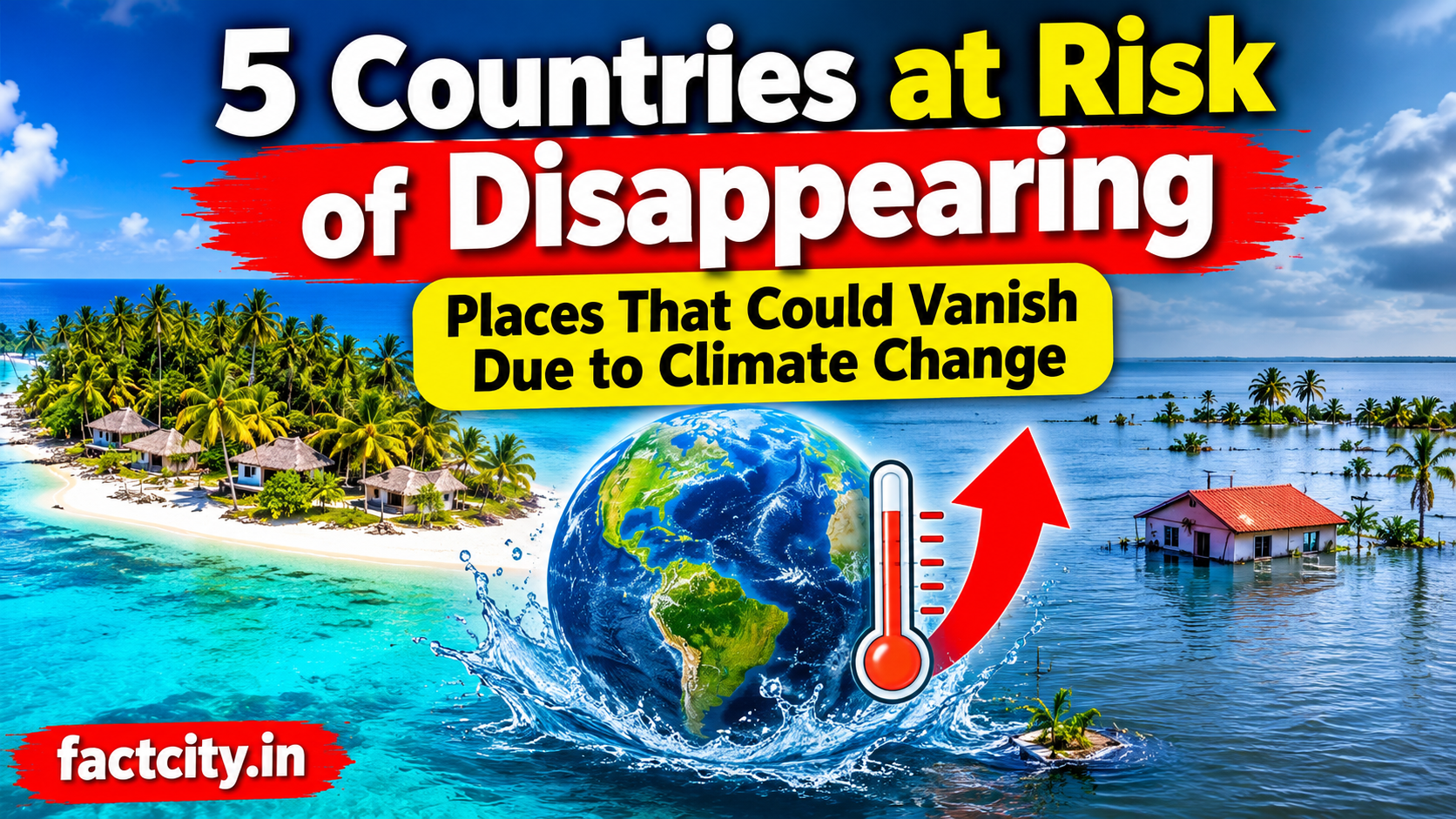
5 Countries at Risk of Disappearing: Imagine living in a country where the land beneath your feet could slowly disappear because of rising sea levels. For millions of people around the world, this is not just a frightening thought but a real concern. Climate change is affecting the planet in many ways, including rising temperatures, melting glaciers, stronger coastal flooding, and changing weather patterns. One of its most serious consequences is the threat it poses to low-lying countries and island nations.
Some countries are especially vulnerable because much of their land is only a few metres above sea level. As oceans continue to rise, these places face increasing risks of coastal erosion, saltwater entering freshwater supplies, damaged homes, and disappearing beaches. In some areas, flooding is already making everyday life more difficult for local communities.
The idea of countries disappearing may sound unbelievable, but scientists and climate experts have warned that certain low-lying nations could lose significant amounts of land or become increasingly difficult to inhabit if climate change continues. This does not mean that entire countries will suddenly sink beneath the ocean. Instead, the danger is gradual and can affect homes, farmland, drinking water, infrastructure, and the future of entire communities.
Here are five countries at risk of disappearing or becoming increasingly uninhabitable because of rising sea levels and climate change.
1. Maldives: A Beautiful Island Nation Facing a Rising Ocean
The Maldives is one of the most beautiful island countries in the world. Located in the Indian Ocean, southwest of Sri Lanka and India, it is famous for its crystal-clear water, white sandy beaches, colourful coral reefs, and luxury resorts. Every year, millions of visitors travel to the Maldives to enjoy its tropical beauty. However, behind this attractive destination lies a serious environmental challenge. 5 Countries at Risk of Disappearing
The Maldives consists of around 1,200 islands grouped into 26 natural atolls. Most of its islands are extremely low above sea level, making the country particularly vulnerable to rising oceans. Even a relatively small increase in sea level can create serious problems for its coastal communities. Higher tides and storm surges can flood residential areas, damage roads, and threaten important infrastructure.
One of the biggest concerns is the loss of freshwater. Many Maldivian islands depend on groundwater and rainwater for drinking supplies. When seawater enters underground freshwater sources, it can make the water unsuitable for everyday use. Saltwater can also damage agricultural land and affect the natural environment.
The government has already introduced different measures to protect vulnerable communities, including coastal protection projects, land reclamation, and the development of higher and more resilient urban areas. However, protecting every island is a difficult and expensive task.
The Maldives is not expected to disappear overnight, but rising sea levels could make some islands increasingly difficult to inhabit in the coming decades. Its future depends on effective climate action, international support, and long-term environmental planning.
2. Tuvalu: One of the World’s Most Vulnerable Island Countries
Tuvalu is a small island nation located in the Pacific Ocean, between Australia and Hawaii. It is one of the world’s least populated countries and consists of nine islands and atolls. Although Tuvalu is known for its peaceful environment and beautiful tropical surroundings, it faces one of the most serious threats from rising sea levels.
Much of Tuvalu’s land is only a few metres above the ocean. This makes the country highly vulnerable to coastal flooding, powerful waves, and storm surges. When seawater moves inland, it can damage homes, roads, gardens, and other important facilities. The problem becomes even more serious when flooding happens repeatedly.
Another major challenge is the shortage of freshwater. Many people depend on rainwater collected in storage tanks because groundwater supplies can become contaminated by seawater. When unusually dry weather occurs, communities may struggle to obtain enough clean drinking water.
Climate change is also affecting the natural environment around Tuvalu. Coral reefs protect many islands by reducing wave energy and supporting marine life. However, warmer ocean temperatures can cause coral bleaching, weakening these important natural ecosystems.
Tuvalu’s islands have an average elevation of less than three metres above sea level, highlighting how exposed the country is to rising oceans and coastal hazards. Pacific island nations are also expected to experience further sea-level rise in the coming decades.
Tuvalu is exploring ways to protect its national identity and future. Its government has raised important questions about how a country can preserve its sovereignty, culture, and national identity even if some of its territory becomes difficult to inhabit.
The biggest concern is not simply losing beaches or land. It is the possibility that future generations may struggle to live in the same places where their families have lived for centuries.
3. Kiribati: A Country Surrounded by the Pacific Ocean
Kiribati is another Pacific island nation facing serious challenges from climate change. It consists of 33 islands and atolls spread across a huge area of the central Pacific Ocean. Its remote location, beautiful lagoons, and traditional island communities make it a unique country, but its low elevation creates significant environmental risks.
Most of Kiribati’s islands are narrow strips of land surrounded by the ocean. In some places, communities live very close to the shoreline, leaving little natural space between homes and the water. As sea levels rise, coastal erosion and flooding can threaten settlements, roads, and essential services.
Freshwater security is one of the country’s biggest problems. Many communities rely on underground freshwater lenses, which are thin layers of freshwater floating above denser seawater. When seawater enters these underground supplies, the water can become too salty for drinking and farming.
Kiribati also faces challenges related to food production. Saltwater entering the soil can damage crops such as coconut trees and other plants that support traditional diets. Changes in rainfall patterns can make the situation even more difficult for people who depend on local natural resources.
Climate research has warned that Pacific island nations, including Kiribati and Tuvalu, are expected to experience additional sea-level rise over the coming decades. Increasing high-tide flooding could create further difficulties for people living in low-lying coastal areas.
The government of Kiribati has been considering different ways to prepare for future climate challenges, including improving infrastructure, strengthening coastal protection, and supporting international climate discussions.
Kiribati’s situation shows that rising sea levels are not only an environmental problem. They can also affect food supplies, public health, education, employment, and the future of an entire population.
4. Marshall Islands: A Nation Living Close to the Ocean
The Marshall Islands is located in the central Pacific Ocean and consist of 29 atolls and five individual islands. It is famous for its beautiful lagoons, coral reefs, and tropical marine environment. However, its geographical location also makes it one of the countries most exposed to rising sea levels.
Many islands in the Marshall Islands are extremely narrow and have limited land available for housing, farming, and infrastructure. In some communities, the ocean is visible from both sides of the island. This means that even moderate coastal flooding can affect a large part of the available land.
Rising sea levels increase the risk of high-tide flooding, coastal erosion, and storm damage. When seawater reaches residential areas, it can damage buildings, roads, electricity systems, and other essential facilities. Repeated flooding can also affect local businesses and make daily life more difficult.
Another major concern is the contamination of freshwater resources. Since many islands have limited natural freshwater supplies, seawater entering underground sources can create serious problems for drinking water and agriculture.
The Marshall Islands also depend heavily on their surrounding marine environment. Fishing and ocean-related activities are important sources of food, employment, and income. Climate change, warmer ocean temperatures, and damage to coral reef ecosystems can threaten these resources.
The country is working on climate adaptation through coastal protection, improved infrastructure, and international cooperation. However, these projects require substantial financial resources and long-term planning.
For the Marshall Islands, the future is about more than protecting land from water. It is also about protecting communities, traditions, cultural heritage, and the right of future generations to continue living in their homeland.
5. Federated States of Micronesia: Protecting Islands From Climate Change
The Federated States of Micronesia is a Pacific island nation made up of four states: Yap, Chuuk, Pohnpei, and Kosrae. It contains hundreds of islands spread across a large area of the western Pacific Ocean. Its natural beauty includes tropical forests, coral reefs, lagoons, and traditional coastal communities.
Although some islands in Micronesia have higher mountainous interiors, many coastal settlements and smaller low-lying islands are vulnerable to rising sea levels. This difference is important because the entire country does not face the same level of risk. Low-lying coastal areas are particularly exposed to flooding, erosion, and storm surges.
As sea levels rise, waves can reach further inland and gradually damage coastal land. Homes, roads, schools, and other facilities located close to the shoreline may face increasing risks. Communities living on smaller islands can have fewer options for relocating buildings or finding alternative sources of freshwater.
Climate change can also affect coral reefs, which are essential to the country’s marine environment. Coral reefs provide habitats for fish, support tourism, and help protect coastlines from powerful waves. Warmer ocean temperatures and ocean acidification can weaken these ecosystems.
Freshwater is another important concern. Changes in rainfall patterns, droughts, and saltwater intrusion can affect water supplies in vulnerable areas. This can create difficulties for households, farming, and local businesses.
Small island nations face interconnected risks, including coastal flooding, water insecurity, damage to settlements, economic losses, and reduced habitability. These challenges can become more serious when several environmental problems occur together.
Micronesia is taking part in regional and international climate efforts to improve resilience and protect its natural resources. Coastal management, better infrastructure, conservation, and improved disaster preparedness are important parts of preparing for future conditions.
The country’s future is not necessarily about the disappearance of every island. Instead, the main concern is whether vulnerable coastal communities will continue to have safe places to live, reliable drinking water, and opportunities to maintain their traditional way of life.
Why Are These Countries at Risk of Disappearing?
The biggest reason these countries face such serious threats is global climate change. Human activities, including burning coal, oil, and natural gas, release greenhouse gases into the atmosphere. These gases trap heat and increase the planet’s average temperature.
As global temperatures rise, glaciers and ice sheets lose more ice, adding water to the oceans. At the same time, warmer seawater expands, contributing to rising sea levels. These changes create additional pressure on countries with low-lying coastal areas and small islands.
There are several major reasons why these countries are especially vulnerable.
1. Rising Sea Levels: Higher ocean levels increase the risk of coastal flooding and can gradually reduce the amount of safe land available for communities.
2. Coastal Erosion: Strong waves and storms can remove sand and soil from shorelines, damaging beaches and reducing the size of vulnerable coastal areas.
3. Saltwater Contamination: Seawater can enter underground freshwater supplies and agricultural land, making it difficult to obtain clean drinking water and grow food.
4. Stronger Coastal Flooding: High tides, storm surges, and extreme weather events can cause repeated flooding, damaging homes and important infrastructure.
5. Damage to Coral Reefs: Coral reefs provide natural protection against waves and support marine ecosystems. Ocean warming and acidification can weaken these important natural barriers.
Can These Countries Really Disappear Completely?
When people hear that a country could disappear, they often imagine an entire nation suddenly sinking beneath the ocean. However, the actual situation is more complicated.
Rising sea levels do not mean that every island will automatically disappear. Some islands can change their shape, move sediment, or maintain their land area under certain environmental conditions. However, even when land remains above water, repeated flooding and saltwater contamination can make it increasingly difficult for people to live there.
For example, an island might still exist geographically but no longer provide enough clean drinking water, safe housing, or agricultural land for its population. In such circumstances, people may have to move to safer locations.
There is also an important legal question. If a country loses much of its habitable territory, what happens to its government, national identity, citizenship, and internationally recognised maritime boundaries?
These questions show that climate change is not only an environmental challenge but also a political, social, and humanitarian issue.
What Can Be Done to Protect These Countries?
Although the threat is serious, there are several ways to reduce the damage caused by climate change. Governments, scientists, environmental organisations, and international communities are working on different solutions to protect vulnerable countries.
Building Coastal Protection: Sea walls, improved drainage systems, and other coastal protection structures can help reduce flooding and protect important settlements.
Restoring Coral Reefs: Healthy coral reefs act as natural barriers against waves and support marine life. Protecting these ecosystems can improve the resilience of island communities.
Developing Higher Land Areas: Some countries are exploring land reclamation and elevated infrastructure to create safer places for homes, hospitals, schools, and businesses.
Protecting Freshwater Supplies: Better rainwater collection systems, water storage facilities, and improved water management can help communities maintain access to clean drinking water.
Reducing Greenhouse Gas Emissions: Countries around the world need to reduce emissions by developing renewable energy, improving energy efficiency, and protecting forests.
Supporting Vulnerable Communities: International financial assistance, climate adaptation projects, education, and disaster preparedness can help small island nations deal with environmental changes. countries-with-the-most-unesco-world-heritage-sites
Conclusion
The five countries at risk of disappearing discussed in this article show how seriously climate change can affect human life. The Maldives, Tuvalu, Kiribati, the Marshall Islands, and the Federated States of Micronesia all face different challenges, but their low-lying islands and vulnerable coastal communities make rising sea levels a major concern.
For the people living in these countries, the threat is not simply about losing beautiful beaches or small pieces of land. It is about protecting their homes, drinking water, food supplies, traditions, and national identities. Some communities may eventually need to relocate if their surroundings become unsafe or unsuitable for living.
However, these countries are not helpless. Climate adaptation, international cooperation, environmental protection, and reductions in greenhouse gas emissions can help limit future damage.