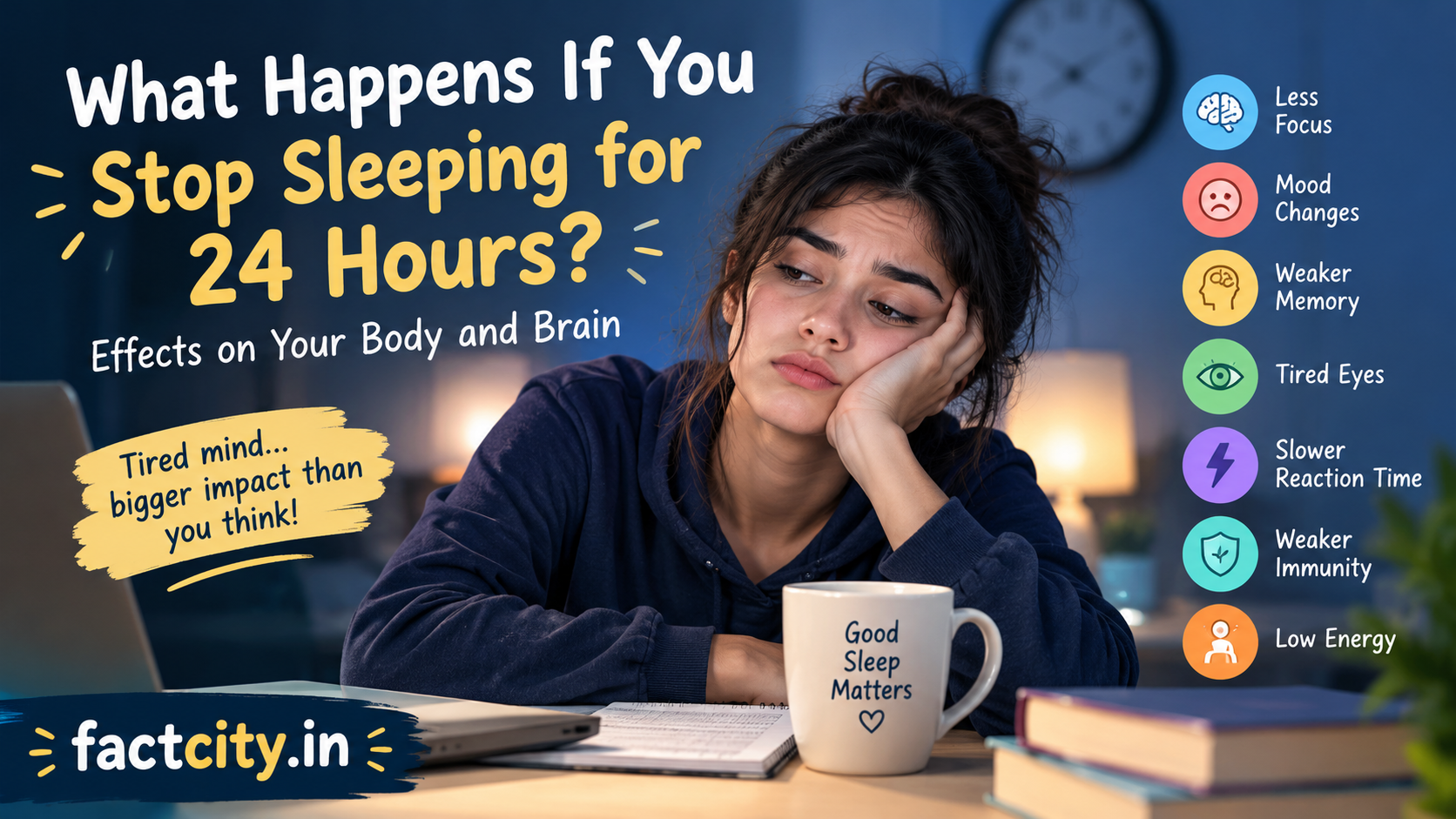
What Happens If You Stop Sleeping for 24 Hours? Have you ever stayed awake all night because of work, exams, gaming, or simply scrolling through your phone? At first, missing a few hours of sleep might not seem like a big deal. You may even feel perfectly fine in the morning. But what happens when you go an entire 24 hours without sleeping?
Sleep is something our bodies need every day. It gives the brain time to rest, helps the body recover, and keeps us ready for the next day. When you skip a whole night of sleep, you may notice changes in your mood, energy, memory, and ability to concentrate. Some effects are easy to notice, while others can affect your performance without you realizing it. Let’s take a closer look at what happens to your body and brain after 24 hours without sleep.
1. Your Brain Starts Feeling Tired
One of the first things you may notice after staying awake for 24 hours is that your brain doesn’t work as quickly as usual. Simple tasks can suddenly feel difficult, and concentrating on something for more than a few minutes may become a challenge. For example, you might read the same sentence several times without understanding it properly. You may forget what you were about to do or lose track of a conversation. What Happens If You Stop Sleeping for 24 Hours?
This happens because your brain needs sleep to maintain attention and process information. Without enough rest, it becomes harder to think clearly and make quick decisions. You might believe you are working normally, but your performance could already be affected. That’s one reason staying awake all night is not always a good way to get more work done.
2. You May Become Irritated Over Small Things
Have you ever noticed that even a small problem can feel frustrating when you’re tired? A lack of sleep can make it harder to control your emotions. After 24 hours without sleep, you might become impatient, annoyed, or unusually sensitive. Something that would normally make you laugh may suddenly feel irritating. You may also find yourself reacting more strongly to ordinary situations.
This can affect your conversations with friends, family members, and coworkers. Sometimes, you may even regret what you said after getting some proper rest. Your brain needs sleep to support emotional balance. When you don’t get enough, handling stress and controlling your reactions can become more difficult.
3. Your Memory May Not Work as Well
Imagine studying all night for an exam, only to struggle to remember what you learned the next morning. This is one of the problems that can happen when you miss sleep. Sleep helps your brain organize and strengthen memories. When you don’t get enough of it, remembering information and learning new things can become harder.
You might forget small details, lose track of instructions, or have trouble recalling something you knew just a few hours earlier. This is why studying throughout the night isn’t always as helpful as it seems. Spending more time with your books does not necessarily mean you’ll remember more information. Getting enough sleep before an exam can help you feel more alert and make it easier to recall what you have studied.
4. Your Eyes Feel Heavy, and You Keep Yawning
After staying awake for an entire day and night, your eyes may begin to feel heavy. You might yawn repeatedly, blink more often, or struggle to keep your eyes open while reading or watching something. If you have also spent hours looking at a phone or computer screen, your eyes may feel dry or uncomfortable.
At this point, your body is giving you a clear signal that it needs rest. You might try washing your face, walking around, or drinking coffee to feel more awake, but these tricks cannot replace sleep. The longer you ignore your body’s need for rest, the harder it may become to stay alert.
5. Your Reaction Time Becomes Slower
This is one of the most important effects of going without sleep for 24 hours. When you’re well-rested, your brain can usually respond quickly to things happening around you. After a sleepless night, that response may become slower. You might take longer to notice a sudden change, make a decision, or react to something unexpected. Even if you don’t feel extremely tired, your ability to respond quickly may be reduced.
This can become dangerous when driving, riding a motorcycle in traffic, or operating machinery. Another problem is microsleep. This happens when your brain briefly falls asleep for a few seconds without you fully realizing it. You may miss what is happening around you during that time. If you have been awake for 24 hours, don’t drive or perform tasks that require constant attention. Feeling awake is not the same as being safe.
6. You May Feel Hungrier Than Usual
Have you ever wanted to eat snacks late at night even when you weren’t particularly hungry? Sleep loss can affect the signals that help regulate appetite. After missing a full night’s sleep, you may find yourself craving sweets, chips, fast food, or other high-calorie snacks. You may also feel less motivated to prepare a proper meal.
This doesn’t happen to everyone in the same way, but research suggests that insufficient sleep can influence hunger, food preferences, and eating habits. If you’re exhausted, try to eat regular, balanced meals instead of relying entirely on sugary foods or energy drinks. Drinking enough water is also helpful, although neither food nor water can replace the benefits of sleep.
7. Your Body May Feel Weak and Exhausted
Even if you haven’t done much physical work, staying awake for 24 hours can leave you feeling drained. You may have less energy for exercise, walking, household chores, or other everyday activities. Your movements may feel slower, and tasks that normally seem easy may require more effort.
Sleep deprivation can also affect coordination and balance. This means physical activities that require accuracy or quick reactions may become more difficult. If you planned a demanding workout after staying awake all night, consider postponing it until you’ve rested. Pushing yourself when you’re extremely tired may increase the chance of mistakes or injuries. Your body needs time to recover, and sleep is an important part of that process.
8. Your Mood and Stress Levels May Change
Lack of sleep can make everyday stress feel more difficult to handle. Problems that usually seem manageable may suddenly feel overwhelming. You may find it harder to stay calm, solve problems, or think positively about a situation. Some people also feel more anxious or emotionally drained after a sleepless night.
This doesn’t mean that one night without sleep will automatically cause a mental health problem. However, sleep plays an important role in emotional well-being, and regularly missing it can make daily life more challenging. If you’ve had a sleepless night, try to avoid making major decisions while you’re exhausted. Give yourself time to rest before dealing with difficult conversations or stressful situations.
9. Your Body’s Natural Defenses Need Sleep
Your immune system works continuously to help protect you from infections and other health threats. Getting enough sleep supports its normal functioning. One night without sleep doesn’t automatically make you sick. However, repeatedly getting too little sleep may interfere with immune function and is associated with a greater risk of certain health problems.
Think of sleep as one part of your everyday health routine, alongside eating well, staying active, and managing stress. You don’t need to panic if you’ve missed a night of sleep. The important thing is to avoid turning it into a regular habit.
10. You May Experience Microsleep Without Knowing It
As your tiredness increases, staying awake can become surprisingly difficult. You might stare at your screen without taking anything in, lose track of a conversation, or struggle to remember what happened a few moments earlier. Sometimes, the brain briefly enters a sleep-like state even when you are trying to remain awake. These episodes are known as microsleeps.
They can last only a few seconds, but that is enough to create a dangerous situation if you’re driving or doing something that requires constant attention. Severe sleep deprivation can also cause confusion and unusual sensory experiences in some people. If you experience hallucinations, severe confusion, or other alarming symptoms, seek urgent medical advice.
Can You Recover After 24 Hours Without Sleep?
The good news is that most otherwise healthy adults can recover from one isolated sleepless night. However, recovery takes time, and you shouldn’t expect to feel completely normal immediately. The best thing you can do is give yourself an opportunity to get enough sleep. Make your bedroom comfortable, reduce unnecessary noise, and avoid spending hours on your phone when you’re trying to rest.
Try to return to a regular sleep schedule over the following days. Most adults need at least seven hours of sleep each night, and many feel their best with seven to nine hours. Drink water, eat normal balanced meals, and avoid using excessive caffeine to force yourself through the day. Caffeine may temporarily make you feel more alert, but it cannot fully restore the judgment and reaction time affected by sleep deprivation. Most importantly, avoid driving or doing dangerous work until you’ve recovered enough to be alert and safe.
Is Staying Awake for 24 Hours Dangerous?
Staying awake for 24 hours can be risky, mainly because it affects your attention, judgment, and reaction time. The danger becomes greater when you need to drive, operate equipment, or make important decisions. For most healthy adults, one sleepless night is unlikely to cause permanent damage. Many short-term effects improve after adequate rest.
However, regularly missing sleep is a different matter. Over time, poor sleep habits are associated with problems involving heart health, metabolism, mood, and concentration. There is no good reason to test how long your body can function without sleep. Your body needs regular rest, even when your daily schedule makes it difficult to find time for it.
Frequently Asked Questions
What happens if you don’t sleep for 24 hours?
You may experience tiredness, poor concentration, slower reactions, mood changes, memory problems, and increased sleepiness. The effects vary from person to person.
Is it okay to stay awake for 24 hours once?
An isolated sleepless night is unlikely to cause permanent damage in most healthy adults, but it can still affect your safety and performance. It’s best to avoid doing it intentionally.
Can coffee help after 24 hours without sleep?
Coffee may temporarily improve alertness, but it cannot fully reverse sleep deprivation. You should not rely on caffeine to make driving or other dangerous activities safe. body-language-signs-someone-likes-you-15-subtle-signs
How much sleep do adults need?
Most adults need at least seven hours of sleep per night. Many need between seven and nine hours to feel rested and function well.
Will sleeping longer the next day fix everything?
Getting enough sleep can help you recover, but one long sleep does not necessarily reverse every effect immediately. You may need several nights of consistent rest to feel fully back to normal.
Final Thoughts
So, what happens if you stop sleeping for 24 hours? You may start feeling tired, become more easily irritated, struggle to remember things, and find it difficult to concentrate. Your reaction time can also slow down, making everyday activities more dangerous than usual. You might think you can manage everything with a cup of coffee, an energy drink, or a little motivation. But your body still needs sleep to function properly.
If you’ve been awake all night, don’t be hard on yourself. Give your body time to rest, avoid dangerous activities, and return to a healthy sleep routine. A good night’s sleep can make a real difference in how you think, feel, and handle the challenges of the next day.