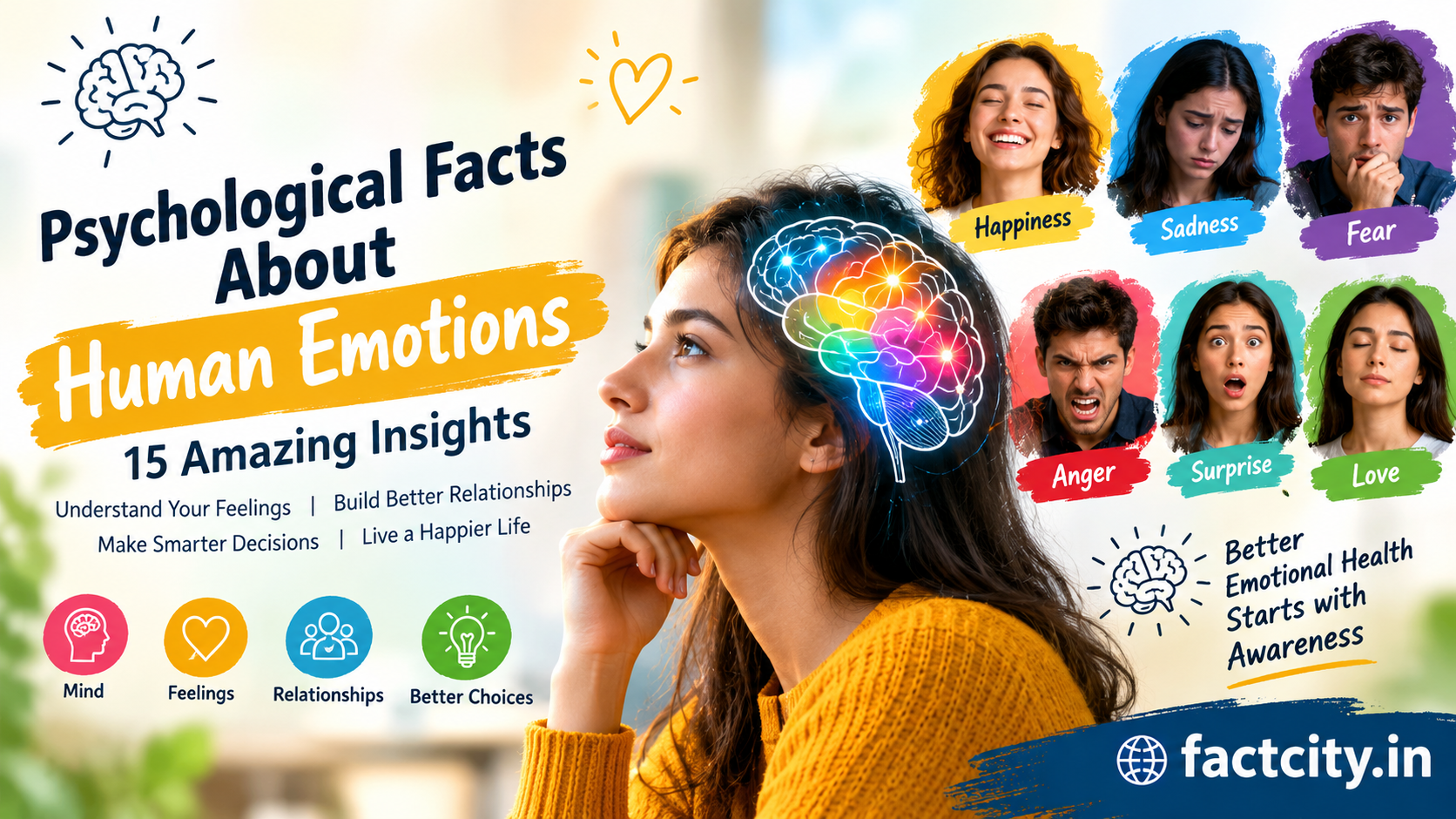
Psychological Facts About Human Emotions: Human emotions are an important part of everyday life. They influence how we think, make decisions, build relationships, communicate with others, and respond to different situations. Happiness can make an ordinary day feel special, while sadness may help us understand what truly matters to us. Fear can protect us from danger, and anger can sometimes alert us when something feels unfair. Although everyone experiences emotions, many people do not fully understand how these feelings work or why they sometimes seem difficult to control.
Learning psychological facts about human emotions can help us understand ourselves and other people more effectively. Psychology explores how emotions develop, how the brain processes feelings, and how emotional experiences influence human behavior. Some emotional reactions happen almost instantly, while others develop gradually through personal experiences, memories, and relationships. In this article, we will explore fascinating psychological facts about human emotions, explain why feelings affect our behavior, and discover how emotional awareness can improve everyday life.
What Are Human Emotions?
Human emotions are psychological and physical responses to experiences, thoughts, memories, and situations. Common emotions include happiness, sadness, anger, fear, surprise, disgust, and love. These feelings can influence our facial expressions, body language, heart rate, attention, and decisions. For example, receiving good news may make someone smile immediately, while facing an uncertain situation may cause nervousness or physical tension.
Emotions are not simply positive or negative experiences. Each emotion can provide useful information about what is happening around us or within us. Fear may encourage caution, sadness may signal a need for comfort, and happiness may strengthen our desire to repeat enjoyable experiences. Understanding emotions does not mean avoiding uncomfortable feelings. Instead, it means recognizing what we feel and learning how to respond in a healthy and thoughtful way.
1. Emotions Can Influence Your Decisions
One interesting psychological fact about human emotions is that feelings can strongly influence decision-making. People often believe they make choices using logic alone, but emotions frequently play an important role in evaluating options and determining what matters most. For example, a person who feels excited may accept an opportunity quickly, while someone experiencing anxiety may focus more on possible risks.
Emotions can sometimes lead to impulsive decisions, especially when feelings are intense. However, they can also help people make meaningful choices by identifying personal values, preferences, and priorities. The key is to balance emotional information with careful thinking. When making an important decision, taking a short pause and considering both feelings and facts can help you choose more wisely.
2. Your Brain Processes Emotions Quickly
The human brain can respond to emotionally important information very quickly. When you encounter a possible threat, your brain begins processing information that helps you determine whether you need to react. This can happen before you have consciously analyzed every detail of the situation.
For example, a sudden loud noise may make you jump before you discover what caused it. This quick response can help prepare your body to deal with potential danger. However, a rapid emotional reaction does not always mean that a situation is actually dangerous. Sometimes, an unexpected sound or unfamiliar situation simply triggers an automatic response that disappears once you understand what is happening.
3. Memories Are Often Connected to Emotions
Have you ever remembered a childhood experience simply because you smelled a familiar perfume, heard an old song, or visited a place from your past? This happens partly because memories can become associated with emotional experiences and sensory information.
Events connected with strong feelings may become especially memorable, although emotional memories are not always completely accurate. People can remember the general feeling of an experience while forgetting certain details or remembering them differently over time. This is one reason two people can experience the same event but recall it in different ways. Our emotions, attention, expectations, and later experiences can all influence how we remember the past.
4. Happiness Can Spread Through Social Interactions
Human beings are social creatures, and our emotions can influence the people around us. When someone smiles, laughs, or expresses enthusiasm, others may respond with similar expressions or feelings. Psychologists often study this process through the concept of emotional contagion, which describes how people can absorb or mirror emotional signals from others.
For example, spending time with a cheerful friend may improve your mood, while being around constant tension can sometimes leave you feeling stressed. However, emotional contagion does not affect everyone in the same way. Personal circumstances, emotional awareness, and individual differences can influence how strongly people respond to another person’s mood. Choosing supportive relationships and communicating openly can help create a healthier emotional environment.
5. Suppressing Emotions Does Not Always Make Them Disappear
Many people believe that ignoring uncomfortable feelings is the easiest way to deal with them. They may hide sadness, pretend they are not angry, or avoid talking about something that hurt them. Although temporarily setting aside an emotion can sometimes be useful, repeatedly suppressing feelings may make emotional experiences more difficult to understand.
Research on emotion regulation suggests that the effects of suppression depend on the situation and the person. Frequently hiding emotional expressions can sometimes increase stress or make communication more difficult. A healthier approach is to acknowledge what you feel without allowing the emotion to control your actions. Talking with a trusted person, writing down your thoughts, or taking time to reflect can help you understand your emotional needs.
6. Fear Can Protect You From Danger
Fear is one of the body’s natural protective responses. It prepares people to respond to situations that may involve danger by increasing alertness and triggering physical changes. Your heart may beat faster, your breathing may change, and your muscles may become ready for action.
Although fear can be useful, it does not always reflect the actual level of danger. Sometimes, people feel afraid of public speaking, meeting new people, or trying unfamiliar activities even when these situations are not physically dangerous. Understanding the difference between a realistic threat and an anxiety-driven response can help people manage fear more effectively. Gradual practice, preparation, and appropriate support may make challenging situations easier to handle.
7. Anger Can Reveal Unmet Needs
Anger is often considered a negative emotion, but it can provide useful information about a person’s experience. Someone may feel angry after being treated unfairly, having a boundary ignored, or experiencing repeated frustration. In these situations, anger can signal that something needs attention.
However, feeling angry and acting aggressively are not the same thing. People can experience anger without shouting, insulting others, or making harmful decisions. Taking a break, identifying the cause of the feeling, and explaining concerns calmly can help turn anger into constructive communication. Understanding what triggers your anger may also help you recognize patterns and respond more thoughtfully in the future.
8. Emotional Intelligence Helps You Understand Others
Emotional intelligence refers to abilities involved in recognizing, understanding, and managing emotions in yourself and responding effectively to emotions in other people. These skills can help people communicate more clearly, manage disagreements, and build stronger relationships.
For example, an emotionally aware person may notice when a friend seems uncomfortable and gently ask whether something is wrong instead of immediately assuming the reason. Emotional intelligence also involves recognizing your own reactions and understanding how they may affect others. These abilities can improve with practice through self-reflection, active listening, and honest communication.
9. Physical Health and Emotions Are Connected
Your physical condition can influence your emotional experiences. Lack of sleep, hunger, illness, and prolonged stress may affect mood, concentration, and patience. You might notice that a small problem feels much more frustrating when you are tired or have not eaten for several hours.
The relationship also works in the opposite direction. Persistent emotional stress can affect sleep, muscle tension, and other aspects of physical well-being. Regular physical activity, adequate rest, balanced meals, and relaxation can support emotional health, although they cannot eliminate every emotional difficulty. Paying attention to both physical and psychological needs can help you understand why your mood changes throughout the day.
10. People Express Emotions Differently
Not everyone shows emotions in the same way. One person may openly discuss sadness, while another becomes quiet and prefers time alone. Some people express excitement through energetic behavior, whereas others show happiness through a small smile or calm conversation.
These differences can be influenced by personality, upbringing, culture, social expectations, and personal experiences. Because people express emotions differently, it is not always possible to determine exactly how someone feels by looking at their face or body language. Asking respectful questions and listening carefully are generally more reliable ways to understand another person’s emotional experience than making assumptions.
11. Gratitude Can Support Emotional Well-Being
Gratitude involves recognizing and appreciating positive aspects of life, including supportive relationships, personal achievements, and ordinary experiences. Psychological research suggests that practicing gratitude may improve aspects of well-being for some people, although its effects vary from person to person.
One simple way to practice gratitude is to identify a few things you appreciate at the end of the day. These might include a helpful conversation, a satisfying meal, or progress toward a personal goal. Gratitude does not require pretending that life is perfect or ignoring genuine problems. Instead, it encourages people to notice positive experiences alongside the challenges they face.
12. Loneliness Can Affect Emotional Health
Humans generally need meaningful social connections, and prolonged loneliness can affect emotional well-being. A person may feel lonely even when surrounded by other people if they do not experience understanding, trust, or a sense of belonging.
Loneliness can encourage people to seek connection, but it may sometimes make social interactions feel more difficult. Taking small steps, such as contacting a trusted friend, joining a group activity, or participating in a shared interest, can help create opportunities for meaningful relationships. Building connections often takes time, so it is important to approach the process with patience rather than expecting immediate results.
13. Emotional Reactions Can Change With Experience
The way people respond emotionally to a situation can change over time. An experience that once caused intense nervousness may become easier after repeated practice. Similarly, people may learn healthier ways to respond to criticism, disappointment, or conflict as they gain experience and develop emotional awareness.
This ability to adapt is connected to learning, memory, and emotion regulation. For example, someone who once reacted to every disagreement with anger may eventually learn to pause, listen, and explain their perspective calmly. Change does not always happen quickly, and old patterns may return during stressful periods. Nevertheless, consistent practice can help people develop more useful emotional responses.
14. Music Can Influence Your Mood
Music can create powerful emotional experiences. A familiar song may bring back memories, a gentle melody may feel relaxing, and an energetic rhythm may increase excitement. These effects are connected to the way the brain processes sound, memory, expectations, and emotional meaning.
However, people do not respond to every song in the same way. A particular melody may make one person feel peaceful while reminding another person of a difficult experience. Personal associations, cultural background, and musical preferences all influence emotional responses. Listening to music that suits your needs can be one enjoyable way to relax, reflect, or create a positive atmosphere.
15. Naming Your Emotions Can Help You Manage Them
One practical psychological fact about human emotions is that identifying a feeling can make it easier to understand what is happening. Instead of saying that you simply feel bad, you might recognize that you are disappointed, embarrassed, worried, frustrated, or lonely.
This process is sometimes called emotional labeling. Research suggests that putting feelings into words may help some people regulate emotional responses. Once you identify an emotion, you can consider what triggered it and what response might be helpful. For example, recognizing that you feel overwhelmed may encourage you to take a break, organize your responsibilities, or ask for assistance rather than continuing to struggle without a plan.
How to Understand and Manage Your Emotions Better
Understanding emotions begins with paying attention to your thoughts, physical sensations, and reactions. When a strong feeling appears, give yourself a moment to recognize it before responding. Ask yourself what happened, what you are feeling, and whether there is a particular need behind the emotion. This simple habit can help you become more aware of your emotional patterns.
It is also helpful to develop healthy ways to manage difficult feelings. Regular exercise, sufficient sleep, meaningful social connections, relaxation techniques, and honest conversations may support emotional well-being. When a problem feels overwhelming, breaking it into smaller steps can make it easier to manage. If emotional difficulties persist, interfere with daily life, or feel impossible to handle alone, speaking with a qualified mental health professional may provide valuable support. 10-interesting-facts-about-the-brain
Remember that emotional health does not mean feeling happy all the time. Sadness, anger, fear, and disappointment are normal parts of human experience. The goal is to understand these feelings, respond to them constructively, and seek help when necessary.
Why Are Psychological Facts About Human Emotions Important?
Learning psychological facts about human emotions can help you understand your own behavior and develop greater empathy for others. When you recognize that emotions influence decisions, memories, communication, and relationships, it becomes easier to respond thoughtfully instead of reacting automatically.
This knowledge can also improve everyday interactions. You may become more patient when someone expresses feelings differently from you, more aware of your personal triggers, and better prepared to communicate your needs. Although psychology cannot explain every individual reaction with a single rule, it provides useful ideas for understanding common emotional experiences.
Conclusion
Psychological facts about human emotions reveal how closely feelings are connected to our thoughts, memories, physical health, and relationships. Emotions can influence decisions, shape memories, affect communication, and help us recognize important needs. They can sometimes create challenges, but they also provide valuable information about our experiences and priorities.
By developing emotional awareness, practicing healthy coping strategies, and learning to communicate openly, people can build stronger relationships and improve their understanding of themselves. The most important lesson is that every emotion deserves attention, but not every emotion needs to determine your actions. Learning to recognize and manage your feelings is a valuable step toward a more balanced and emotionally aware life.