Errors and Omissions Insurance Cost for Small Business: Running a small business involves many responsibilities, from managing customers and employees to delivering quality services and maintaining financial stability. However, even experienced business owners can make mistakes. A missed deadline, incorrect professional advice, inaccurate information, or an unexpected service error can sometimes lead to a customer complaint or expensive legal dispute. These situations can create serious financial problems, especially for small businesses that do not have large emergency funds. This is where Errors and Omissions (E&O) insurance becomes important. Understanding the Errors and Omissions Insurance Cost for Small Business can help business owners choose suitable protection without spending more than necessary.
E&O insurance is designed to protect professionals and service-based businesses against certain claims involving negligence, mistakes, inaccurate advice, or failure to deliver promised professional services. Although the cost depends on several factors, many small businesses can find coverage at a reasonable monthly price. Before purchasing a policy, it is important to understand average premiums, coverage limits, pricing factors, and ways to reduce insurance expenses.
What Is Errors and Omissions Insurance?
Errors and Omissions insurance, commonly known as E&O insurance, is a type of professional liability insurance that helps protect businesses when clients claim that a professional mistake or service-related failure caused them financial damage. It can cover eligible legal defense expenses, settlements, and judgments, depending on the policy terms and coverage limits.
For example, imagine that a marketing consultant creates an advertising strategy for a small company. Due to an error in the campaign planning, the client loses potential business and decides to take legal action. Even if the consultant believes the work was completed correctly, defending against the claim could involve significant legal expenses. An E&O insurance policy may help cover eligible costs associated with the claim.
This type of insurance is particularly useful for businesses that provide advice, professional services, technical solutions, or specialized expertise. It is not limited to large companies. Freelancers, independent contractors, consultants, and small professional firms may also benefit from this coverage.
How Much Does Errors and Omissions Insurance Cost for Small Business?
The cost of Errors and Omissions insurance for a small business depends on its profession, annual revenue, number of employees, location, claims history, and selected coverage limits. There is no single price that applies to every business.
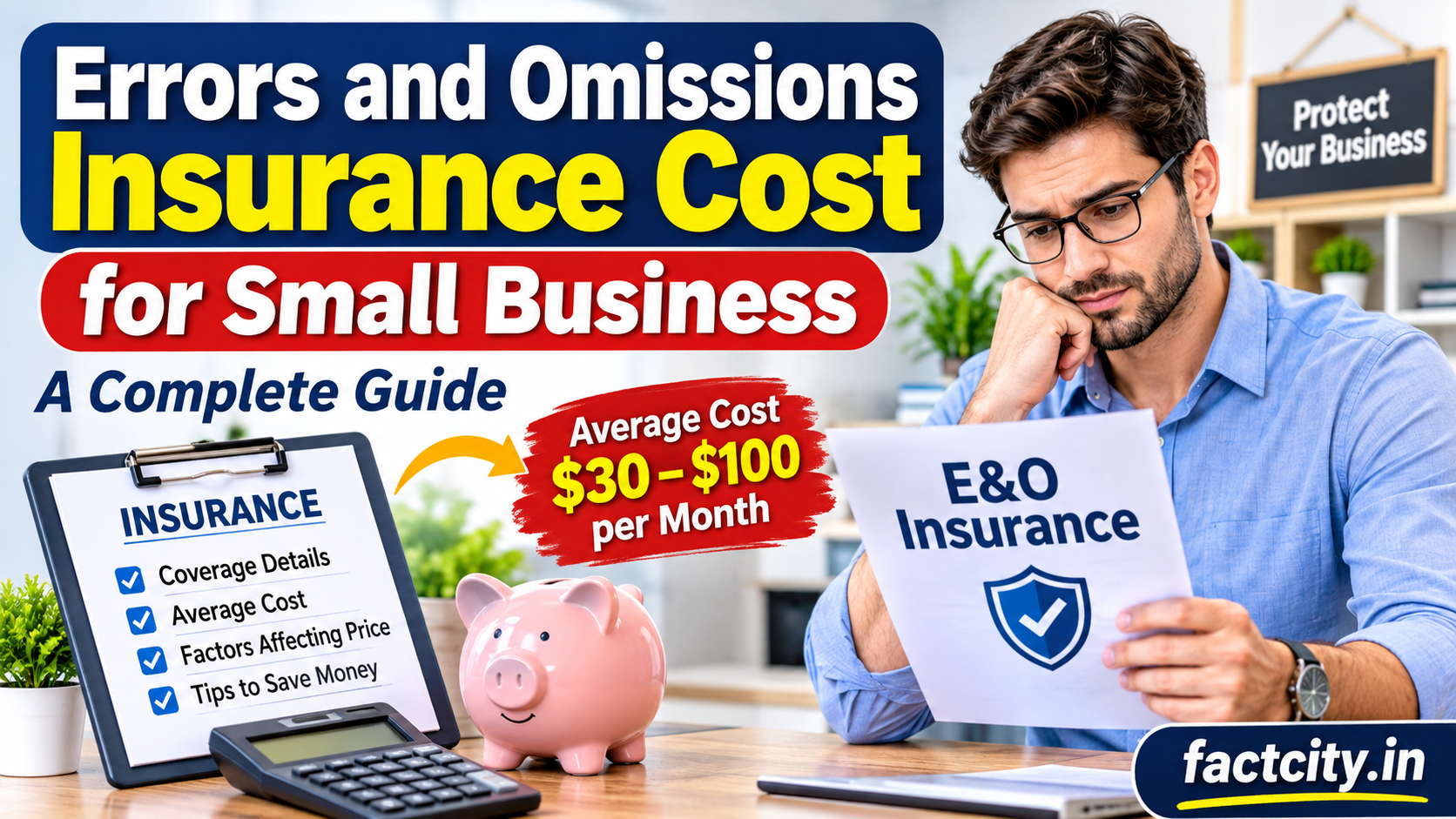
As a general budgeting estimate, many small businesses may find basic E&O coverage in the range of $30 to $100 per month. However, businesses operating in higher-risk industries or requiring larger policy limits may pay considerably more.
According to Insureon’s March 2026 pricing information, its small-business customers pay an average of approximately $88 per month, or $1,051 annually, for E&O insurance. MoneyGeek’s October 2026 research reported a different modeled average of approximately $60 per month for businesses with one to four employees. These figures use different research methods, so they should be treated as estimates rather than guaranteed insurance quotes.
A small consulting business with limited client exposure may qualify for a relatively affordable policy. On the other hand, a financial advisory firm handling complex client investments may face higher premiums because mistakes could result in substantial financial losses.
Business owners should compare several insurance quotes before making a decision because the cheapest policy may not always provide the protection their company needs.
Average Monthly and Annual E&O Insurance Costs
Understanding monthly and annual insurance expenses makes it easier to prepare a realistic business budget. Many insurance companies offer monthly payment options, while others provide discounts for customers who pay the full annual premium.
Here is an illustrative budgeting range for small businesses:
| Coverage Category | Estimated Monthly Cost | Estimated Annual Cost |
|---|---|---|
| Basic E&O coverage | $30–$50 | $360–$600 |
| Standard professional coverage | $50–$100 | $600–$1,200 |
| Higher-risk professional coverage | $100–$200 | $1,200–$2,400 |
| Specialized high-limit coverage | $200+ | $2,400+ |
These figures are general planning estimates, not fixed market rates. Actual premiums may be lower or higher depending on the insurer and the business’s individual risk profile.
For a small company with a limited budget, comparing annual and monthly payment options can help identify the most affordable arrangement.
Factors That Affect Errors and Omissions Insurance Cost
Insurance providers evaluate several details before calculating an E&O insurance premium. Understanding these factors can help business owners predict their expenses and make better coverage decisions.
1. Type of Business and Industry
The type of professional services a business provides is one of the most important factors affecting insurance costs. Some industries naturally have greater exposure to financial mistakes and professional liability claims.
For example, financial advisors, accountants, architects, engineers, technology consultants, and legal professionals may face higher risks because their recommendations or services can significantly affect clients’ finances and operations.
A freelance writer, graphic designer, or general marketing consultant may have a different risk profile. However, even businesses considered relatively low-risk can face professional liability claims.
Insurance companies evaluate the potential financial impact of mistakes when determining the premium.
2. Annual Business Revenue
Annual revenue can also influence E&O insurance costs. Businesses with higher revenue often serve more clients, manage larger projects, and handle more complex responsibilities.
A company generating $100,000 annually may have different insurance requirements from a professional firm earning $1 million or more. Higher revenue does not automatically mean higher premiums in every situation, but it can indicate greater exposure to potential claims.
Insurance providers may ask about annual sales, expected growth, and the value of contracts when preparing a quote.
3. Number of Employees
The size of a business can affect its professional liability insurance premium. A company with several employees may have more opportunities for mistakes, communication problems, or service-related disputes than an independent professional working alone.
For example, a small consulting firm with five employees may need broader protection than a solo consultant because multiple people interact with customers and perform professional services.
Some insurers also consider employee responsibilities, training procedures, and internal management systems.
4. Coverage Limits
Coverage limits determine how much an insurance company may pay for covered claims. Higher limits generally result in higher premiums because the insurer is accepting greater potential financial responsibility.
Many small businesses consider policies with $1 million in coverage per claim and a separate annual aggregate limit. However, the appropriate amount depends on the nature of the services, client contracts, and possible financial losses.
A business working with large corporate clients may need higher limits than a freelancer handling smaller projects.
5. Claims History
Previous insurance claims can influence future premiums. If a business has experienced professional negligence claims, an insurance provider may consider it a higher risk.
Companies with a clean claims history may have access to more competitive pricing, although this depends on the insurer’s underwriting rules.
Maintaining accurate records, reviewing work carefully, and communicating clearly with clients can help reduce the possibility of disputes.
6. Business Location
The state where a business operates may also affect E&O insurance pricing. Insurance companies consider local legal environments, regional claim patterns, and other location-related risks.
For example, a business operating in a state with higher professional liability exposure may receive a different quote from a similar company located elsewhere.
Businesses serving clients across multiple states should also check whether their policy covers professional activities in all relevant locations.
Which Small Businesses Need E&O Insurance?
Errors and Omissions insurance is especially valuable for businesses that provide professional advice, technical services, or specialized knowledge. Although requirements differ between industries and locations, many professionals choose this coverage to protect their finances and maintain customer confidence.
Common businesses that may benefit include:
Consulting Businesses: Management consultants, business advisors, and independent consultants provide recommendations that can influence important business decisions. If a client believes incorrect advice caused financial damage, an E&O claim may follow.
Accounting and Tax Preparation Firms: Accountants handle sensitive financial information, tax documents, and reporting responsibilities. An incorrect calculation or missed filing deadline could result in financial losses for a client.
Technology and IT Companies: Software developers, IT consultants, and technology service providers may face claims involving software errors, system failures, implementation mistakes, or missed project requirements.
Marketing and Advertising Agencies: Marketing professionals manage campaigns, customer strategies, and advertising projects. Mistakes in their work may lead to client complaints and financial disputes.
Real Estate Professionals: Real estate agents and brokers may need E&O protection against certain claims involving professional services, inaccurate information, or transaction-related mistakes.
Designers and Creative Professionals: Graphic designers, web developers, and freelance creative professionals can also face claims if clients believe professional mistakes affected their projects.
The exact coverage available depends on the insurer and policy wording. Business owners should confirm that their specific services are included before purchasing protection.
What Does Errors and Omissions Insurance Cover?
A standard E&O policy generally provides protection against certain claims related to professional negligence, mistakes, or failures in delivering agreed services.
Depending on the policy, coverage may include eligible legal defense costs, settlements, and court judgments arising from covered claims.
For example, if a consultant is accused of providing incorrect professional advice that caused a client financial losses, the policy may help pay the legal expenses involved in defending the claim.
Coverage may also apply to allegations involving inaccurate information, professional errors, missed deadlines, or failure to meet agreed service responsibilities.
However, not every business dispute is covered. Intentional wrongdoing, fraudulent activities, certain contractual liabilities, bodily injury, property damage, and other excluded situations may fall outside a standard E&O policy.
Business owners should carefully read the exclusions and conditions before purchasing insurance.
What Is Not Covered by E&O Insurance?
Understanding exclusions is just as important as understanding coverage. E&O insurance is designed for professional liability risks, not every possible business problem.
Most policies do not cover intentional fraud, criminal activities, or deliberate misconduct. They may also exclude employee injuries, damage to business property, vehicle accidents, and certain cyber incidents unless additional coverage is purchased.
For example, if a customer slips and falls inside a business office, general liability insurance may be more relevant than E&O coverage.
Similarly, if a company’s computer system is attacked by hackers and customer information is stolen, cyber liability insurance may be needed.
This is why small business owners should understand the differences between professional liability, general liability, commercial property, and cyber insurance.
E&O Insurance vs. General Liability Insurance
Many business owners confuse Errors and Omissions insurance with general liability insurance. Although both provide business protection, they cover different types of risks.
General liability insurance mainly addresses certain third-party bodily injury, property damage, and personal or advertising injury claims.
E&O insurance focuses on allegations that professional services, advice, or work caused financial harm to a client.
For example, if a visitor gets injured after slipping inside a company’s office, general liability insurance may respond to the claim. However, if a consultant provides incorrect business advice that results in financial losses, E&O insurance may be more appropriate.
Some businesses need both policies because they face physical and professional risks at the same time.
How to Reduce Errors and Omissions Insurance Costs
Small businesses do not have to accept the first insurance quote they receive. Several practical steps may help reduce premiums while maintaining appropriate protection.
Compare Multiple Insurance Quotes
One of the simplest ways to find affordable E&O insurance is to compare quotes from different providers. Insurance companies use different underwriting methods, which means prices and policy conditions can vary.
Requesting quotes from at least three insurers can help identify competitive options. Compare the actual coverage, exclusions, deductibles, and limits rather than looking at the monthly price alone.
Choose Suitable Coverage Limits
Higher coverage limits generally cost more. However, selecting unnecessarily high limits can increase expenses without providing meaningful additional value for some businesses.
Review your contracts, client expectations, and potential financial exposure before choosing a policy limit.
Consider a Higher Deductible
A deductible is the amount a policyholder must pay toward an eligible claim before the insurance coverage responds, subject to the policy terms.
Choosing a higher deductible may reduce the premium. However, business owners should select an amount they can comfortably afford if a claim occurs.
Maintain Accurate Business Records
Good documentation can reduce misunderstandings and help businesses respond more effectively to client complaints.
Keep copies of contracts, project instructions, invoices, emails, approvals, and completed work. Clear communication and written agreements can help prevent disputes from becoming expensive legal problems.
Review Your Policy Every Year
Business operations change over time. A company may hire employees, increase revenue, introduce new services, or begin working with larger clients.
Reviewing your E&O insurance annually helps ensure that the policy continues to match your business activities. It also provides an opportunity to compare prices and identify unnecessary coverage expenses.
Explore Insurance Bundles
Some insurance providers offer packages that combine different types of business insurance. Depending on the insurer, purchasing multiple policies together may provide pricing advantages.
However, business owners should compare bundled and separate policies to confirm which option provides better overall value.
How to Choose the Right E&O Insurance Provider
Choosing an insurance company involves more than finding the lowest monthly premium. A suitable provider should understand your industry and offer policy terms that match your professional responsibilities.
Start by checking whether the insurer covers your specific services. Some companies specialize in technology professionals, while others provide broader professional liability protection.
Next, review the coverage limits, deductible, exclusions, claims reporting requirements, and policy renewal conditions. It is also important to understand whether the policy operates on a claims-made basis and whether prior acts coverage or an extended reporting period is available.
Customer service and claims handling are additional considerations. When a professional liability claim occurs, clear communication and reliable claims support can make the process easier.
Before purchasing a policy, request a complete explanation of the coverage rather than relying only on a short online description.
What Is Claims-Made E&O Insurance?
Many Errors and Omissions insurance policies operate on a claims-made basis. This means the policy generally needs to be active when the claim is first made and reported, subject to its terms and retroactive date.
This is important because professional liability claims may arise months or even years after the original service was completed.
For example, a consultant might complete a project in 2025, but a client may not raise a professional negligence allegation until 2026. Whether the policy responds depends on the applicable policy dates, retroactive date, reporting conditions, and other terms.
An extended reporting period, sometimes called tail coverage, may provide additional time to report certain claims after a policy ends. It does not automatically cover every new incident occurring after cancellation.
Business owners should avoid allowing coverage to lapse without understanding the possible consequences.
Is Errors and Omissions Insurance Worth the Cost for Small Businesses?
For many professional service businesses, E&O insurance can be a valuable financial protection tool. Even a relatively small business can face a costly legal dispute if a customer believes that professional advice or services caused financial harm.
Legal defense expenses can become significant regardless of whether the business is ultimately found responsible. Without suitable insurance, the owner may need to use personal savings or business funds to manage the dispute.
An appropriate policy can help protect business finances, support contractual requirements, and improve confidence when working with customers.
However, the value of insurance depends on the business’s risk exposure and financial situation. Owners should compare the potential cost of an uninsured claim with the premium and coverage offered by the policy.
Frequently Asked Questions About Errors and Omissions Insurance Cost
How much does E&O insurance cost per month for a small business?
Many small businesses may pay approximately $30 to $100 per month for E&O insurance. However, companies in higher-risk industries or those requiring larger coverage limits may pay more. The actual premium depends on business size, revenue, location, and claims history.
Can a small business get E&O insurance for less than $50 per month?
Yes. Some freelancers, independent consultants, and lower-risk professional businesses may qualify for coverage below $50 per month. The final price depends on the insurer’s underwriting requirements and the coverage selected.
Is E&O insurance mandatory for small businesses?
E&O insurance is not legally mandatory for every small business. However, certain professions, licensing requirements, industry regulations, or client contracts may require professional liability coverage. Business owners should check the rules that apply to their profession and location. countries-with-the-largest-desert
Does E&O insurance cover legal fees?
Many professional liability policies cover eligible legal defense expenses associated with covered claims. However, the amount paid and the way defense costs affect policy limits depend on the policy wording.
Can freelancers purchase Errors and Omissions insurance?
Yes. Freelancers can purchase E&O insurance even if they do not have employees. Writers, designers, consultants, developers, and other independent professionals may benefit from this protection.
Is E&O insurance the same as professional liability insurance?
In many industries, the terms are used interchangeably. Both generally refer to insurance designed to address claims involving professional negligence, errors, or failures in providing services. However, coverage details can differ between policies and professions.
Does E&O insurance cover mistakes made by employees?
Depending on the policy, covered professional services performed by employees may be included. Business owners should review the policy definition of insured persons and covered professional activities to confirm the protection available.
Final Thoughts
Understanding the Errors and Omissions Insurance Cost for Small Business is an important step toward protecting a company’s financial future. While many small businesses may find coverage for approximately $30 to $100 per month, the actual price depends on the industry, revenue, employee count, location, claims history, and selected coverage limits.
Choosing the cheapest policy should not be the only goal. Business owners should focus on finding coverage that addresses their actual professional risks and provides suitable financial protection. Comparing multiple quotes, maintaining accurate records, choosing appropriate coverage limits, and reviewing policies regularly can help keep insurance expenses manageable.
Whether you operate a consulting firm, technology company, accounting practice, marketing agency, or freelance business, professional mistakes can sometimes lead to expensive disputes. Having suitable Errors and Omissions insurance can provide valuable financial support and help you operate with greater confidence.