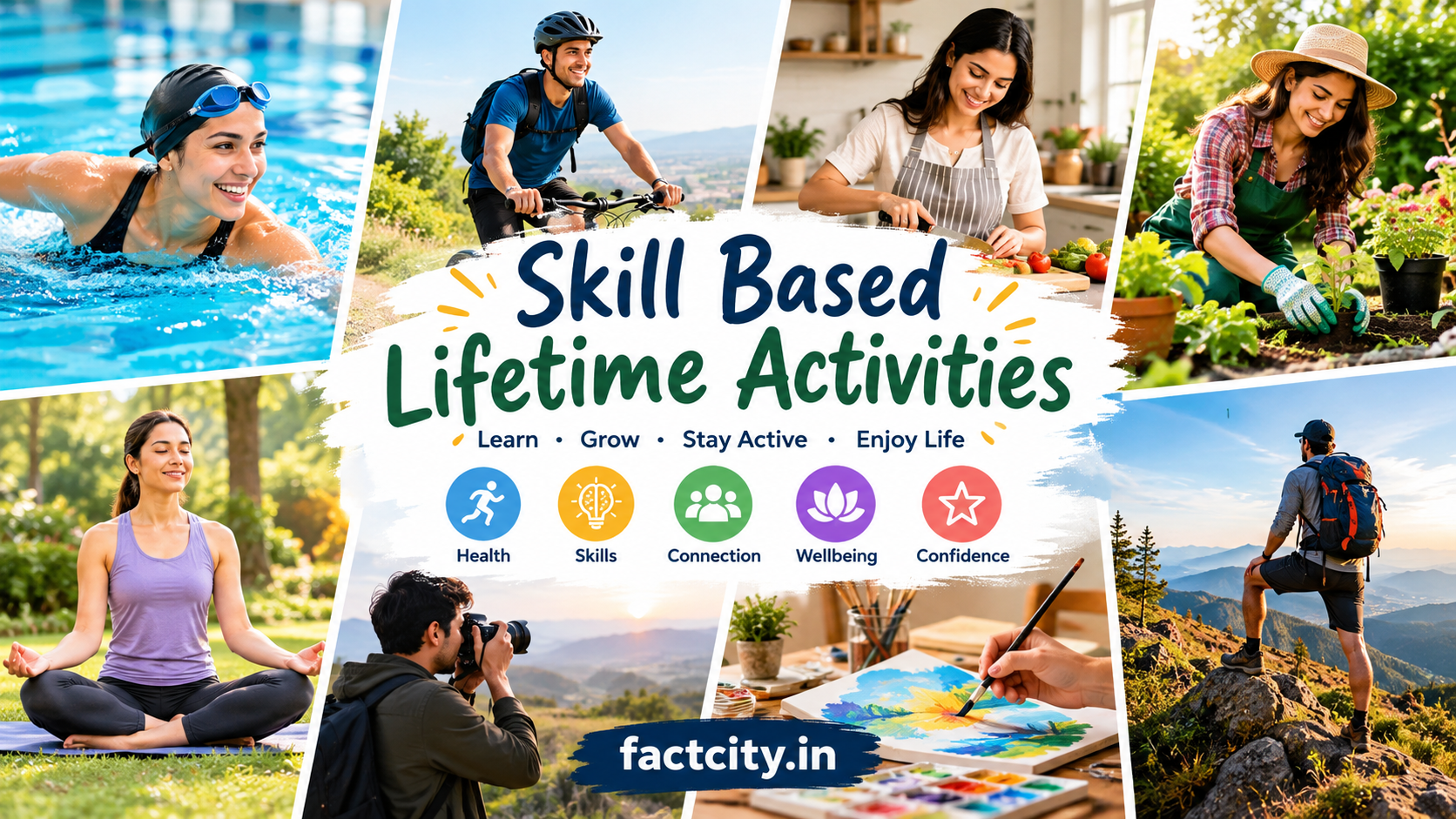
Skill-based lifetime activities are those that help people to develop useful abilities that can be used in different stages of life. These activities can be done at any age and are not limited to school or sport activities. These can be physical activities, creative hobbies, practical skills, communication exercises, outdoor recreation, or everyday tasks that encourage independence and confidence.
Long-term habits can be generated from lifelong activities, unlike activities that are useful only for a short period. You can learn a skill as a child, hone it in adulthood, and still find pleasure in it in later life. This makes skill-based lifetime activities valuable for personal development, physical wellbeing, social connection and lifelong learning.
What are the skill-based lifetime activities?
Lifetime skill-based activities are activities that require practice, learning, coordination, decision-making, or creativity and can be done throughout life. Swimming, cycling, cooking, gardening, walking, photography, dancing, yoga, and playing certain recreational sports, for example, can all be lifetime activities. The difficulty level can be adjusted according to the age, experience, physical condition, and interests of a person. The basic premise is straightforward: instead of learning a skill to pass a test or win a competition, you develop skills that can be useful and enjoyable for years.
Why Is It Important to Have Life Activities?
Lifetime activities can help in many facets of daily living. Physical activities can help people to be active and creative, and practical activities can encourage learning and independence. They may also be opportunities to meet with friends, family, classmates, or community groups. By participating regularly, you can establish routines that make it easier to stick to healthy and productive habits. Flexibility is another big benefit. A person doesn’t need to do an activity at the same intensity all the time. For example, a young person might enjoy competitive running and then switch to walking, swimming, or gentle cycling.
Skill-Based Lifetime Activities Examples:
There are many types of activities that can develop skills for life. Which is the best choice is a matter of personal interest and circumstances.
Swimmings
Swimming is a useful lifetime activity in that it combines physical activity with an important safety skill. If you are a beginner who wants to learn the basics of floating and water confidence, or an experienced swimmer who wants to improve endurance, technique, or learn a different stroke of swimming. It can also be adapted to different levels of ability, making it a great recreational activity for many age groups.
Biking
Another popular lifelong activity is cycling. It is suitable for exercise, transportation, recreation, or exploring outdoor areas. To ride a bike, you need balance, coordination, and awareness. Once learned, these basic skills can often be maintained with regular practice. There are different types of cycling people can choose, from casual neighborhood rides to longer recreational trips.
Walking & Hiking
Walking is a simple activity, but it is something that can be part of a person’s routine for many years. Hiking adds skills of navigation, balance, outdoor awareness, and planning. The distance and intensity can be altered to suit the individual’s needs. Going for a walk with friends or family can also make physical activity a social experience.
Cooking
Useful lifetime skills are a great example is cooking. People can start with simple recipes and learn skills of food preparation, kitchen safety, meal planning, and various cooking techniques. Cooking at home can be a creative process too; the same ingredients can be mixed together in many different ways.
Horticulture
Gardening is a practical activity that involves being outdoors. It can teach people about plants, soil, watering, seasonal changes, and responsibility. You can adapt gardening for many spaces. If you have a big yard, you can grow vegetables and flowers, but even if you live in an apartment, you can grow herbs or small plants in containers.
Dance
Dancing involves movement, rhythm, co-ordination, memory and creativity. There are many styles such as traditional, contemporary, ballroom, folk and social dancing. People can join for fun or become experts. Dancing also offers opportunities for social interaction and enjoyment.
Yoga & Flexibility Training
Yoga and other movement activities can help people develop awareness of their bodies, as well as balance, coordination, and controlled movement. Different formats and difficulty levels allow participants to choose activities according to their level of experience. It is important to learn the right techniques and make the right modifications for people with physical limitations.
Taking Pictures
But not all life skills include physical exercise. Photography is a creative activity that can develop observation, composition, patience, and technical knowledge. A beginner can progressively get to know about lighting, framing, editing, and camera settings, starting with a smartphone.
Arts & Crafts
Drawing, painting, sewing, woodworking, pottery, knitting and other crafts can be hobbies for a lifetime. These activities help people to create something with their own hands, develop concentration and problem-solving skills. They are also a relaxing way to pass free time.
Sports of Recreation
Some sports can be played throughout the lifespan with adequate adaptation of the activity and intensity. For example, badminton, table tennis, golf, bowling, tennis, and recreational volleyball. The goal is not always about competition. In recreation, people may participate for enjoyment, to develop their skills, to socialize, and to remain active.
Student Lifetime Activities Based on Skill
Learning activities useful outside the classroom can be of benefit to students. Sports can help children to develop co-ordination and teamwork, and cooking and basic household tasks can help them to become independent. Creative activities such as writing, drawing, music, photography and crafts could assist students in discovering their interests. The best approach is to provide students with opportunities to try different activities rather than expecting all students to enjoy the same skill.
Skill-Based Activities for Adults: Lifetime
Adults have busy lives, and so practical and flexible activities can be easier to maintain. Walking, cycling, cooking, gardening, photography, fitness, dancing and recreational sports can fit into different lifestyles. Learning a new language, playing a musical instrument or developing digital skills can also provide valuable lifelong learning opportunities. The key is consistency, not perfection. Pick an easy activity that you can do frequently rather than an ambitious activity that is difficult to sustain.
Lifetime Activities for Older Adults by Skill
As people get older, they can also adjust their lifetime activities. Walking, gentle swimming, gardening, stretching, crafts, photography, reading, cooking, and social recreation can all contribute to continued learning and engagement. Activities should be appropriate for the individual’s abilities and safety needs. If you have a medical condition or physical limitation, you might want to seek professional guidance before starting any new physical activity.
Advantages of Skill-Based Lifetime Activities
Skill-based lifetime activities may provide a number of potential benefits:
- They spark a lifelong love of learning.
- They can support movement and physical activity.
- They might gain confidence by learning skills.
- They offer opportunities to be creative.
- They promote social interaction.
- They can bring meaning to leisure.
- They might help people become independent.
- They offer fun alternatives to passive entertainment.
- They help people to continue learning at different ages.
The benefits depend on the activity, the frequency of doing it, the person’s situation, and their level of participation.
How to Select a Life-long Activity
Individual interests determine the right choice of activity. Think about what you enjoy doing, and what skill you’d like to build. Think about your time, budget, location, physical ability, and equipment access. Also, it is better to start at a level that can be attained than to try to become highly skilled right away. For instance, someone interested in cooking could start out with three simple meals. And if you’re into cycling, you might try short rides. If you are interested in photography, you might practice taking pictures with a smartphone before spending money on specialized equipment.
How to Turn a Skill into a Lifelong Habit
Learning a skill is one thing; maintaining it is another. Realistic goals can lead to easier long-term participation. Try to do the activity at the same time. Monitor your progress, but don’t get stuck on perfection. Working with friends or joining a local group can also boost motivation. Most importantly, pick an activity you really enjoy. The more an activity fits naturally into your lifestyle, the more likely it is to become a lasting habit and a lifetime activity.
Final Thoughts . .
Skills-based lifetime activities are valuable because they bring together learning, enjoyment and long-term personal development. It could be swimming, cycling, walking, cooking, gardening, photography, dancing, crafts or recreational sports. The possibilities are endless. The best lifetime activity is not necessarily the most difficult activity. It’s something that can evolve with the times and still have meaning across time. People can keep learning, creating, moving, and experiencing new things at almost any age by acquiring useful skills and applying them to their everyday lives.