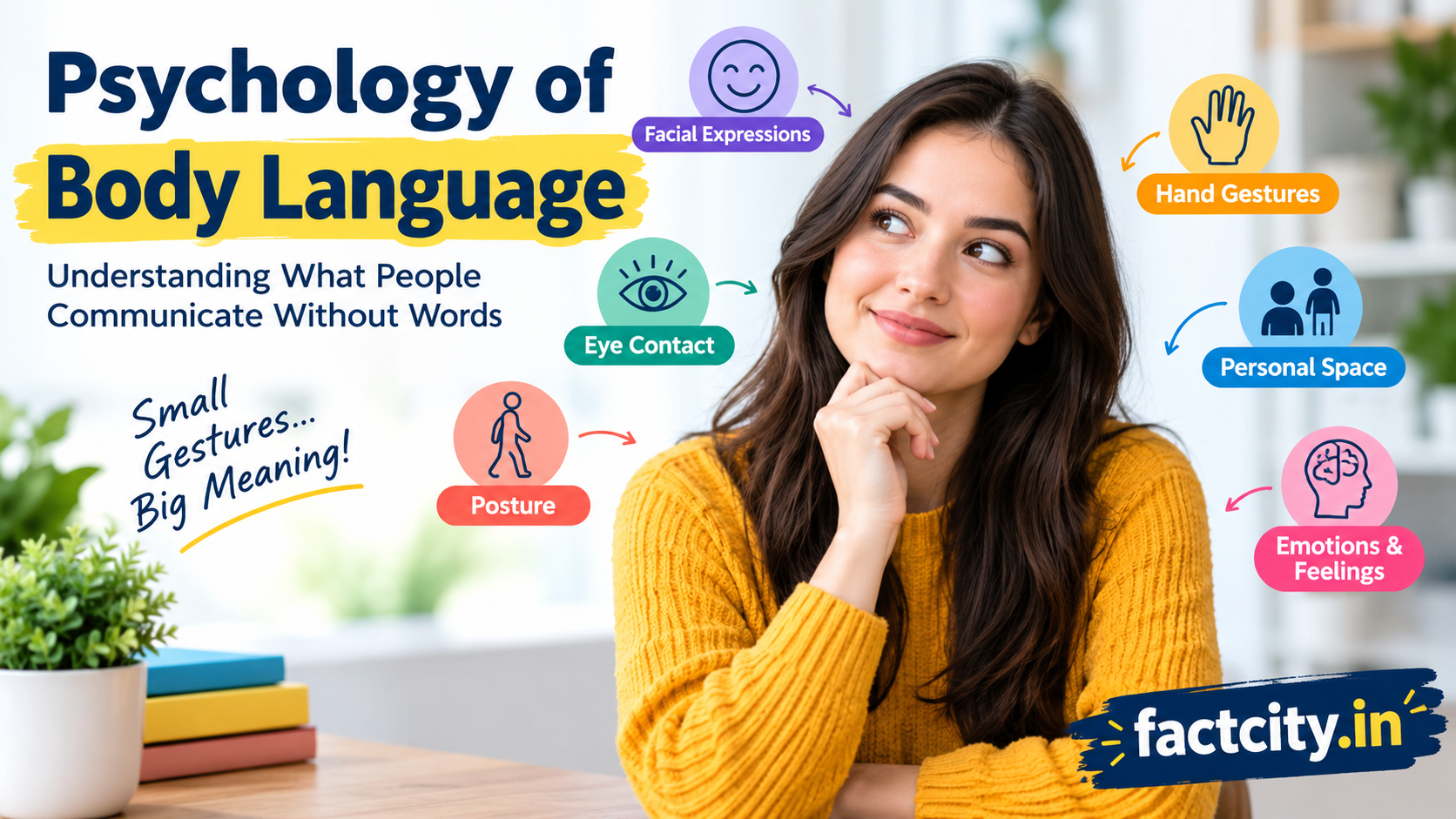
Psychology of Body Language Have you ever noticed someone smiling while speaking, crossing their arms during a conversation, or looking away when answering a question? These small actions may seem ordinary, but they are important parts of human communication. The psychology of body language explores how people use facial expressions, gestures, eye contact, posture, and physical movements to express emotions and communicate with others.
Body language can help us understand social situations, build stronger relationships, and become more aware of how our behavior affects other people. Although spoken words are important, nonverbal signals can also provide useful information about a person’s feelings, comfort level, and reactions.
In this article, we will explore the psychology of body language, common nonverbal signals, and practical ways to understand them in everyday life.
What Is the Psychology of Body Language?
The psychology of body language is the study of how physical behavior communicates information about emotions, attitudes, and social interactions. It focuses on nonverbal communication, including facial expressions, hand movements, eye contact, posture, and personal space.
For example, a person who leans forward while listening may be interested in the conversation. Someone who repeatedly checks the time might be distracted or worried about being late. However, these actions do not always have a single meaning.
Body language is influenced by personality, culture, personal experiences, and the situation. Understanding it requires observing the complete interaction rather than judging someone by one gesture.
1. Facial Expressions Reveal Emotional Reactions
Facial expressions are among the most noticeable forms of nonverbal communication. People use their eyes, eyebrows, mouth, and other facial movements to express a wide range of emotions.
A genuine-looking smile may communicate happiness or friendliness, while a furrowed brow may suggest concentration, confusion, or concern. Raised eyebrows can indicate surprise or curiosity, depending on the situation.
Facial expressions can sometimes communicate emotions before a person explains them verbally. However, expressions are not perfect indicators of someone’s internal feelings. Some people naturally show fewer expressions, while others may smile when they feel nervous.
The best approach is to consider facial expressions alongside the person’s words and the surrounding circumstances.
2. Eye Contact and Human Psychology
Eye contact plays an important role in social communication. It can help people show attention, establish connection, and understand conversational reactions.
When someone maintains comfortable eye contact while listening, it may indicate interest or engagement. Looking away can mean that a person is thinking, feeling uncomfortable, avoiding distractions, or simply following their natural communication style.
Too much eye contact may also make someone feel uncomfortable or pressured. Different cultures and individuals have different expectations about how much eye contact is appropriate.
Therefore, eye contact should not be used alone to determine whether someone is confident, attracted to another person, or telling the truth.
3. Body Posture Communicates Confidence
Posture can influence how people perceive themselves and others. Standing upright with relaxed shoulders may create an impression of confidence and attentiveness. In contrast, a person who bends forward or lowers their head might appear tired, uncomfortable, or less engaged.
However, posture can be affected by physical discomfort, fatigue, disability, and personal habits. A person with a naturally relaxed posture is not necessarily insecure.
If you want to communicate more confidently, try keeping your shoulders relaxed, standing comfortably, and facing the person you are speaking with. A natural posture can help you appear approachable without forcing yourself into an uncomfortable position.
4. Hand Gestures Help Express Ideas
Hand gestures are another important part of the psychology of body language. People often move their hands to explain ideas, emphasize important points, or communicate excitement.
For example, using open hand gestures during a discussion may make communication feel more welcoming. Pointing can draw attention to something, while repetitive movements may sometimes accompany nervousness or excitement.
Gestures also vary between cultures. A movement that is friendly in one place may have a different meaning elsewhere.
The goal is not to memorize every gesture as a fixed psychological sign. Instead, observe how a person’s movements support or differ from their spoken message.
5. Personal Space and Emotional Comfort
Personal space refers to the physical distance people prefer to maintain during social interactions. This distance can influence whether an interaction feels comfortable, friendly, or intrusive.
Friends and family members may stand closer to each other than strangers do. In professional situations, people often prefer more physical distance to maintain appropriate boundaries.
If someone steps backward when you move closer, they may want more space. This reaction does not necessarily mean they dislike you. They may simply have different personal boundaries.
Respecting personal space helps create trust and makes conversations more comfortable. Pay attention to the other person’s reactions and avoid assuming that everyone prefers the same distance.
6. Nervous Body Language and Stress
Nervousness can sometimes appear through physical movements. A person might tap their fingers, move their feet, touch their face, adjust their clothing, or change their sitting position repeatedly.
These behaviors may occur during a job interview, public speaking, an unfamiliar social situation, or a difficult conversation.
However, nervous movements do not automatically indicate dishonesty or a lack of confidence. They can also result from excitement, boredom, physical discomfort, or habitual behavior.
If you notice nervous body language in yourself, try taking slow breaths, relaxing your shoulders, and focusing on the conversation instead of worrying about every movement.
7. Mirroring and Social Connection
Mirroring happens when people unconsciously or deliberately adopt similar gestures, expressions, posture, or speaking patterns. For example, two friends may gradually begin sitting in similar positions while talking.
This behavior can sometimes develop naturally when people feel comfortable with one another. Similar movements may help conversations feel smoother and create a sense of connection.
Nevertheless, mirroring is not proof of attraction, friendship, or agreement. People may copy movements because they share an environment, follow social habits, or simply happen to move similarly.
Rather than deliberately copying another person’s gestures, focus on listening carefully and responding naturally.
8. How to Read Body Language More Accurately
Understanding body language requires patience and attention. Instead of judging a person by one movement, consider several signals together.
Here are some practical ways to improve your interpretation:
- Observe the context: Consider what is happening and what the conversation is about.
- Look for patterns: Notice whether a behavior happens repeatedly rather than just once.
- Compare with normal behavior: Someone’s usual communication style can help you understand changes in their reactions.
- Listen to spoken words: Body language should complement verbal communication, not replace it.
- Respect individual differences: Personality, culture, and personal experiences can influence physical behavior.
- Ask questions when appropriate: If someone seems uncomfortable, a respectful question may provide more accurate information than guessing.
These habits can help you become a more thoughtful communicator without making unfair assumptions about other people.
9. Common Myths About Body Language
Many popular claims about body language oversimplify human psychology. For example, crossed arms do not always mean that someone is defensive. A person may cross their arms because they are cold or comfortable in that position.
Similarly, looking away does not automatically mean someone is lying. Smiling does not always indicate happiness, and fidgeting does not necessarily reveal guilt.
There is no universal gesture that reliably explains every person’s thoughts or intentions. Human behavior is complex, and nonverbal communication must be interpreted carefully.
A balanced understanding of body language helps people avoid misunderstandings and recognize that gestures can have several possible explanations. 7-amazing-secrets-of-the-world-that-you-cannot-see
10. Why Understanding Body Language Matters
Learning about body language can improve everyday communication in many situations. During job interviews, it may help you become more aware of your posture and listening habits. In relationships, noticing changes in facial expressions or tone may encourage more thoughtful conversations.
Body language awareness can also improve teamwork, public speaking, and social confidence. When you understand how your own gestures affect others, you can communicate more clearly and make interactions feel more comfortable.
The most important skill is not identifying hidden meanings in every movement. It is learning to observe people respectfully, listen carefully, and remain open to different explanations.
Conclusion
The psychology of body language helps explain how people communicate through facial expressions, eye contact, posture, gestures, and personal space. These nonverbal signals can provide useful clues about emotional reactions and social comfort, but they should never be treated as unquestionable evidence of what someone thinks or feels.
By considering context, recognizing individual differences, and paying attention to both words and actions, you can develop stronger communication skills and build healthier relationships.