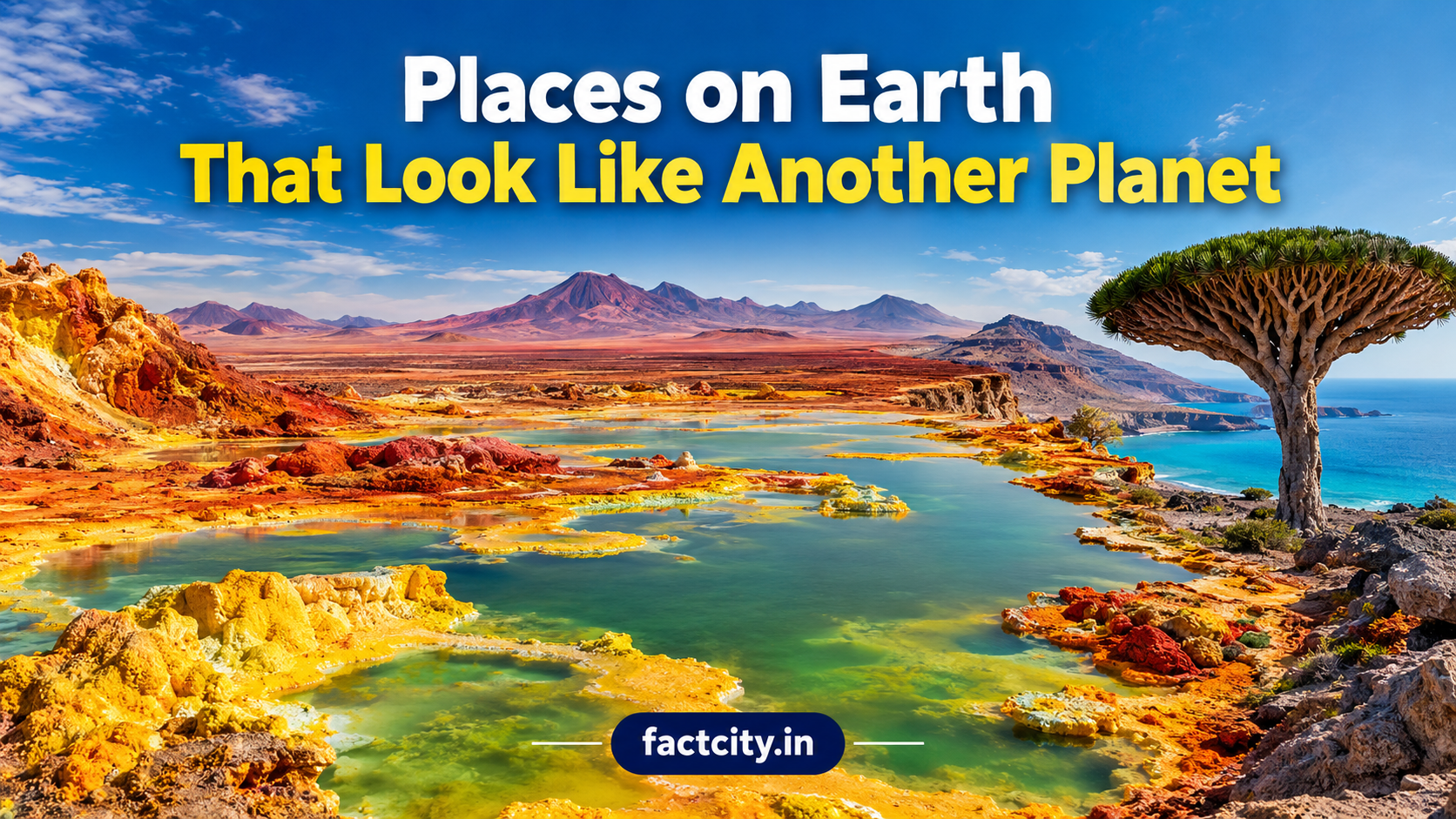
Places on Earth that look like another planet. Our planet is full of extraordinary places that look so unusual they seem to belong to another world. From vast deserts with strange rock formations to colorful mineral lakes, volcanic landscapes, and icy valleys, Earth has many destinations that resemble the surfaces of distant planets. Some places look like Mars, while others resemble the Moon or an alien world from a science-fiction movie. The most surprising part is that these landscapes are real, and many of them have been shaped by natural processes over thousands or even millions of years.
If you enjoy discovering unusual destinations, exploring natural wonders, or learning interesting facts about our planet, these places on Earth that look like another planet will certainly capture your imagination. Their unique colors, unusual geological formations, and extreme environments make them fascinating to scientists, photographers, travelers, and nature lovers. Let’s explore some of the most extraordinary places on Earth that look as though they belong somewhere beyond our planet.
1. Atacama Desert, Chile
The Atacama Desert in northern Chile is one of the driest places on Earth, and its barren landscape often resembles the surface of Mars. Huge stretches of rocky ground, reddish mountains, salt flats, and almost lifeless terrain create an otherworldly appearance. Some parts of the desert receive extremely little rainfall, allowing the landscape to remain dry for long periods.
Scientists are particularly interested in the Atacama Desert because certain areas have environmental conditions that help researchers study how life might survive on Mars. The region’s clear skies also make it an excellent location for astronomical observations. Visitors can explore unusual geological formations, watch colorful sunsets, and see landscapes that look more like another planet than an ordinary desert.
2. Socotra Island, Yemen
Socotra Island, located in the Arabian Sea near the Horn of Africa, is famous for its unusual plants and isolated natural environment. The island is home to the dragon blood tree, a remarkable tree with an umbrella-shaped canopy that looks almost artificial. Its strange appearance, combined with rocky mountains and white sandy beaches, gives parts of Socotra the feeling of an alien world. Places on Earth that look like another planet
One of the most fascinating features of Socotra is its exceptional biodiversity. Many of its plant species are found nowhere else on Earth. This uniqueness developed partly because the island remained geographically isolated for a long time. Its unusual vegetation and dramatic scenery have made it one of the most visually distinctive places on the planet. Socotra also demonstrates how isolation can allow nature to develop in extraordinary ways.
3. Salar de Uyuni, Bolivia
Salar de Uyuni in Bolivia is the world’s largest salt flat, covering approximately 10,582 square kilometers. During the dry season, its surface appears as an enormous white plain stretching toward the horizon. The landscape looks almost endless, with very few objects to help visitors judge distances.
During the rainy season, a thin layer of water can cover parts of the salt flat, creating a spectacular mirror effect. The sky, clouds, and distant mountains appear reflected on the ground, making it difficult to distinguish between the earth and the heavens. This extraordinary visual effect gives the area an appearance that resembles a surreal alien landscape. Salar de Uyuni is also an important source of lithium resources, making it significant beyond its natural beauty.
4. Dallol, Ethiopia
Dallol, located in Ethiopia’s Danakil Depression, is one of the most unusual geological environments on Earth. Its landscape contains bright yellow, orange, green, and white mineral formations created by hydrothermal activity, evaporation, and chemical reactions. These vivid colors make the area look like a strange surface from a distant planet.
The region is also known for extreme heat and highly acidic hydrothermal features. Its unusual environment attracts scientific interest because it helps researchers understand how geological and chemical processes interact under harsh conditions. However, Dallol is not a typical tourist destination. Extreme temperatures, corrosive waters, and remote terrain make visiting the area potentially dangerous, so proper local guidance and safety precautions are essential.
5. The Danakil Depression, Ethiopia
The Danakil Depression is one of the hottest and most geologically active regions on Earth. Located in northeastern Ethiopia, it contains salt plains, volcanic features, colorful mineral deposits, and areas shaped by tectonic activity. The combination of intense heat, dry terrain, and unusual geological formations makes the landscape look almost extraterrestrial.
The depression lies in a region where Earth’s crust is being pulled apart by tectonic forces. This geological activity has contributed to the area’s volcanoes and distinctive terrain. Although the Danakil Depression is fascinating for researchers and adventurous travelers, conditions can be severe. High temperatures, remote locations, and volcanic hazards mean that visitors should travel with experienced guides and follow current safety advice.
6. Wadi Rum, Jordan
Wadi Rum in southern Jordan is often called the Valley of the Moon because of its dramatic desert scenery. Towering sandstone mountains rise from wide red sand plains, while wind and erosion have carved arches, cliffs, and unusual rock formations into the landscape. The reddish colors and vast open spaces create a setting that resembles the surface of Mars.
The region has attracted filmmakers because its scenery can convincingly represent an alien planet. However, Wadi Rum is more than a cinematic landscape. It also contains archaeological sites and evidence of human activity stretching back thousands of years. Visitors can explore the desert with local guides, learn about Bedouin culture, and experience its extraordinary scenery under clear night skies.
7. Pamukkale, Turkey
Pamukkale in southwestern Turkey looks remarkably different from the red deserts and rocky landscapes found elsewhere on this list. Its name means “cotton castle” in Turkish, and the site is famous for its bright white terraces filled with mineral-rich thermal water. Viewed from a distance, these formations resemble frozen waterfalls or a landscape covered in snow.
The terraces formed over time as calcium carbonate-rich water flowed down the hillside and deposited minerals. The resulting white formations create a striking contrast with the blue water and surrounding countryside. Pamukkale also lies near the ancient city of Hierapolis, giving the destination both geological and historical importance. Its unusual appearance makes it feel almost unreal, especially when sunlight reflects off the white terraces.
8. The Valley of the Moon, Argentina
Ischigualasto Provincial Park in Argentina is widely known as the Valley of the Moon. Its barren terrain, gray rock formations, strange shapes, and wide-open spaces create an appearance that resembles the lunar surface. The landscape has been shaped by erosion, exposing layers of sedimentary rock that reveal a long geological history.
The park is especially important to scientists because it contains fossils from the Triassic Period, making it a valuable location for studying early dinosaur relatives and other ancient life forms. Its unusual scenery attracts photographers and geology enthusiasts who want to experience a landscape that feels completely different from ordinary forests or green valleys. The combination of geological formations and prehistoric fossils makes this destination remarkable.
9. Mount Bromo, Indonesia
Mount Bromo, located in East Java, Indonesia, is an active volcano surrounded by a vast volcanic plain known as the Sea of Sand. The landscape features dark volcanic sand, steep crater walls, rugged mountains, and clouds of mist that often drift across the terrain. At sunrise, the changing light creates dramatic shadows and colors, making the area appear almost otherworldly.
The volcano is part of the Tengger volcanic complex and remains an important natural attraction in Indonesia. Visitors often travel to nearby viewpoints to watch the sunrise over the volcanic landscape. However, volcanic activity can create dangerous conditions, and access to the crater area may be restricted. Travelers should always follow official safety instructions and respect closed zones.
10. The Painted Hills, Oregon, United States
The Painted Hills in Oregon are famous for their colorful layers of red, yellow, gold, and dark brown soil. These bands developed over millions of years as ancient volcanic materials, sediments, and changing environmental conditions shaped the region. The hills look especially striking when sunlight highlights their different colors.
Unlike a typical green landscape, the Painted Hills have very little vegetation across many of their exposed slopes. Their unusual patterns and smooth contours can make them resemble the surface of a distant planet. The area forms part of the John Day Fossil Beds National Monument, which preserves important evidence of ancient environments and plant life. Visitors can explore designated trails and enjoy the colorful scenery while helping protect the fragile terrain.
11. Lake Natron, Tanzania
Lake Natron in northern Tanzania is known for its shallow water, mineral-rich environment, and striking reddish or orange colors that can appear under certain conditions. The lake’s high alkalinity is linked to the volcanic landscape of the East African Rift region. Depending on water levels, mineral concentrations, and microbial activity, parts of the lake can display unusual colors that make it look like an alien environment.
Despite its harsh conditions, Lake Natron supports specialized organisms and provides an important breeding area for lesser flamingos. These birds use the lake’s environment as a major nesting site. The contrast between the lake’s unusual colors, surrounding volcanic terrain, and large groups of flamingos makes it one of Africa’s most distinctive natural landscapes. Visitors should respect wildlife and avoid disturbing sensitive breeding areas.
12. The Marble Caves, Chile
The Marble Caves, located on General Carrera Lake in Patagonia, Chile, are among the most beautiful geological formations in South America. Their smooth walls, swirling patterns, and blue-green reflections create an appearance that seems almost artificial. Over thousands of years, waves from the lake have gradually eroded the marble, creating caves, tunnels, and sculpted surfaces.
The color of the water changes with the season and lighting conditions, making the caves appear different throughout the year. When sunlight reaches the water, blue reflections illuminate the marble walls and create an extraordinary visual effect. The caves can generally be explored by boat or kayak when weather and water conditions allow. Their unusual shapes and vivid colors make them resemble a hidden world beneath another planet’s surface.
13. The Black Sand Beaches of Iceland
Iceland’s black sand beaches offer a dramatic landscape that looks very different from the golden beaches found in tropical destinations. At Reynisfjara, near the village of Vík, dark volcanic sand stretches beneath towering basalt columns and rugged cliffs. The contrast between the black shoreline, white sea foam, and powerful Atlantic waves creates a striking, almost extraterrestrial scene.
The black sand formed from volcanic material that was broken down over time by natural forces. The basalt columns developed as lava cooled and contracted, creating distinctive geometric shapes. Although the beach is visually stunning, it is also dangerous because of powerful sneaker waves and strong currents. Visitors should stay well away from the water’s edge and follow local safety warnings.
14. The Pinnacles Desert, Australia
The Pinnacles Desert in Western Australia contains thousands of limestone pillars rising from a sandy landscape. Some formations are short and rounded, while others stand several meters tall with sharp or irregular shapes. Their unusual arrangement makes the desert look like the surface of a strange, unexplored planet. 10-interesting-facts-about-the-brain
The pinnacles developed through complex natural processes involving limestone, soil formation, and erosion over long periods. Although scientists have studied their formation, the precise contribution of different processes to individual pinnacles can vary. The surrounding desert, sparse vegetation, and scattered stone pillars create a memorable landscape for visitors. The best views often come when sunlight creates long shadows across the sand, highlighting the formations’ unusual shapes.
Why Do Some Places on Earth Look Like Another Planet?
Many of these landscapes appear extraterrestrial because they have developed under unusual environmental conditions. Volcanic activity creates black sand, lava fields, and rugged craters, while wind and water erosion carve rocks into strange shapes. Mineral deposits can produce vivid colors, and extremely dry environments often have little vegetation to soften the landscape. Without familiar trees, grass, or buildings, these locations can look remarkably similar to images of Mars or the Moon.
Scientists also study some of these environments to understand geological processes and the possibility of life beyond Earth. Places such as the Atacama Desert offer useful comparisons for studying dry conditions, while volcanic and hydrothermal regions help researchers investigate how organisms survive in extreme environments. However, a landscape that looks like another planet does not necessarily have the same conditions as that planet. Earth remains a unique world with liquid water, diverse ecosystems, and a complex atmosphere.
Conclusion
The places on Earth that look like another planet show just how extraordinary our natural world can be. From the red deserts of Chile and Jordan to the colorful mineral formations of Ethiopia, the mirror-like salt flats of Bolivia, and the unusual rock pillars of Australia, each destination offers a different kind of otherworldly beauty. These landscapes were created by natural processes that continue to shape our planet today.
You do not need to travel into space to experience scenery that looks extraterrestrial. Earth itself contains environments that challenge our imagination and remind us how much there is still to discover. Whether you are interested in geology, travel, photography, or natural wonders, exploring these remarkable destinations is an exciting way to understand the diversity and beauty of our planet.