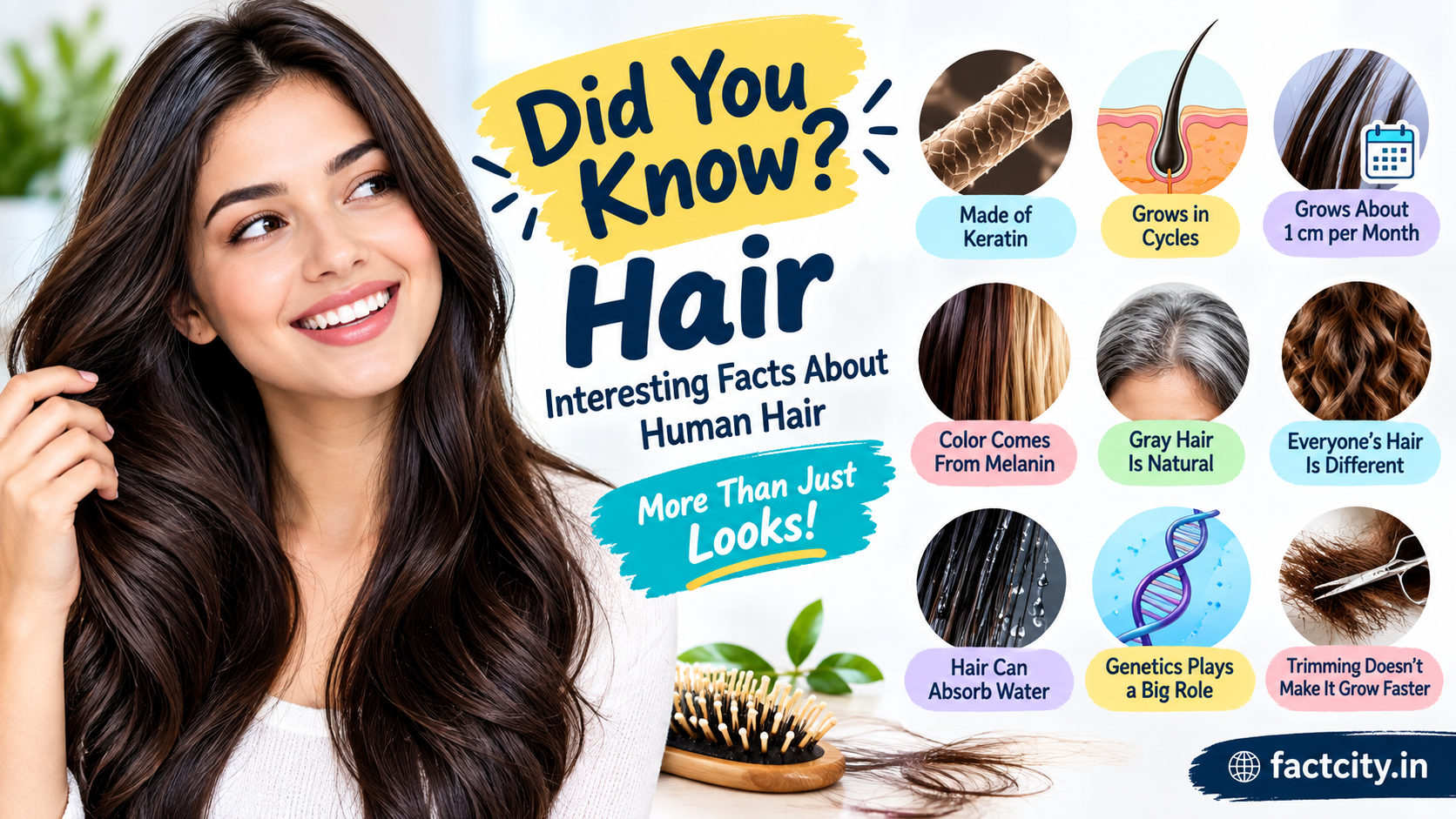
We look at and touch hair daily, but how much do we really know about it? There are a lot of fascinating things about human hair that we tend to overlook, from how it grows to its structure. Did you know that hair can tell you some neat things about biology, genetics, ageing, and everyday habits?
Whether you are interested in beauty, science, health, or just general knowledge, these fun hair facts will help you look at this familiar part of the human body in a whole new light.
What Is Hair Made Of?
One of the most interesting things to know about hair is what hair is actually made of. Human hair is composed primarily of a protein called keratin. You can also find the same type of protein in fingernails and the outer layer of the skin.
Every hair strand has a sturdy structure that helps it stay flexible while shielding it from everyday exposure to the environment. Technically, the visible part of hair is dead cells. The follicle under the skin is alive and active.
This explains how the hair shaft can be cut without pain, while damaging or irritating the hair follicle can sometimes be painful.
Did You Know Hair Grows in Cycles?
Hair doesn’t grow forever at the same pace. All hair follicles have a natural growth cycle.
The main points are:
- Anagen: The period of active growth.
- Catagen: short transitional phase.
- Telogen: a resting stage.
- Exogen: Phase of shedding when an old strand is lost.
Since different follicles are at different stages at the same time, we lose some hair naturally while other strands continue growing.
This is a natural cycle, which is why you will usually see a few hairs on your pillow, clothes, or brush.
How Quickly Does Hair Grow?
“How fast does hair grow?” is a question we get asked a lot. Scalp hair grows on average about a centimetre a month, but this can vary from person to person.
Genetics, age, hormones, nutrition, general health, and other factors can affect how hair grows individually.
It also explains why two people can have similar hair-care regimens but different hair growth rates.
Hair colour is from melanin
Did you know that hair colour is primarily determined by a pigment called melanin?
Melanin is produced by specialised cells in the hair follicles. Natural hair colours are black, brown, blonde, red, and so on. These come from different amounts and types of melanin.
With age, pigment production slowly diminishes in many follicles. This may make newly growing hair appear grey or white.
How soon this change occurs differs greatly from person to person and is largely determined by genetics.
Why Does Hair Turn Gray?
Grey hair is one of the most visible signs of ageing. But people can begin to develop grey hair at very different ages.
If the follicle produces less melanin, then the new hair growing from the follicle has less pigment. The hair may look grey, silver or white depending on how much pigment is present.
Premature greying can have different causes, so there is no one age at which everyone should expect grey hair.
Hair is more durable than it appears.
One hair looks thin and delicate, but keratin makes it very strong.
It takes a surprisingly lot of tension to snap a hair. But it can be damaged by repeated chemical treatments, excessive heat, rough handling, and other forms of damage.
That’s why healthy hair isn’t just about appearance. Gentle handling will help reduce unnecessary breakage.
Did You Know Hair Can Soak Up Water?
Hair is not 100% waterproof. The hair shaft is made in such a way that it can absorb water and moisture.
When hair gets wet, it can swell and be more flexible. This is one reason why hair should generally be handled gently when wet. “Pulling or brushing your hair aggressively when it’s wet can cause it to break.
Hair texture also plays a role in how moisture acts. Humidity and water may affect straight, wavy, or curly hair differently.
Why is everyone’s hair different?
Nobody’s hair is the same as anybody else’s. genetics and can affect hair characteristics such as:
- Thickness Consistency
- Real Colour
- Curl design
- Growth Rate, Density, Shape of individual strand
Even brothers and sisters can be strikingly different in hair . Any pair of siblings inherits a different genetic mix from their parents.
Hair Texture May Change
Many people believe that their hair texture stays the same throughout their life, but that’s not always the case.
Hormones, age, environmental conditions, styling practices, and a host of other factors can affect the appearance and feel of hair.
For instance, a person with very straight hair as a child might notice texture changes down the road.
This makes hair a fascinating example of how biological traits can change over time.
Does Cutting Your Hair Make it Grow Faster?
One common hair myth is that trimming the ends makes hair grow faster.
In fact, cutting the hair shaft does not directly increase the follicle growth rate. Hair grows from the follicle under the skin, not at the ends.
Regular trims can help cut off split or damaged ends, which makes hair look healthier and helps hide breakage.
So trimming does not speed up hair growth, but it can be useful to maintain the appearance and condition of the hair.
Hair Shedding – Why?
Hair loss is a natural part of the hair cycle. Eventually, old hairs enter the resting and shedding phases and are replaced by new growth.
“People shed at different rates and shed at different times.
Many reasons can cause temporary increased hair shedding. It could be due to changes in the body, stress, illness, nutritional problems, medications, or other reasons.
If you notice sudden, severe, or persistent hair loss, it’s worth talking to a qualified healthcare professional.
Your hair has a unique pattern
You’re not just sporting a big bunch of hair on your head. Each follicle can have a different growth pattern and characteristics.
Follicle growth patterns determine things like natural part, cowlicks, and the overall shape of the hair.
That’s why hair styles can look different on different people, even with similar products.
Hair Can Tell You Something About Genetics
The genetics of hair traits is highly significant. Your genes can determine your natural hair colour, texture, thickness, and growth pattern.
This is how some hair features might appear to be inherited.
But genetics is only one part of the puzzle. Other factors such as age, environment, lifestyle, nutrition and hair-care habits can also influence the hair’s condition and appearance.
Cool Hair Facts You Didn’t Know
Here are some quick facts to remember:
- Hair is mainly made of keratin, a structural protein that has high tensile strength.
- A hair grows from a follicle under the skin.
- Hair doesn’t grow all the time. It grows in cycles.
- Natural hair colour is determined by melanin.
- Hair normally turns grey when hair follicles make less pigment.
- Haircutting does not directly make the follicles grow faster.
- Everyone has a different hair texture and thickness.
- When wet, hair can absorb water and change its properties.
- Genetics play a large role in many hair characteristics.
- Certain daily hair-care practices can lead to breakage and damage.
Summary
Hair is more than just what it looks like. Human hair is a fascinating aspect of biology, from its keratin-based structure and natural growth cycle to the genetics behind its colour and texture.
So the next time you look in the mirror, remember that every single strand has its own growth cycle and structure. Who knew hair could be so fascinating? Learning simple facts like these can make everyday features of the human body much more interesting.
Good hair care is generally about knowing your own hair, treating it kindly, having good habits, and knowing that everybody’s hair behaves differently. Understanding the science of hair can help you make better decisions about your routine, instead of believing every popular hair myth.