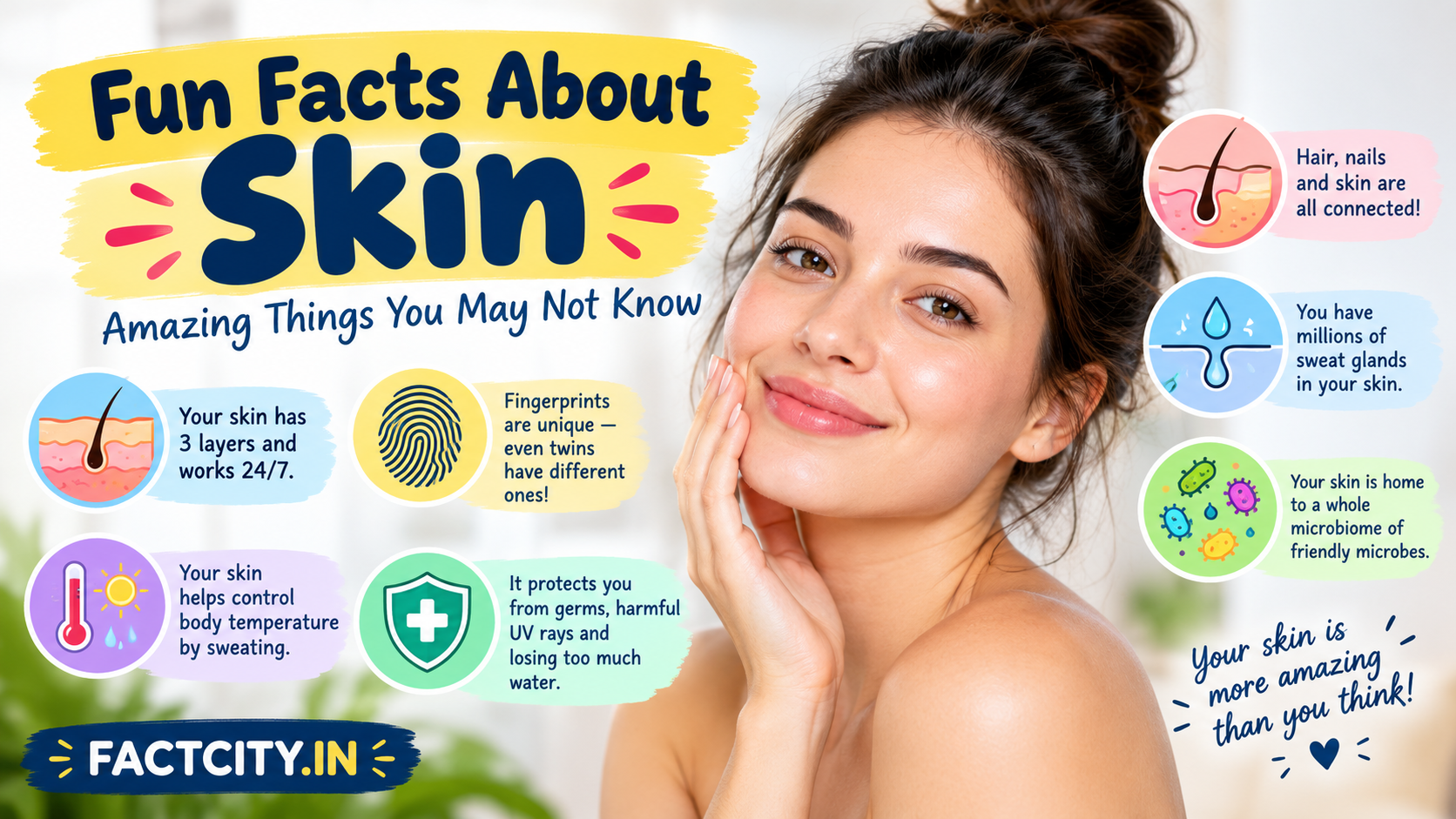
Fun Facts About Skin. There are lots of wonderful things about the human body, but skin is one of the most interesting. It is easy to think of skin as simply the body’s outer covering, but in fact, skin is a complex living organ that performs many important functions each and every day. Our skin is always working, protecting us from the outside world and helping us sense temperature and touch.
If you are looking for fun facts about skin, you might be surprised to learn how much there is to know. Here are some fun, easy-to-understand facts about human skin and the incredible job it does in our daily lives.
The largest organ in the body is the skin
One of the most interesting facts about skin is that it is generally considered to be the largest organ of the human body by surface area and weight. The skin of an adult covers an area of about 1.5 to 2 square meters, depending on body size. “Fun Facts About Skin“
Your skin forms a barrier between the inside of your body and the outside world. It is everywhere in your body, including where it is exposed to sunlight, air, water, and changes in temperature.
The Skin Has Several Layers
Skin isn’t just one simple sheet. It has different layers: the epidermis, dermis, and underlying subcutaneous tissue, all serving different roles. The epidermis is the outermost layer that makes up much of the body’s barrier to the environment. Beneath that is the dermis, which contains structures like blood vessels, nerves, hair follicles, sweat glands, and oil glands. Under the skin is a layer of subcutaneous tissue. This tissue has fat and connective tissue in it and helps to cushion and insulate the body.
Your skin is constantly changing
Your skin may appear the same from one day to the next, but it is constantly renewing itself. The lower epidermis cells gradually move up toward the surface as they mature. Eventually, the older skin cells migrate to the surface of the skin and are shed naturally. This is happening all the time without you needing to think about it. This is one reason why your skin is constantly being replaced over time.
Your Skin Protects You
Protection is one of the most important functions of skin. It acts as a physical barrier to many environmental factors, including friction, microorganisms, chemicals, and excessive water loss. The skin also has a role to play with the immune system. Some skin cells can sense danger and help kick off immune responses. So your skin is doing a lot more than just covering your body every day.
Skin helps regulate body temperature
Another interesting thing about skin is that it controls temperature. When your body gets too hot, sweat glands make sweat. Sweat evaporates from the surface of your skin and helps cool your body.
The blood vessels in the skin also change diameter. They can open up to release more heat or narrow to limit heat loss. These automatic responses help keep your body’s internal temperature pretty constant.
Your Skin Has Millions of Sweat Glands
There are many sweat glands all over the skin of humans. These glands are especially important for cooling the body. There are different types of sweat glands that can be activated by heat, exercise, emotions, and hormones. Sweating is not just something that happens when you exercise. It plays an important role in the body’s natural temperature regulation system. interesting-facts-about-disney-world
Skin Enables You to Experience The Environment
Your skin is a major sensory organ too. Special nerve endings and receptors in the skin allow you to sense touch, pressure, vibration, temperature, and pain. For example, when you touch something hot, sensory receptors send signals through nerves to your nervous system. Your body can respond right away. Without these sensory functions interacting, it would be much more difficult to interact safely with the environment.
Fingerprints Are Unique
There are tiny patterns called friction ridges on your fingertips. They leave fingerprints. Perhaps the most famous fact about the skin is that fingerprints are very distinctive. Even identical twins have different fingerprints.
These patterns form before birth and are generally stable throughout life, but can be changed by injury, scarring, or certain skin disorders. Fingerprints are also helpful for identification because of individual patterns.
The Skin Has Its Own Microbiome
The skin hosts a huge population of microscopic life, including bacteria and other microorganisms. This community is called the skin microbiome. Some microorganisms are actually good. Many live naturally on healthy skin and can interact with the skin’s environment and immune defences. The makeup of the skin microbiome may differ based on body site, age, environment, and individual lifestyle.
Skin Colour Is Mostly Because Of Melanin
A pigment called melanin is a major determinant of natural skin colour. Melanin is made by special cells called melanocytes. This is what causes the wide range of natural human skin tones. Different people have different types and amounts of melanin.
Melanin also helps absorb some of the ultraviolet radiation in sunlight. But having more melanin doesn’t mean you’re completely protected from sun damage, so sun protection can be important for everyone.
Your skin can show changes in the body
Sometimes the skin can give visible clues as to what is happening inside the body. Colour change, texture change, moisture change or spotting can happen for many different reasons. It can be a temporary redness caused by heat, exercise or irritation. Weather, bathing habits or environmental conditions can all influence dryness.
But not all skin changes have a simple explanation. If you have a persistent, unusual, painful, or rapidly changing skin problem, you should see a qualified health care professional.
Goose Skin Is A Skin Reaction
Have you ever seen small bumps form on your skin when you’re cold or experiencing a strong emotion? These are what are usually called goosebumps. They occur when tiny muscles attached to hair follicles tighten up.
For humans, goosebumps don’t really provide much practical warmth, because we have relatively little body hair compared with many other mammals. But the reaction is a fascinating reminder of the link between the nervous system and skin.
Hair & Nails Are Related to Skin
Hair and nails are closely associated with skin, as they are derived from specialised structures of skin. Hair grows from follicles in the skin, and nails grow from nail matrices. The outer layer of skin contains keratin, a tough protein that also makes up your hair and nails . So your hair, nails, and skin are more interconnected than they might seem at first.
The skin thickness varies in different areas
The thickness of the skin varies in different parts of the body. For example, the skin on the palms of the hands and the soles of the feet is much thicker than the skin around the eyelids. Special protective features are normally provided for areas that are often subjected to pressure or friction. This difference allows different parts of the body to do their jobs properly.
Your Skin Can Stretch
Skin is incredibly flexible. It can stretch with the body as it grows or changes size and slowly adapt afterward. The dermis contains proteins such as collagen and elastin that give the skin its strength and elasticity. As we age, changes in collagen, elastin, hydration, and other factors can affect skin firmness and elasticity.
Scars Are Part of Healing
In the presence of more extensive skin injury, the body launches a complex repair sequence. New tissue grows to repair the damaged area. If the repair process results in tissue that is different from the original skin, a scar may develop. Scars can be of different sizes, colours and textures. They may also slowly change their appearance as they get older.
Helps Minimise Excessive Water Loss from the Skin
Your body has a lot of water, so you need to make sure you don’t lose water for nothing. The outer layer of skin acts as a barrier to prevent water from leaving the body. This protective barrier is created by natural oils and special lipids in the skin’s outer layer. This function is particularly noticeable when the skin barrier is compromised, and the skin becomes abnormally dry or irritated.
Your Skin Doesn’t Sleep
Maybe the most amazing thing about skin is that it never really ceases to work. Even while you sleep, your skin is at work, protecting you, regulating your temperature, receiving sensory information, and keeping the normal processes of renewal going. These functions occur automatically so you don’t often think about them.
Why Skin Is Interesting to Learn About
Skin is much more than the surface on which the body’s appearance rests. It is a living, breathing organ connecting the body to its environment. It protects us, helps regulate our temperature, allows us to feel touch and pain, strengthens immune defences, and helps prevent too much water loss. It is always in motion and healing at the same time.
These fun skin facts show just how complex the human body really is. So the next time you look at your hands, feel a cool breeze, or see goosebumps, remember that your skin is doing an amazing collection of biological functions every second.
Final Words
We see human skin every day, and perhaps it seems mundane, but skin is really one of the most interesting organs in the body. Believe it or not, there’s a lot going on in and under your skin – from your unique fingerprints and sensory receptors to your sweat glands, melanin, and skin microbiome.
Knowing these interesting facts about skin can make us appreciate how well the human body is designed to protect, sense, adapt, and heal itself. Our skin is not merely a covering; it is an active and vital part of our being.