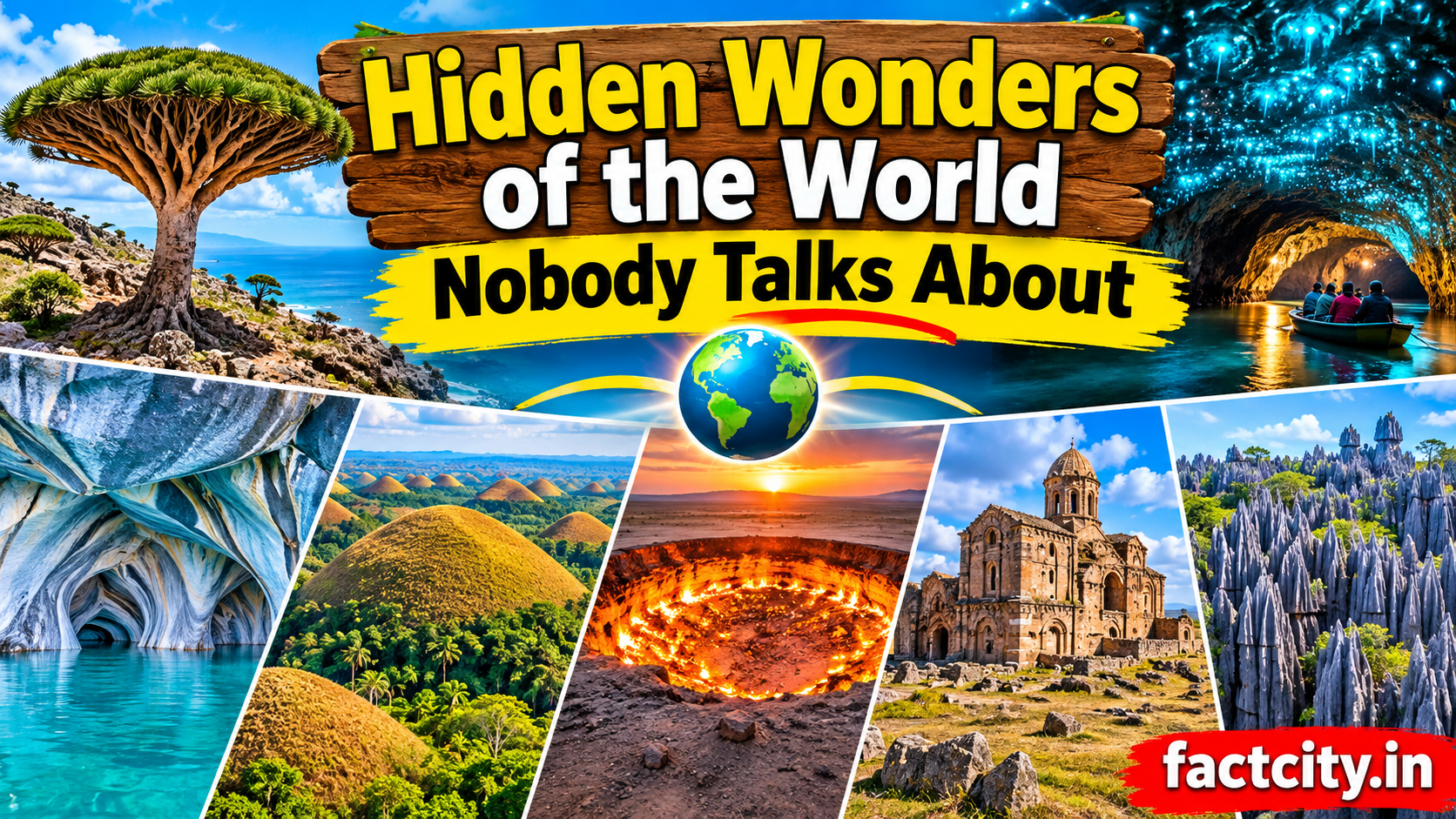
Hidden Wonders of the World. When people think about the wonders of the world, famous places such as the Great Wall of China, the Pyramids of Egypt, and the Taj Mahal usually come to mind. However, our planet is filled with countless hidden wonders that remain unfamiliar to many travelers. These remarkable places feature unusual landscapes, mysterious natural formations, ancient history, and breathtaking beauty that often receive far less attention than popular tourist destinations. From colorful underground caves to remote islands and forgotten archaeological sites, the hidden wonders of the world reveal how much there is still to discover about our planet. Exploring these lesser-known destinations offers a chance to understand Earth’s incredible diversity and appreciate places that have remained outside the spotlight.
1. Socotra Island, Yemen
Socotra Island is one of the most unusual places on Earth, located in the Arabian Sea near the Horn of Africa. Its isolated location has allowed many plant and animal species to develop in ways rarely seen elsewhere. The island is especially famous for its dragon blood trees, which have umbrella-shaped branches and produce a deep red resin. These strange-looking trees create a landscape that resembles something from a fantasy movie. Socotra is also home to unique birds, plants, and dramatic limestone formations. Despite its extraordinary natural beauty, the island remains relatively unknown to many international travelers. Its unusual ecosystem makes it one of the most fascinating hidden wonders of the world.
2. The Marble Caves of Chile
Hidden along the shores of General Carrera Lake in Chile are the beautiful Marble Caves, a natural wonder formed through thousands of years of water erosion. The caves feature smooth marble walls with swirling patterns of blue, white, and gray. When sunlight reflects from the lake’s turquoise water, the cave interiors appear to glow with changing colors. The formations are best explored by small boats or kayaks when weather conditions allow. Although the caves are breathtaking, their remote location in Patagonia means that reaching them requires considerable travel. Their natural beauty demonstrates how water can slowly transform solid rock into extraordinary artistic shapes.
3. The Waitomo Glowworm Caves, New Zealand
New Zealand’s Waitomo Glowworm Caves offer a magical underground experience that many people may not know about. Inside the caves, thousands of tiny glowworms produce soft blue-green light that illuminates the darkness like a star-filled sky. These glowworms use their glowing light to attract insects, creating a natural survival system that also produces a spectacular visual display. Visitors can explore certain cave sections by boat, moving quietly beneath the glowing ceiling. The experience feels peaceful and almost unreal. The caves are a reminder that some of Earth’s most beautiful sights exist far below the surface, hidden from ordinary view.
4. The Chocolate Hills of the Philippines
Located on Bohol Island in the Philippines, the Chocolate Hills are a collection of more than a thousand rounded hills spread across the landscape. During the rainy season, the hills appear green, but in the dry season, their grass turns brown, giving them the appearance of giant chocolate mounds. Scientists believe the formations developed through the weathering of limestone over a long period. Their unusual shape and enormous number make the region a fascinating geographical attraction. Although the Chocolate Hills are known in the Philippines, they remain less familiar to many international visitors than other famous natural landmarks.
5. The Door to Hell, Turkmenistan
The Darvaza Gas Crater, often called the Door to Hell, is one of the world’s strangest landscapes. Located in the Karakum Desert of Turkmenistan, this enormous crater has been burning for decades. The glowing flames inside the crater create a dramatic sight, especially after sunset when the surrounding desert becomes dark. The fire is associated with a gas-rich underground area that was ignited during Soviet-era exploration. Its exact history and duration of burning are often described differently, but the crater has become a remarkable example of how human activity and natural resources can create an unusual landscape. It is a destination that attracts curious travelers seeking something completely different.
6. The Richat Structure, Mauritania
The Richat Structure, also known as the Eye of the Sahara, is a massive circular formation located in the desert of Mauritania. From space, it resembles a giant eye surrounded by rings. The structure stretches across a wide area and is made up of layers of rock shaped by geological processes over millions of years. Scientists once considered different explanations for its formation, but it is now understood as an eroded geological dome rather than an impact crater. Its unusual circular appearance makes it especially impressive when viewed from above. Despite its remarkable shape, the Richat Structure remains unfamiliar to many people who have never studied Earth’s geography.
7. The Ancient City of Ani, Türkiye
The ancient city of Ani lies near the border between Türkiye and Armenia. Once a powerful medieval city, Ani was known for its impressive architecture, churches, and strategic location along important trade routes. Today, its ruins stand across a vast landscape, offering a glimpse into a civilization that once flourished there. Visitors can see the remains of stone churches, defensive walls, and other historic structures. The quiet surroundings make the site feel like a forgotten world. Ani is a fascinating destination for anyone interested in ancient history, architecture, and the rise and decline of once-great cities.
8. The Tsingy de Bemaraha, Madagascar
Madagascar is home to the extraordinary Tsingy de Bemaraha, a landscape filled with sharp limestone pinnacles that rise like stone forests. The formations were created through long periods of erosion, which carved the limestone into narrow peaks, deep crevices, and unusual rock shapes. The area also supports rare wildlife, including several species found only in Madagascar. Walking through parts of this landscape can feel like exploring another planet. Its difficult terrain and remote location have helped preserve its unique environment. The Tsingy is a remarkable example of how geological forces can create landscapes that seem almost impossible.
9. The Kelimutu Crater Lakes, Indonesia
On the island of Flores in Indonesia, Mount Kelimutu contains three crater lakes known for their changing colors. The lakes can appear turquoise, green, black, red, or other shades depending on their chemical conditions and volcanic activity. Their colors may change independently, making the mountain especially fascinating to scientists and visitors. Local traditions also give the lakes spiritual significance, adding cultural meaning to their natural beauty. The surrounding volcanic landscape creates a dramatic setting, particularly at sunrise. Although Indonesia is famous for its beaches and tropical islands, Kelimutu remains one of its most unusual natural attractions. countries-with-the-most-fascinating-hidden-places
10. The Hidden Beauty of Earth’s Lesser-Known Wonders
The world is filled with extraordinary places that do not always receive the attention they deserve. From the unusual trees of Socotra to the glowing caves of New Zealand and the ancient ruins of Ani, these hidden wonders reveal the remarkable variety of landscapes and cultures found across the planet. Many of these destinations are difficult to reach, while others remain overlooked simply because they are far from popular travel routes. Their beauty reminds us that discovery does not always require visiting famous landmarks. Sometimes, the most unforgettable experiences come from exploring places that few people have heard about.
Conclusion
The hidden wonders of the world nobody talks about offer a fresh perspective on Earth’s beauty, history, and natural diversity. These destinations show that our planet is far more extraordinary than the familiar places featured in travel magazines and documentaries. Whether it is a mysterious desert formation, a colorful underground cave, or a forgotten ancient city, every hidden wonder has a story worth discovering. Learning about these remarkable places encourages curiosity, appreciation for nature, and respect for cultural heritage. As more people become interested in exploring lesser-known destinations, it is important to protect these fragile environments so future generations can experience their beauty as well.