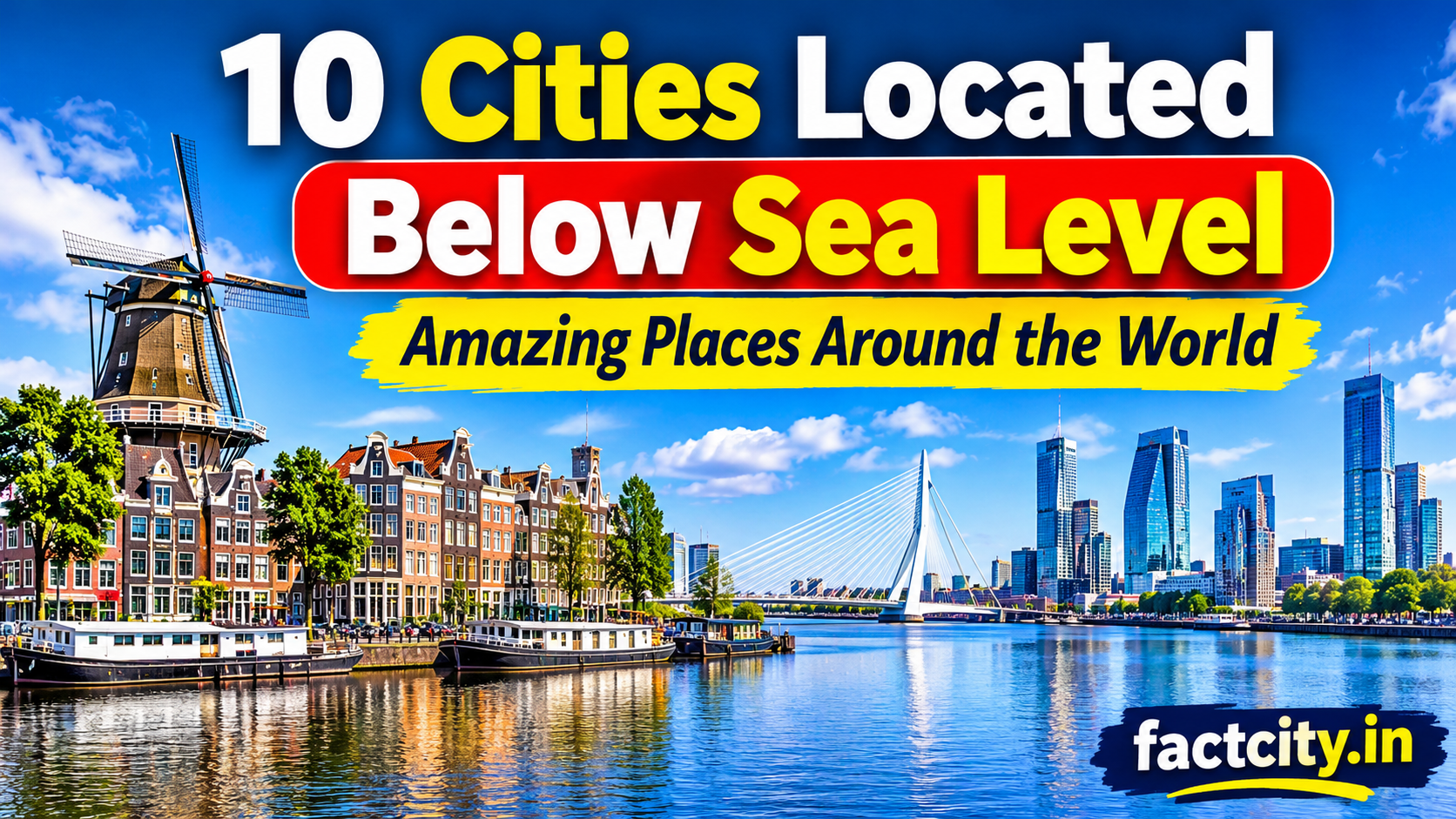
10 Cities Located Below Sea Level. The world is full of fascinating geographical wonders, and some of the most interesting places are cities located below sea level. While most people imagine cities surrounded by mountains, hills, or coastal landscapes, several famous destinations exist in areas where the land is actually lower than the level of the ocean. These cities are remarkable examples of how humans have adapted to unusual geographical conditions through engineering, technology, and creative planning. Some are protected by massive seawalls, others depend on sophisticated drainage systems, and a few are located in naturally low-lying regions created by ancient geological processes. Cities below sea level are particularly interesting because they reveal the relationship between human civilization and the natural environment. From the Netherlands to the Middle East and North America, these destinations offer incredible stories of survival, history, and geographical transformation. In this article, we explore 10 cities located below sea level and discover what makes each of them unique.
1. Amsterdam, Netherlands
Amsterdam is one of the most famous cities associated with living below sea level. Located in the Netherlands, the city developed around waterways, canals, and reclaimed land. Although not every part of Amsterdam lies below sea level, several surrounding areas and sections of the city are situated at extremely low elevations, with some reclaimed land below the average sea level. The Netherlands has a long history of managing water through dikes, pumps, drainage channels, and carefully designed infrastructure. Amsterdam’s famous canal system is not only an architectural attraction but also an important part of its historical water management. Much of the surrounding Dutch landscape was created by draining wetlands and transforming them into usable land. This extraordinary engineering achievement allows millions of people to live, work, and travel comfortably in areas that would otherwise be vulnerable to flooding. Amsterdam demonstrates how human creativity can transform challenging geographical conditions into beautiful and highly developed urban environments.
2. Rotterdam, Netherlands
Rotterdam is another remarkable Dutch city located partly below sea level. Situated near the North Sea and along the Nieuwe Maas River, Rotterdam contains low-lying areas that depend heavily on modern flood protection systems. The city is home to one of Europe’s largest ports and plays a major role in international trade and transportation. Its geographical position makes it economically important but also creates challenges related to flooding and rising water levels. Rotterdam has developed an impressive collection of water management technologies, including flood barriers, protective embankments, and innovative urban drainage systems. The city is also internationally recognized for its modern architecture and sustainable development projects. Some neighborhoods feature special public spaces designed to temporarily store rainwater during heavy storms. Rotterdam proves that a city located in a vulnerable lowland region can still become a global economic center through careful planning and engineering. 10 Cities Located Below Sea Level
3. The Hague, Netherlands
The Hague, known as the political center of the Netherlands, is another city associated with low-lying coastal geography. It is home to the Dutch government, the royal family, and several important international institutions, including the International Court of Justice. Parts of the surrounding region lie below or close to sea level, particularly in areas created through land reclamation and drainage. The Hague’s location near the North Sea makes coastal protection an important part of regional planning. Although the city itself contains areas at different elevations, its surrounding landscape demonstrates the remarkable engineering systems used throughout the Netherlands. Dunes, dikes, and water management infrastructure help protect the region from flooding. The Hague combines political importance, historical architecture, beautiful beaches, and advanced environmental planning, making it one of the most fascinating examples of urban development in a low-lying coastal region.
4. New Orleans, United States
New Orleans is one of the most widely known American cities located partly below sea level. Situated in Louisiana near the Mississippi River and the Gulf of Mexico, the city occupies a landscape shaped by river deposits, wetlands, and coastal processes. Some neighborhoods lie below sea level, while other areas are above it. New Orleans is protected by an extensive system of levees, floodwalls, pumps, and drainage infrastructure. These systems are essential because the surrounding geography makes the city vulnerable to heavy rainfall, river flooding, and storm surges. Hurricane Katrina in 2005 demonstrated the devastating consequences that can occur when flood protection systems fail. Despite these challenges, New Orleans remains famous for its vibrant music culture, historic French Quarter, delicious cuisine, and unique traditions. The city is a powerful example of how geography can influence urban development, infrastructure, and everyday life.
5. Baku, Azerbaijan
Baku, the capital of Azerbaijan, is one of the most interesting cities located below sea level. Situated along the western coast of the Caspian Sea, Baku stands at approximately 28 meters below global mean sea level in many central areas. This unusual elevation is connected to the geographical characteristics of the Caspian Sea, which is an enclosed body of water rather than an ocean. Because the Caspian Sea has no natural outlet to the world’s oceans, its water level is different from global sea level. Baku is famous for its modern skyscrapers, historic Old City, and important role in the energy industry. The city also experiences a distinctive climate influenced by its coastal location and surrounding landscapes. Its combination of ancient architecture, modern development, and unusual elevation makes Baku a fascinating destination for travelers interested in geography and history.
6. Tiberias, Israel
Tiberias is a historic city located on the western shore of the Sea of Galilee in northern Israel. The city lies approximately 200 meters below global mean sea level, making it one of the lowest-elevation urban settlements in the world. Its unusual location is connected to the Jordan Rift Valley, a major geological depression stretching through parts of the Middle East. Tiberias has been an important cultural and religious destination for centuries and is associated with significant events in Jewish history. The city attracts visitors because of its beautiful lakeside scenery, historical landmarks, and nearby natural attractions. The surrounding region also contains remarkable geological features, including deep valleys and mineral-rich waters. Tiberias demonstrates how geological forces can create landscapes where cities develop at elevations far below the level of the world’s oceans.
7. Jericho, Palestine
Jericho is widely recognized as one of the oldest continuously inhabited cities in the world and is also famous for its extremely low elevation. Located in the Jordan Valley near the Dead Sea, Jericho sits approximately 250 meters below global mean sea level. Its geographical position makes it one of the lowest cities on Earth. Despite the surrounding dry landscape, Jericho has historically benefited from natural springs and fertile agricultural areas. These water sources helped early communities establish settlements thousands of years ago. The city is associated with ancient archaeological discoveries, historical traditions, and remarkable natural surroundings. Jericho’s palm trees, agricultural landscapes, and warm climate make it distinctive compared with many other cities in the region. Its long history of human settlement demonstrates how access to water can support civilization even in challenging geographical environments.
8. Mexicali, Mexico
Mexicali is a city in northwestern Mexico located near the United States border and the Colorado River. Parts of its surrounding region are below sea level, particularly within the Colorado River Delta and the Imperial Valley geographical system. The area has experienced extensive agricultural development supported by irrigation infrastructure. Although Mexicali itself contains different elevations, its position within a low-lying desert basin makes it an interesting example of urban development in an unusual landscape. The city is known for its extremely hot summers, agricultural activity, and cultural connections between Mexico and the United States. Water management is especially important in the region because rainfall is limited and much of the agricultural economy depends on carefully managed water supplies. Mexicali illustrates how cities can develop successfully in desert environments shaped by rivers, irrigation, and geographical depressions.
9. El Centro, California, United States
El Centro is a city located in California’s Imperial Valley, close to the Mexican border. It sits approximately 12 meters below global mean sea level, making it one of the notable American cities with a below-sea-level elevation. The Imperial Valley is part of a larger geological region that includes the Salton Trough, a low-lying depression formed through tectonic activity. Despite its desert environment, the region supports extensive agriculture through irrigation water supplied from the Colorado River. El Centro serves as an important commercial and agricultural center for the surrounding communities. Its hot climate, flat terrain, and unusual elevation make it geographically distinctive. The city is also connected to the broader history of agricultural development in Southern California, where engineering projects transformed dry landscapes into productive farmland.
10. Dammam, Saudi Arabia
Dammam is a major coastal city in eastern Saudi Arabia located along the Arabian Gulf. Parts of the surrounding coastal region are extremely low-lying, and certain reclaimed or developed areas sit below or close to sea level. The city’s geographical position has contributed to its importance as a center for transportation, commerce, and the petroleum industry. Dammam is connected to several important urban areas in the Eastern Province and serves as a major gateway to the Arabian Gulf. The surrounding landscape is generally flat and characterized by desert conditions, making drainage and coastal infrastructure important aspects of urban development. Dammam’s modern skyline, waterfront attractions, and economic significance make it a fascinating example of development in a low-lying coastal environment.
Why Do Some Cities Exist Below Sea Level?
Cities located below sea level usually develop because of a combination of geographical conditions, historical settlement patterns, and human engineering. Some regions naturally contain deep depressions created by tectonic activity, while others were transformed through land reclamation and drainage. Coastal cities may expand into low-lying wetlands because these areas provide valuable access to ports, rivers, transportation routes, and agricultural land. Over time, engineering systems such as dikes, levees, canals, pumps, and flood barriers make these areas suitable for permanent settlement. However, maintaining such infrastructure requires continuous investment, especially as climate change increases the risks associated with rising sea levels and extreme weather events. places-where-gravity-seems-different
The Challenges of Living Below Sea Level
Living below sea level can create several environmental and engineering challenges. Flooding is one of the most important concerns because heavy rainfall, river overflow, storm surges, or coastal flooding can threaten low-lying communities. Drainage systems must be carefully designed to remove excess water, particularly in regions where gravity alone cannot move water efficiently. Some cities depend on powerful pumping stations to keep streets, neighborhoods, and agricultural areas dry. Another challenge is the increasing risk associated with climate change. Rising sea levels and more intense storms can place additional pressure on existing flood protection systems. As a result, many cities are investing in improved infrastructure, sustainable urban planning, and nature-based solutions to reduce future risks.
Conclusion
The 10 cities discussed in this article reveal how fascinating geography can be and how human civilization adapts to challenging environments. From Amsterdam and Rotterdam in the Netherlands to Baku, Tiberias, Jericho, and New Orleans, these destinations demonstrate the extraordinary relationship between geography, engineering, and urban development. Some cities are protected by sophisticated water management systems, while others exist naturally within deep geological depressions. Their histories show that living below sea level does not necessarily prevent a city from becoming culturally important, economically successful, or internationally recognized. At the same time, these places remind us of the importance of understanding geographical conditions and protecting communities against environmental risks. Cities below sea level remain among the most remarkable examples of human adaptation to the natural world.