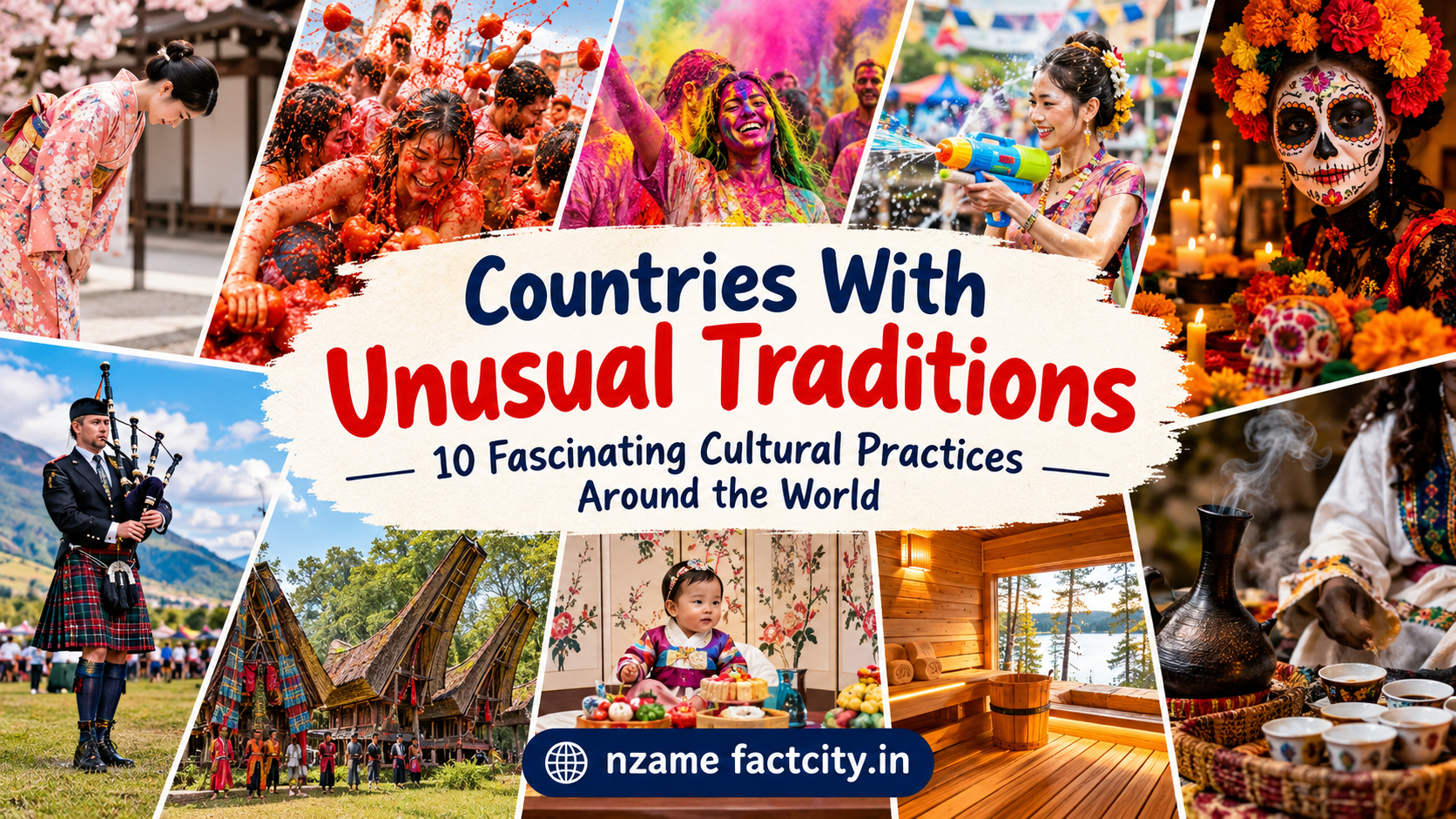
Countries With Unusual Traditions: Countries around the world have unique traditions that reflect their history, beliefs, values, and way of life. Some customs may seem unusual to visitors, while others offer a fascinating look at how different communities celebrate important moments, show respect, and preserve their cultural heritage. From colorful festivals and unusual celebrations to ancient rituals passed down through generations, these traditions make every culture special.
Exploring countries with unusual traditions is a wonderful way to understand the diversity of human life. A practice that seems surprising in one country may be a meaningful symbol of happiness, respect, good fortune, or community in another. These customs are often connected to local history, religion, nature, and family life. Let’s explore ten countries with unusual traditions that continue to attract attention and make cultures around the world so interesting.
1. Japan: The Tradition of Bowing
Japan is known for its rich cultural heritage, and bowing is one of its most recognizable traditions. People commonly bow when greeting someone, thanking another person, apologizing, or showing respect. Although a handshake is common in many countries, bowing remains an important part of everyday communication in Japan.
The depth and duration of a bow can depend on the situation. A small bow may be enough for a casual greeting, while a deeper bow can express greater respect or a sincere apology. Visitors may find this custom unfamiliar at first, but it reflects the importance Japanese culture places on politeness, consideration, and social harmony.
Another interesting aspect of Japanese culture is its seasonal celebrations, including cherry blossom viewing. Families and friends gather under blooming cherry trees to enjoy food and appreciate the beauty of the flowers. This tradition, known as hanami, reminds people to enjoy beautiful moments because they do not last forever. Countries With Unusual Traditions
2. Spain: La Tomatina Tomato Festival
Spain is home to La Tomatina, one of the world’s most unusual and entertaining festivals. It takes place in the town of Buñol, where participants gather for a large tomato fight. During the celebration, people throw ripe tomatoes at one another, turning the streets into a colorful scene filled with excitement.
The festival is generally held on the last Wednesday of August. What makes La Tomatina special is that an ordinary food item becomes the center of a major public celebration. Participants wear clothes they do not mind getting dirty and follow event rules designed to help keep the activity safer.
Although the festival may look chaotic, it has become an important part of the town’s cultural identity and attracts visitors from many countries. La Tomatina demonstrates how a local celebration can grow into an internationally recognized event while remaining connected to its community.
3. India: The Festival of Colors, Holi
India has countless regional customs and festivals, and Holi is one of its most famous celebrations. Often called the Festival of Colors, Holi brings people together to celebrate with colored powders, water, music, sweets, and joyful gatherings.
Holi is associated with the arrival of spring and carries religious and cultural meanings that vary across communities. In Hindu traditions, it is also connected with stories about the victory of good over evil. The celebrations often begin with Holika Dahan, a ritual bonfire held on the evening before the main festival in many places.
During Holi, people may apply colored powder to friends, relatives, and neighbors, creating a lively atmosphere. The festival can also offer an opportunity to reconnect with others and put aside old disagreements. For visitors, the sight of streets filled with bright colors can be surprising, but the celebration represents joy, togetherness, and renewal for many participants.
4. Thailand: The Water Festival of Songkran
Thailand celebrates Songkran, the traditional Thai New Year festival, in April. One of its best-known features is the playful splashing of water in streets and public spaces. People use water guns, buckets, and containers to splash one another as part of the celebration.
However, Songkran is more than a large water fight. Water has an important symbolic meaning connected with cleansing, renewal, and good fortune. Many people visit temples, make offerings, and gently pour water over Buddha images as a sign of respect. Younger family members may also pour water over the hands of older relatives to show gratitude and receive blessings.
The festival combines traditional customs with modern celebrations, bringing families and communities together. For travelers, Songkran offers an exciting opportunity to experience Thai culture, although it is important to respect religious practices and follow local safety guidelines.
5. Mexico: The Day of the Dead
Mexico’s Day of the Dead, known as Día de los Muertos, is a meaningful cultural tradition that honors family members and loved ones who have died. It is commonly observed on November 1 and 2, although customs and dates can vary by community.
At first glance, the colorful decorations, painted skulls, and festive gatherings may seem unusual to people unfamiliar with the tradition. However, the celebration is not simply about death. It focuses on remembering loved ones, sharing family stories, and maintaining emotional connections with those who are no longer alive.
Families may create special altars called ofrendas, decorate them with photographs, candles, marigold flowers, and favorite foods, and visit cemeteries to honor the deceased. The exact customs differ across Mexico, reflecting the country’s diverse cultural and regional influences.
This tradition offers a powerful reminder that people around the world express love and remembrance in different ways.
6. Scotland: The Highland Games
Scotland is famous for its Highland Games, traditional events that combine athletic competitions, music, dancing, and community celebrations. These gatherings are closely connected with Scottish heritage and are especially associated with the country’s Highland culture.
One of the most unusual events is the caber toss. In this competition, participants lift and throw a large wooden pole, attempting to turn it end over end so that it lands in a particular direction. Other events may include hammer throwing, weight throwing, and tug-of-war.
Highland Games often feature traditional Scottish clothing, including kilts, as well as bagpipe performances and Highland dancing. While the sporting competitions are a major attraction, the events also provide an opportunity for communities to celebrate their shared history.
For visitors, these games offer a chance to experience Scottish traditions through music, physical strength, and social gatherings.
7. Indonesia: The Toraja Funeral Traditions
In the Tana Toraja region of Indonesia, funeral traditions reflect a distinctive understanding of family, community, and death. For many Toraja communities, funeral ceremonies are important social and spiritual events that honor the deceased and bring relatives together.
Depending on the family’s circumstances and local customs, preparations for a funeral may take considerable time. Relatives can travel long distances to attend, and ceremonies may include traditional music, communal gatherings, and other ritual activities.
Some Toraja communities also have distinctive burial practices, including graves carved into rocky cliffs and burial sites associated with traditional wooden structures. These practices are connected with local beliefs about ancestors, family relationships, and the journey after death.
The traditions can be unfamiliar to outsiders, but they should be understood within their cultural context. They demonstrate the importance of honoring family members and maintaining connections between generations.
8. South Korea: The Tradition of Celebrating the First Birthday
South Korea has a special tradition known as doljanchi, which celebrates a child’s first birthday. Historically, surviving the first year of life was considered a significant milestone, making the occasion especially meaningful for families.
During the celebration, the child may wear a traditional Korean outfit called a hanbok. Family members gather for a meal, photographs, and a ceremony known as doljabi. During doljabi, several objects are placed in front of the child, and the object the child chooses is traditionally interpreted as a playful prediction of their future.
The objects can vary, but they may represent qualities such as wealth, success, intelligence, or a long life. Today, many families combine this traditional ceremony with modern birthday parties.
Although the celebration may appear unusual to visitors, it is a warm expression of family love, hope, and happiness for a child’s future.
9. Finland: The Tradition of Sauna Culture
Finland is famous for its sauna culture, which has deep roots in everyday life. A sauna is a heated room where people sit and relax, often enjoying the warmth and taking breaks to cool down. For many Finns, visiting a sauna is not simply a luxury but a familiar part of life.
Saunas can be found in private homes, apartment buildings, lakeside cottages, and public facilities. Families and friends may use them to relax and spend time together, while some people appreciate the quiet atmosphere as a way to unwind.
Traditional Finnish sauna culture emphasizes cleanliness, relaxation, and respect for others. Practices differ depending on the setting, and visitors are generally expected to follow local etiquette.
What may seem unusual to people from countries without a strong sauna tradition is how naturally this activity fits into ordinary routines. In Finland, the sauna represents comfort, well-being, and a long-standing cultural connection with heat and nature.
10. Ethiopia: The Coffee Ceremony
Ethiopia is widely associated with coffee, and the traditional Ethiopian coffee ceremony is an important expression of hospitality and community life. Rather than simply preparing a quick drink, the ceremony can involve a careful process that brings people together.
Fresh coffee beans may be roasted, ground, and brewed in a traditional clay pot called a jebena. The aroma of roasting beans becomes part of the experience, and the coffee is usually served in small cups. In many settings, the ceremony includes conversation and time spent with family, friends, or guests.
The number of servings and specific practices can vary by region and household. In some communities, the ceremony involves several rounds of coffee, allowing guests to enjoy the drink while sharing stories and discussing everyday life.
This tradition shows how a simple beverage can become an important symbol of hospitality, friendship, and belonging.
Why Are Unusual Traditions Important?
Unusual traditions help preserve a country’s cultural identity and connect people with their history. Many customs have been passed down through generations, allowing communities to maintain a sense of belonging while adapting to modern life.
These practices can also help travelers understand that cultural differences are not necessarily strange or meaningless. A water festival, a colorful celebration, a special birthday ceremony, or a traditional coffee gathering may have deeper meanings that are not immediately obvious to outsiders.
Learning about traditions encourages curiosity and respect. It also helps people appreciate that there is no single way to celebrate, communicate, honor family members, or build relationships within a community. 10-interesting-facts-about-the-brain
As international travel and communication continue to connect people, understanding cultural customs becomes increasingly valuable. Respectful curiosity allows visitors to enjoy new experiences without making unfair assumptions about the people who maintain these traditions.
Conclusion
The world is full of countries with unusual traditions that reveal the creativity, history, and values of different communities. From Japan’s respectful bowing customs and Spain’s famous tomato festival to Mexico’s Day of the Dead and Ethiopia’s traditional coffee ceremony, each practice tells a story about the people who celebrate it.
Some traditions are lively public festivals, while others take place quietly within families and communities. Their meanings may differ, but many share common themes of respect, remembrance, happiness, hospitality, and togetherness.
Exploring these fascinating cultural practices helps us see the world from new perspectives. Instead of judging a custom simply because it seems unfamiliar, we can learn about its history and understand why it remains important. These traditions make our world more diverse, meaningful, and interesting, reminding us that every culture has something valuable to share.